The Catholic Church in the Congo Faces Harassment by the Government. Cardinal Ambongo Speaks Out
ID del artículo: 230716
Descripción corta: Congo’s Catholic Church Faces Growing Government Pressure as Police Disrupt Mass and Fire Tear Gas at Worshippers
(ZENIT News / Kinshasa, 11.25.2026).- Two successive confrontations between security forces and the Catholic Church in the Democratic Republic of the Congo have raised serious concerns about religious freedom and the government’s treatment of one of the country’s most influential institutions. In Kinshasa, authorities prevented a major youth Mass from taking place in a stadium despite the organizers’ claim that they had secured all necessary permits. A day later, police fired tear gas at Catholics participating in a peaceful procession in Lubumbashi, where the faithful were demanding compliance with a court ruling in favor of a Catholic seminary.
The incidents of November 22 and 23 have intensified tensions between the Church and President Félix Tshisekedi’s government, prompting Cardinal Fridolin Ambongo, Archbishop of Kinshasa, to warn against attempts to intimidate religious leaders and silence the Church’s public voice.
The first confrontation unfolded on November 22, during the solemnity of Christ the King, when Ambongo was scheduled to celebrate Mass with thousands of young Catholics at Kinshasa’s Tata Raphaël Stadium. The gathering also marked the 41st edition of the archdiocesan youth day, an important fixture in the local Church calendar.
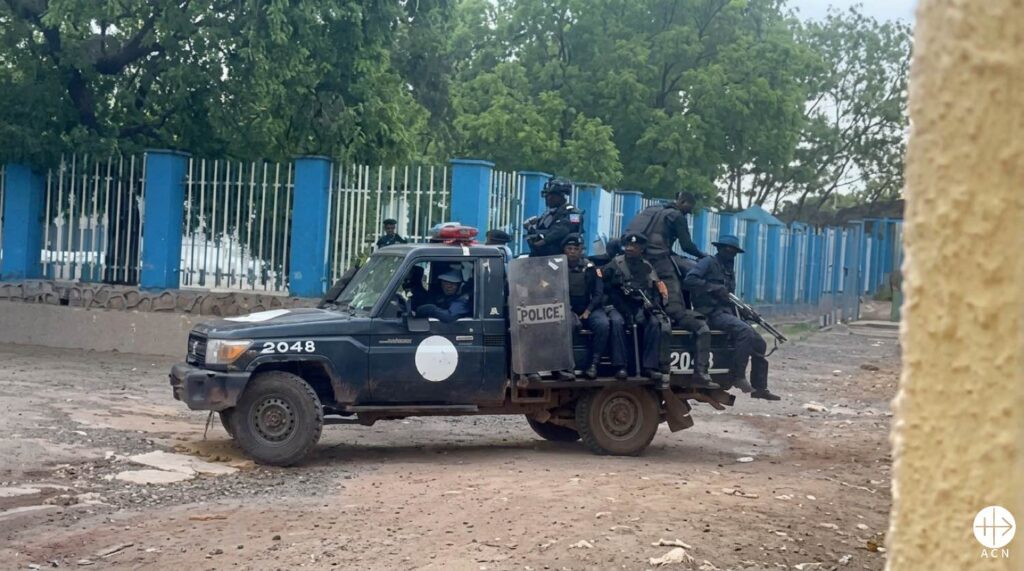
According to the archdiocese, the authorities communicated their decision to prevent the celebration only after 10 p.m. on Saturday, through an unidentified government representative. No formal notification or convincing explanation was provided, despite the organizers’ insistence that they had obtained the necessary authorizations. The Congolese bishops’ conference also reported a substantial police deployment around the stadium, whose capacity is approximately 60,000.
The authorities’ intervention forced the Church to move the celebration at short notice to the grounds of Saint-Raphaël School in the Limete district. Thousands of young people nevertheless attended, and the Mass proceeded without incident.
Governor Daniel Bumba offered a different account the following day, denying that the event had ever been prohibited. He maintained that ongoing construction work at the stadium had prompted provincial authorities and Church representatives to agree on the alternative venue. However, this explanation left unanswered why the organizers had reportedly received their permits, why the change was communicated so late and why such a substantial police presence had been deployed.
Ambongo described the episode as a provocation but urged Catholics not to respond with hostility. Instead, he used his homily to challenge young Congolese to take responsibility for their country’s future, particularly as violence and displacement continue to devastate eastern regions. He reminded them that the suffering of their compatriots was also their own and called on them to reject corruption, hatred, manipulation and violence.
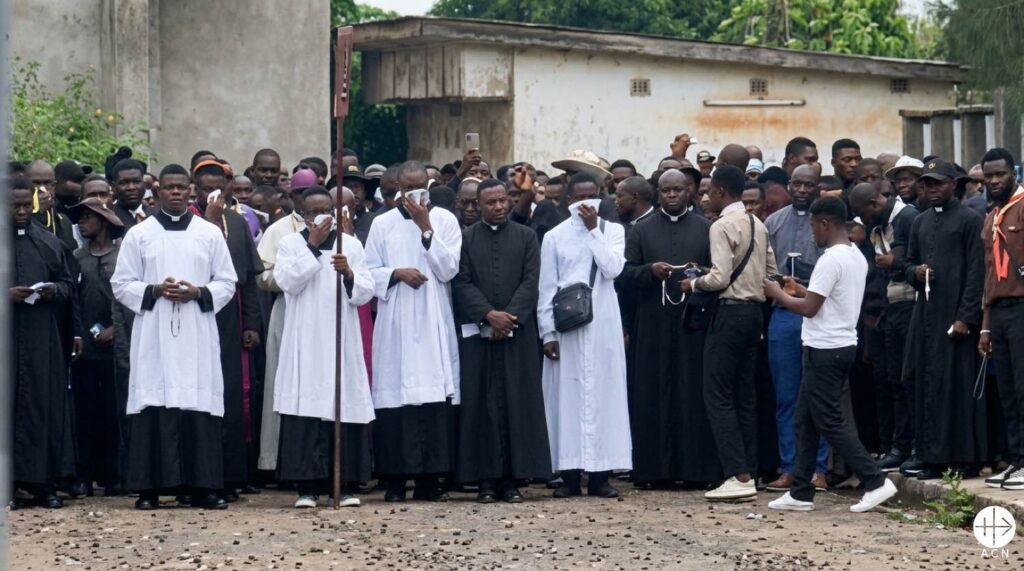
The confrontation in Kinshasa was followed by an even more disturbing episode in Lubumbashi on November 23. Police fired tear gas at Catholics taking part in a peaceful procession organized to demand enforcement of a court judgment concerning the land of Saint Paul Interdiocesan Major Seminary.
The property dispute had already been decided in favor of the Church, with a judge ordering the demolition of structures erected on the seminary grounds. Nevertheless, local authorities prevented the procession from proceeding. According to reports from the Church, security forces also blocked access to the cathedral, several demonstrators were detained, diocesan personnel were arrested and police surrounded the residence of Archbishop Fulgence Muteba.
Images circulated by Aid to the Church in Need showed clergy and laypeople praying the Rosary as tear gas was deployed against them.
Lubumbashi Mayor Joyce Tunda Kazadi defended the restrictions, citing a suspension of public demonstrations in Haut-Katanga province, initially introduced on August 31 and renewed on November 9. She also claimed that security services had warned of possible infiltration by opposition supporters. Local authorities further maintained that the Church had been informed on November 20 that the procession could not take place.
The National Episcopal Conference of Congo strongly condemned both incidents. Its secretary-general, Father Donatien Nshole, warned on November 24 that treating the Church as a political enemy was a serious mistake. He described the use of tear gas against people praying and the restrictions imposed on Church leaders as forms of authoritarianism incompatible with the democratic aspirations of the country.
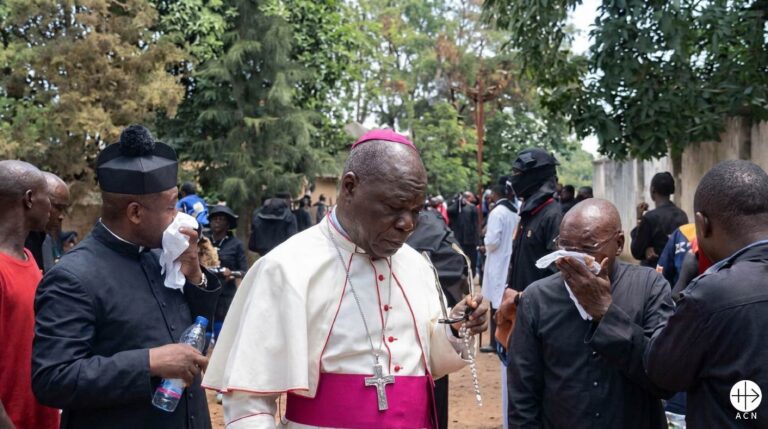
Ambongo, meanwhile, insisted that the Church’s commitment to peace should not be mistaken for submission to injustice. He called on Catholics in Lubumbashi to remain united and defend their rights through peaceful means, declaring that neither intimidation nor violence could silence the Gospel.
The underlying political tensions are not new. The cardinal has repeatedly criticized the government’s handling of the country’s problems, particularly the continuing humanitarian catastrophe in the east, where armed conflict has claimed lives and forced communities, including thousands of young people, from their homes. He has also challenged political leaders over their priorities, previously condemning debates about constitutional changes while young Congolese face unemployment, insecurity and a lack of opportunities.
His criticism has made him an increasingly influential and, at times, controversial figure in national affairs. The government has previously threatened him with prosecution for sedition following his public interventions.
Thank you for reading our content. If you would like to receive ZENIT’s daily e-mail news, you can subscribe for free through this link.

Publicaciones relacionadas:
 Nicaragua will be left without nuns and religious: government expels them all and sets date for their departure
 After one month of Nicolás Maduro’s imprisonment, the Venezuelan government restores Cardinal Porras’ passport
 Colombian President Harasses Catholic Priest Live on Air for Speaking Out Against Communism
 The Christian Presence in the Holy Land Is Being Squeezed from Every Direction