

(ZENIT News / Jerusalem, 07.22.2026).- In the Holy Land, the crisis facing Christians is no longer confined to one battlefield, one political dispute or one act of violence. It is unfolding simultaneously through insecurity, displacement, economic pressure, legal uncertainty and the slow erosion of the conditions that allow communities to remain rooted in the land where Christianity was born.
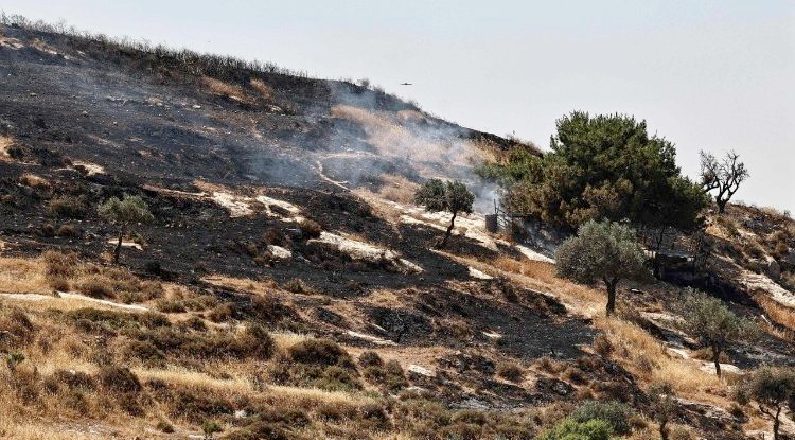
In Taybeh, the last entirely Christian Palestinian town in the West Bank, the immediate fear is physical. The parish priest, Father Bashar Fawadleh, says Israeli settlers have been building what witnesses describe as a new outpost on Jabal Al-Massis, an area belonging to the town. The site lies in Area B under the Oslo arrangements, where civil administration is entrusted to the Palestinian Authority and security responsibilities are shared with Israeli authorities.
For Taybeh’s residents, the concern is not merely the appearance of new structures on a distant hillside. The priest warns that an outpost only a short distance from homes could make daily life more dangerous, intimidate children and discourage farmers from reaching their land and poultry farms. He describes the fear of being gradually surrounded and pressured to leave.
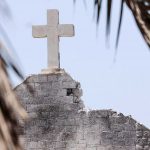
The warning comes roughly a year after fires set near the town’s cemetery and the ancient Church of Saint George. Despite the continuing anxiety, the Christian community is trying to preserve ordinary life. A summer camp involving 161 children has brought together young people from the town’s Greek Orthodox, Melkite Catholic and Latin Catholic communities.
That image—children at a summer camp while adults fear that their land may be taken or their community forced into decline—captures the broader struggle of Christianity in the region. The challenge is not simply surviving violence. It is maintaining the ordinary institutions, families and social conditions that make a permanent Christian presence possible.
In Jerusalem, another battle is being fought through taxation. A dispute over the municipal property tax known as Arnona has raised fears among Christian leaders that long-standing exemptions could be challenged, with consequences for churches, schools, hospitals, social centers and charitable institutions. Palestinian Authority President Mahmoud Abbas has appealed to Pope Leo XIV and other international leaders, arguing that historical rights and agreements protecting Church institutions must be preserved.
The issue reaches back more than a century. Church leaders point to the Mitilene Agreements of 1901 and other historical arrangements whose tax provisions were respected under the British Mandate and, according to the Latin Patriarchate’s auxiliary bishop, William Shomali, were not formally abolished after Israel’s independence in 1948.
The dispute has continued for approximately three decades. In 2018, Christian leaders closed the doors of the Church of the Holy Sepulchre in protest against a similar dispute. The present controversy could involve claims amounting to millions of euros if commercial activities were taxed retroactively over the past 30 years.
The Church’s position, however, is not that every activity connected with an ecclesiastical institution should automatically be exempt from all municipal obligations. Bishop Shomali has proposed a distinction between genuinely profit-making activities and institutions whose primary purpose is religious, educational or charitable. Commercial enterprises could contribute to municipal services from which they benefit, while places of worship, cemeteries, parish facilities, schools, hospitals and social institutions would retain traditional exemptions.
That distinction is crucial because the Church’s presence in the Holy Land is not limited to liturgy. Its institutions provide education, health care, social assistance and shelter to people far beyond the Christian community. A tax policy that fails to distinguish between a commercial operation and a charitable institution could therefore affect not only Christians but the wider population served by these institutions.
The pressure is also visible in the lives of clergy and ordinary believers. Father Joseph Hoina, a Cameroonian priest involved in pastoral work with migrants and asylum seekers in Jaffa, describes Christian communities struggling with war, economic collapse, travel restrictions and the loss of employment. In parts of the West Bank and Jerusalem, families have lost jobs, children have been deprived of schooling and some households can barely meet basic needs.
For Christians, the crisis also has a specifically spiritual dimension. Priests may be unable to reach communities to celebrate the Eucharist. In the language of Father Hoina, the loss of access to the Eucharist becomes a form of spiritual hunger.
Yet the Church’s response is not retreat. At the Church of Saint Peter in Jaffa, migrants from the Philippines, India, Eritrea, Ethiopia, China and elsewhere gather for worship and pastoral care. The church becomes, in practice, a transnational family for people who have fled war, poverty or persecution. Meals, songs and traditions shared after liturgies help migrants recover something that displacement often destroys: the sense that they still belong somewhere.
It is a particularly powerful expression of the Church’s mission in a region where political borders, ethnic divisions and military front lines have repeatedly sought to define who belongs. The Christian presence survives not only in ancient stones, but in communities that continue to welcome people others might regard as outsiders.
The political landscape offers little reassurance. In Lebanon, Israeli Prime Minister Benjamin Netanyahu claimed that unidentified Christian villages had asked to be annexed by Israel because Israel protected them from Hezbollah. Lebanese officials and local Christian representatives rejected the claim. According to critics, the Christian communities in southern Lebanon do not want annexation; they want peace, security and the freedom to live in their villages, cultivate their land and avoid being drawn into war.
That distinction should not be overlooked. Christians in the Middle East should not be treated as political instruments in competing narratives. Their right to remain in their ancestral communities is not dependent on becoming the clients of one power or the symbols of another. The principle of religious freedom requires that Christians be able to live safely without being forced to choose between rival political projects.
The situation is even more severe in Gaza, where the Christian community has been reduced to a small and increasingly vulnerable remnant. Cardinal Pierbattista Pizzaballa has described a population living amid destroyed infrastructure and tent camps, with especially severe consequences for women and children. The Latin Patriarchate is seeking to reopen a school in Gaza where children could study, receive food and obtain psychological support.
At the Holy Family parish, Gaza’s only Catholic church, moments of normality have become precious. Christians and Muslims have gathered together to watch football despite blackouts and the collapse of communications. Such scenes may appear insignificant beside the scale of the war, but they reveal something essential: even amid devastation, the desire for ordinary human life survives.
The wider violence continues to exact a terrible price. According to the material reviewed, between October 7, 2023, and July 5, 2026, 1,088 Palestinians were killed in the West Bank, including 242 children and adolescents. In 2025 alone, 54 Palestinian children and adolescents were killed by Israeli forces in the West Bank, according to the Israeli organization B’Tselem. The organization says it is unaware of any indictments for the killing of Palestinians in the West Bank since October 2023.
Those allegations demand accountability and independent investigation. The protection of civilians, especially children, cannot depend on nationality or political allegiance. The same principle applies to the case of Natalie Abudayyeh, a Palestinian woman detained since June 2 and held in Damon prison. According to the Lutheran Church in Jordan and the Holy Land, her family has been denied face-to-face contact with her, while access for her lawyer has been restricted. Church leaders are calling for her release, family access and open and fair legal proceedings.
Meanwhile, Palestinian political institutions are also facing a test. Mahmoud Abbas has called legislative elections for November 28, 2026—the first such elections in more than 20 years, if they take place. The last legislative elections were held in January 2006. Presidential elections, announced for 2027, have yet to receive a definitive date. Democratic renewal cannot resolve the region’s conflicts by itself, but the absence of credible political representation leaves societies even more vulnerable to extremism, authoritarianism and despair.
This is why the Christian crisis in the Holy Land should not be reduced to a question of numbers. The issue is whether communities that have existed for centuries will continue to have the security, legal protection, economic viability and freedom necessary to remain.
Taybeh’s parish priest has expressed the fear that, if his people disappear, the world will lose more than a town. It will lose a living Christian community.
That warning reaches far beyond Taybeh. The survival of Christianity in the Holy Land will not be secured by statements of sympathy alone. It will require concrete protection for civilians, respect for religious freedom, accountability for violence, preservation of historical rights and practical support for families who are being pushed toward emigration by war and insecurity.
The Church’s own witness offers a different response to the logic of abandonment. In Jaffa, it opens its doors to migrants. In Gaza, it tries to rebuild education and human dignity. In Jerusalem, it seeks negotiation rather than an indiscriminate confrontation over taxation. In Taybeh, it insists that a Christian community should be able to remain on its land without fear.
The central question is therefore not simply whether Christianity can survive in the Holy Land. It is whether the international community will accept a future in which the ancient Christian communities of the region remain only as monuments, while the people who gave those places their living meaning are gradually forced to leave.
Thank you for reading our content. If you would like to receive ZENIT’s daily e-mail news, you can subscribe for free through this link.

Publicaciones relacionadas:
 Situation in Israel and Gaza raises fears of migration wave also in Iraq
 Traditional Congregation Accused of “Brain Washing”: Superior Faces Prison
 Preserving Christianity in Iraq 10 years after Daesh invasion
 The Jewish State of Israel Bombs Catholic Church in Gaza: Parish Priest Wounded, Pope Leo XIV Speaks Out
