

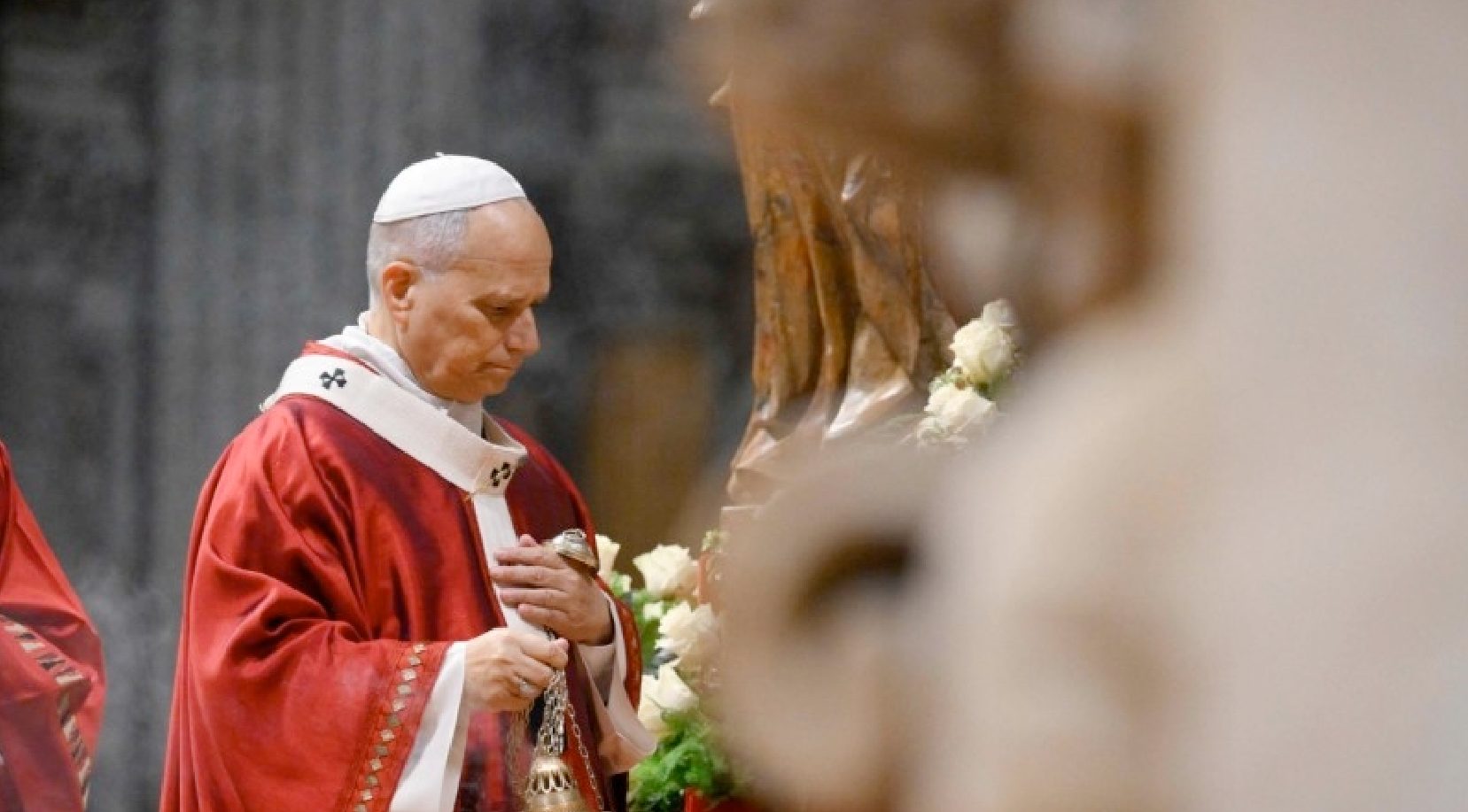
José Enrique Oyarzún, LC
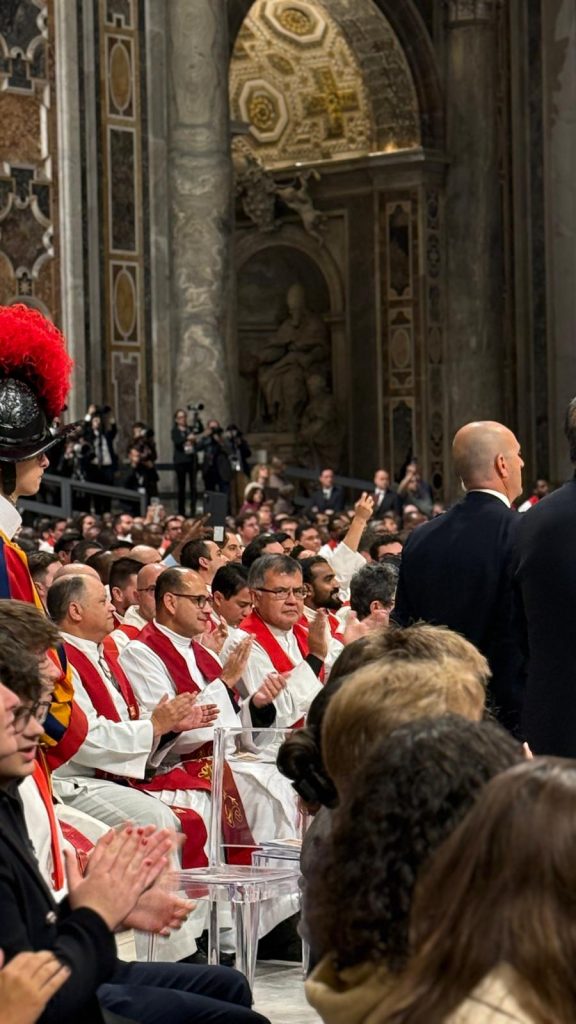
(ZENIT News / Rome, 07.11. 2025).- I had the grace of participating in Holy Mass in St. Peter’s Basilica — with university students from the pontifical institutions –, presided over by Pope Leo XIV. His homily, delivered within the context of the Jubilee Year, offered profound guidance for those of us who inhabit the ecclesial university world. More than an inspirational speech, it was a roadmap for rethinking the identity and mission of our universities in the light of the Gospel.
The Holy Father began with the Gospel image of the bent-over woman (Luke 13:10-17), a symbol of one who has lost the ability to see beyond herself. By straightening her, Jesus restores not only her health, but also her vision: the possibility of opening herself to a broader horizon. This healing, the Pope explained, represents the healing of all intelligence that turns in on itself. And that is precisely one of the great challenges for pontifical universities: to help people raise their gaze, to reconcile reason with faith, intelligence with hope, science with wisdom.
- Cultivating Integrative Perspectives
Leo XIV lucidly warned about a contemporary trend: specialization without synthesis. «Today we are experts in infinitesimal details,» he said, «but incapable of achieving a comprehensive vision.» Pontifical universities are called to offer an antidote to this fragmentation. Their mission is to cultivate an integrative intellect, capable of uniting disciplines, knowledge, and experiences, restoring to knowledge its sense of wholeness and service. This requires fostering collaboration among faculties, promoting interdisciplinarity, and always maintaining the theological horizon that gives unity to academic life.
- Educating As An Act of Lifting Up
Another key point of the homily was the definition of education as an act of lifting up the other. «To educate,» the Pope recalled, «is to raise the other to their feet, as Jesus did with that bent-over woman.»
This vision transcends the traditional understanding of teaching and research. Teaching is not merely transmitting knowledge, but helping each person to stand tall in life, to discover their intellectual and spiritual dignity. In the context of pontifical universities, this means cultivating a teaching approach that unites academic excellence with human accompaniment and openness to faith, in order to form free, responsible individuals with their own judgment.
- Study As Intellectual Charity
Leo XIV also spoke of a «learning through the alphabet of study, of knowledge, of the sincere search for what is true and for what is worth living.» This expression encapsulates the deepest vocation of an ecclesial university: to love the truth and to teach from love.
Study and research are not ends in themselves, but concrete expressions of intellectual charity. They imply recognizing that seeking the truth is serving humanity, liberating it from ignorance and existential emptiness. This perspective exacts evaluating academic activity not only by its quantitative output, but also by its capacity to generate meaning, hope, and encounter.
- A Community of Filiation and Hope
The homily concluded by reminding the congregation that knowledge finds its fullness in filiation: «We are not creatures thrown into the world by chance, but we belong to Someone who loves us and who has a plan of love for our lives.» This awareness radically changes university life when it translates into a communal style.
Pontifical universities are called to be communities that learn and teach from a place of filiation, where the search for truth is lived as a shared journey, in dialogue among professors, students, and staff, united by the certainty of belonging to God and serving the Church.
Conclusion
Leo XIV’s homily was, ultimately, an invitation to redeem the intellect: to heal the ways of thinking that are self-absorbed and to recover the upright posture of one who looks at the world with hope.
Hearing these words in St. Peter’s was a reminder that study, when lived as a vocation and service, becomes a form of Easter: a journey that frees us from the slavery of the ego and opens us to the freedom of the children of God.
Pontifical universities are called to live precisely this: to correct minds, broaden hearts, and cultivate perspectives capable of contemplating truth with love.
The author of this article is the Rector of the Pontifical Athenaeum Regina Apostolorum (APRA)

