

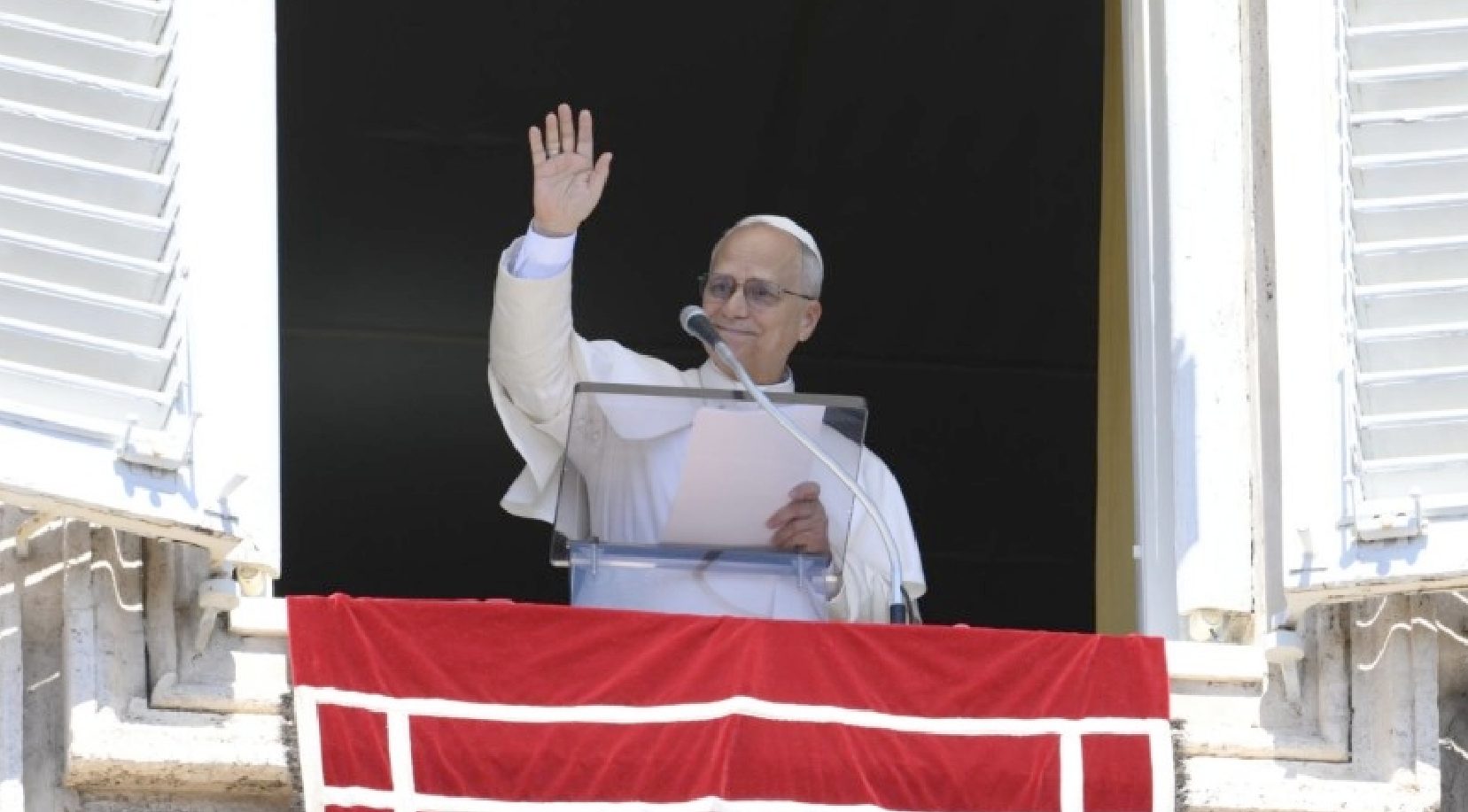
(ZENIT News / Vatican City, 08.31.2025).- At noon on Sunday, August 31, the last day of the month, Pope Leo XIV prayed the Angelus from the window of the Apostolic Palace overlooking St. Peter’s Square. As customary, before beginning the Marian prayer of the Angelus, the Pope delivered his Sunday address reflecting on the Gospel of the day. We now offer it translated into English:
***
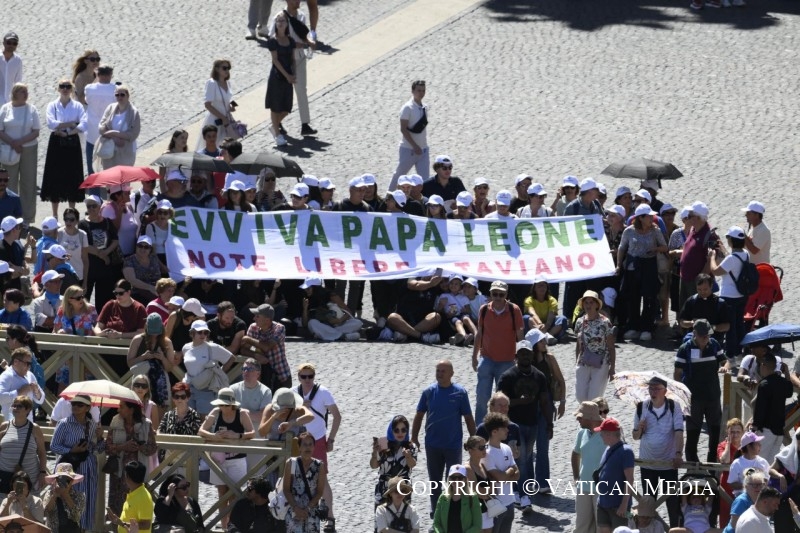
Dear brothers and sisters, happy Sunday!
In every culture, sitting at table together, especially on days of rest and celebration, is a sign of peace and communion. In this Sunday’s Gospel (Lk 14:1.7-14), Jesus is invited to a meal by one of the leaders of the Pharisees. Inviting others to one’s table is a sign of openness of heart, while accepting such an invitation entails having the humility to be open to others and their world. These gestures that bring people together help foster a culture of encounter.
Encounter is not always easy. The Evangelist notes that the other guests “observed” Jesus closely; indeed, he was watched with some suspicion by the stricter interpreters of tradition. Yet the encounter takes place because Jesus makes himself genuinely present; as a good guest, he acts with respect and sincerity, avoiding merely polite formalities that preclude authentic encounter.
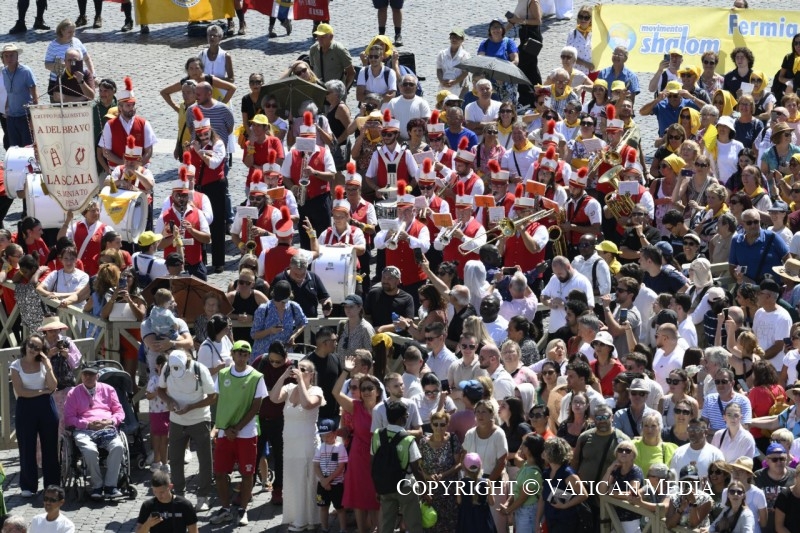
Consequently, as was his wont, he employs a parable to describe what he sees happening and invites those watching him to reflect on it. For he saw people rushing to sit in the places of honour, something that also happens today, not in families but on occasions when people consider it important to “be noticed”, whereby a moment for being together ends up as a competition.
Sisters and brothers, when we sit together at the table of the Eucharist on the Lord’s Day, we too should be willing to let Jesus speak. He becomes our guest and he can tell us how he sees us. It is very important that we see ourselves through his eyes: to see how frequently we reduce life to a competition, how anxious we become to obtain some sort of recognition, and how pointlessly we compare ourselves to others. Stopping to reflect, letting ourselves be taken aback by a word that challenges our hearts’ priorities, is to experience freedom, the freedom to which Jesus calls us.
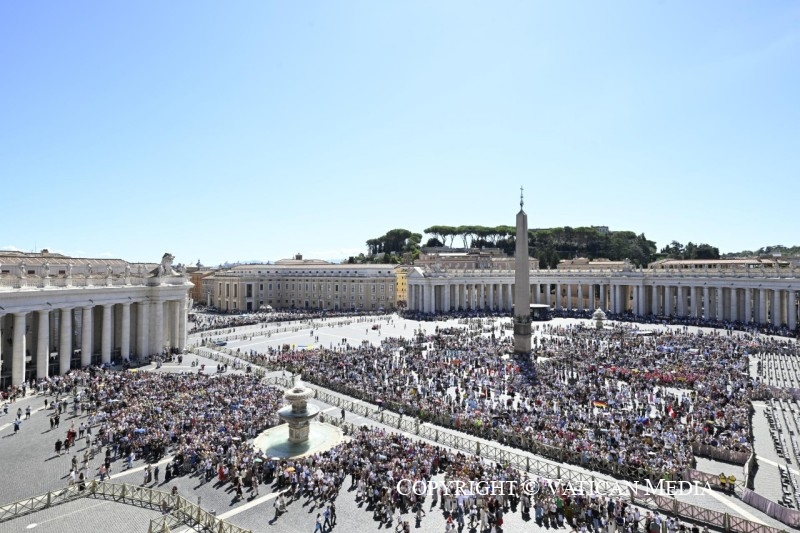
In the Gospel, Jesus speaks of “humility” in describing perfect freedom (cf. Lk 14:11). Humility is really freedom from ourselves. It is born when the Kingdom of God and its righteousness become our real concern and we allow ourselves to lift up our eyes and look ahead: not down at our feet, but at what lies ahead! Those who exalt themselves generally think that nothing is more interesting than themselves; yet deep down, they are quite insecure. Whereas those who know that they are precious in God’s eyes, who know they are God’s children, have greater things to be worried about; they possess a sublime dignity all their own. Once we learn to take the last places, rather than striving for the first, that dignity will appear, and we will come to the fore simply and effortlessly.
Dear friends, today let us pray that the Church will always be a school of humility for everyone, a home where all are welcome, a place where rivalries are set aside and where Jesus still speaks to us and teaches us to imitate his own humility and freedom. Mary is truly the Mother of that home; it is to her that we now pray.
Thank you for reading our content. If you would like to receive ZENIT’s daily e-mail news, you can subscribe for free through this link.

