

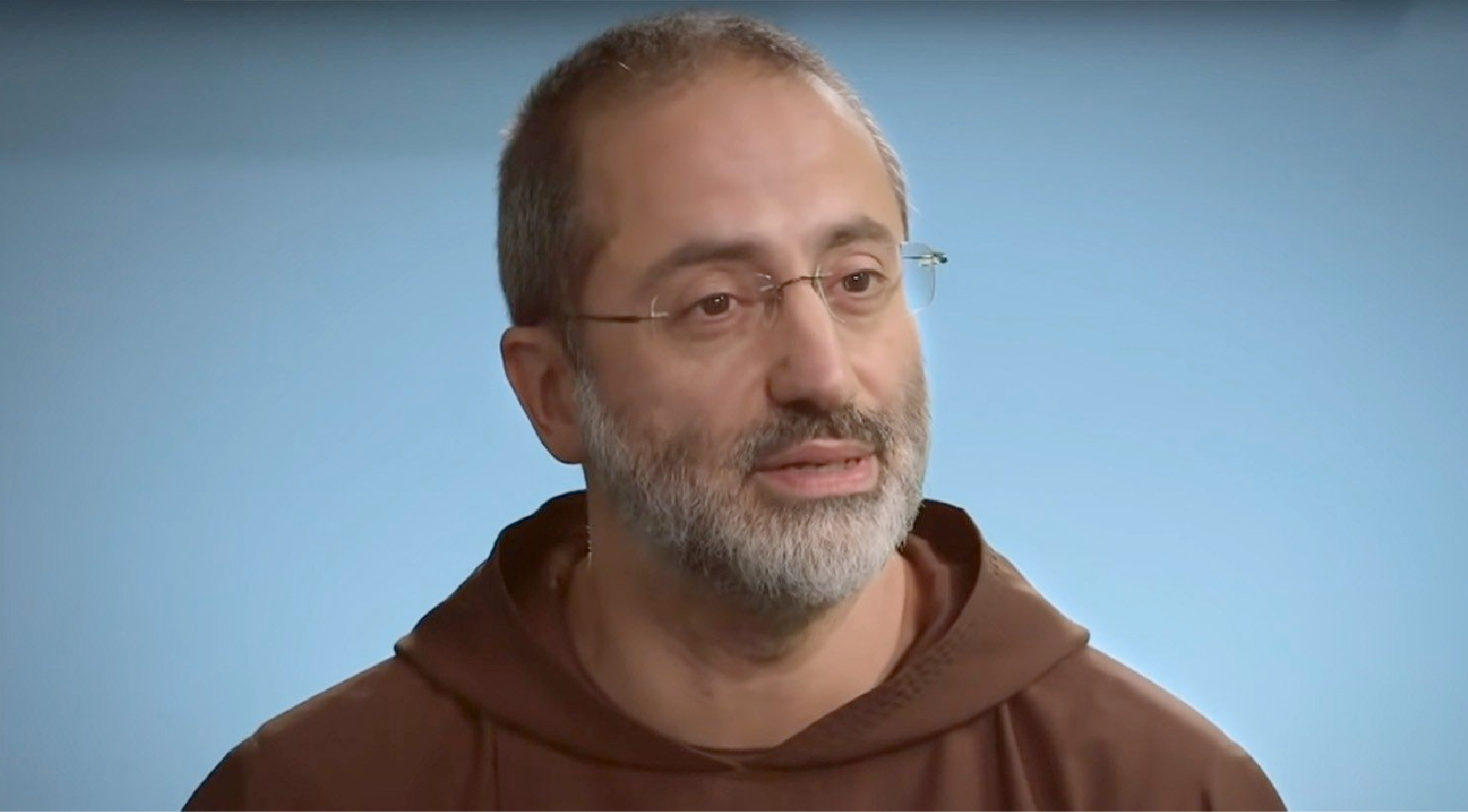
(ZENIT News / Rome, 03.01.2026) – As Preacher of the Papal Household, the Italian priest Roberto Pasolini is responsible for preaching in the Vatican during Lent and Advent. He will open his series of meditations on Friday, March 6, in Paul VI Hall and will preach on the following four Fridays.
At 54, the Capuchin friar is a theologian, biblical scholar, lecturer, and author of numerous books. He is also known for his profound and accessible catechesis, as well as his online podcasts, in which he explores the Scriptures with clarity. ZENIT interviewed him about this unique mission in service to the Pope and the Roman Curia.
* * *
ZENIT: What is your specific mission to the Pope and the Roman Curia?
Father Roberto Pasolini: My service consists of offering meditations every Friday to the Holy Father, the Cardinals residing in Rome, and the members of the Roman Curia at the culminating moments of the Liturgical Year, especially during Advent and Lent.
These are reflections rooted in the Word of God and the Tradition of the Church, intended to nourish prayer and offer paths to conversion. Furthermore, on Good Friday, the Preacher of the Papal Household traditionally delivers the homily in St. Peter’s Basilica during the Liturgy of the Passion of the Lord. In addition to my institutional service, I am frequently invited to preach in Italian, European, and even non-European dioceses, leading retreats, spiritual exercises, and formation sessions. I also write books, primarily for the general public, and have taught biblical exegesis at the university level for several years.
ZENIT: What was your feeling when you were called to this position in November 2024?
Fr. Pasolini: I think I experienced the full range of emotions one feels when God places a high step on our path. First, a great fear in the face of the responsibility and importance of the task. Then, gradually, a more serene joy, linked to the beauty of the proposal.
To communicate the Word of God has always been my greatest passion. That’s why I accepted this appointment with confidence, knowing that God would undoubtedly do His part, supplying what is lacking in my humanity and supporting my weakness.
ZENIT: Will your sermons be open to the public, as they were last year, and what topics will you address?
Fr. Pasolini: This year, since the Pope has proclaimed the Franciscan Jubilee Year to commemorate the 800th anniversary of the death of the Poverello of Assisi, the meditations will revolve around the figure of St. Francis as a model of evangelical conversion and Christian life.
So far, the selection of topics has been entrusted to me, with a period of discussion and review with the Holy Father before final approval.
I cannot say for sure whether the sermons will be open to the public. Each Pope brings his own style to this ministry, and we will see what direction Pope Leo XIV will give it.
Previously, the meditations were held privately. After the COVID period, they began to take place in Paul VI Hall, and this format has been maintained, probably also because it was understood that they could be beneficial for many faithful around the world, who feel in communion with the Pope and with the whole Church.
However, I believe that the possibility of listening to the meditations, including through the media and social networks, will continue to be guaranteed. This requires me to find a language that takes into account the immediate recipients — the Pope and the Cardinals — without neglecting a wider audience of lay faithful.
ZENIT: Do we [priests] preach differently when we address those with great responsibilities in the Church?
Fr. Pasolini: Preaching conversion to the Pope and the Roman Curia has the same meaning as preaching it to any baptized person. It’s a demanding ministry, because one cannot invite others to conversion without first experiencing it.
Every audience, every listener, has the right to words adapted to their sensitivity and responsibility. That is why I always try to look at those before me and offer them words that are useful and understandable.
Of course, speaking before the Pope carries an added responsibility; it offers spiritual encouragement to the Vicar of Christ and universal Pastor of the Church. Therefore, the choice of topics, language, and preaching style must take this particular circumstance into account, with respect and moderation. In the Gospel, Jesus reminds us that to whom much has been entrusted, much will be required. My mission, therefore, is to remind those who lead the Church, with gentleness but firmness, of the gift and responsibility entrusted to them. However, knowing that everyone in the Body of Christ has a responsibility, I do not approach this ministry with any particular concern; it is simply a matter of helping each person examine their degree of commitment to the Gospel, according to their own vocation.
ZENIT: What fruits would you like to see emerge for the Church through this ministry?
Fr. Pasolini: First of all, I hope that this ministry will transform my heart and make me ever more available to the service of the Church. A preacher must be the first listener and the first recipient of the Gospel he proclaims! Furthermore, I hope that my words, in communion with those who have gone before me and with those who will follow me, may offer a humble but sincere contribution to the reflection on and deepening of the mystery of Christ.
The mission of the Church is precisely this: to delve deeper into the mystery of Christ, to allow ourselves to be ever more enlightened by His truth, so as to find the courage and freedom to proclaim to all the Passover of Christ, who died and rose again for our salvation.
Article published originally by ZENIT’s French edition.

Publicaciones relacionadas:
 Massacre Against Catholics in Nigeria: What Is Known About the Attackers? How Many Dead Are There? A Local Priest of Owo Talks About It
 Does the Pope Have Cancer? He himself Answers, Adding that Ukraine Is His Next Objective
 From Putin to Gaza, abuse and Fiducia Supplicans. Interview with the Pope
 This Is What Leo XIV Has Said About Female Diaconate, the LGBT Community in the Church, and Sexual Abuse
