

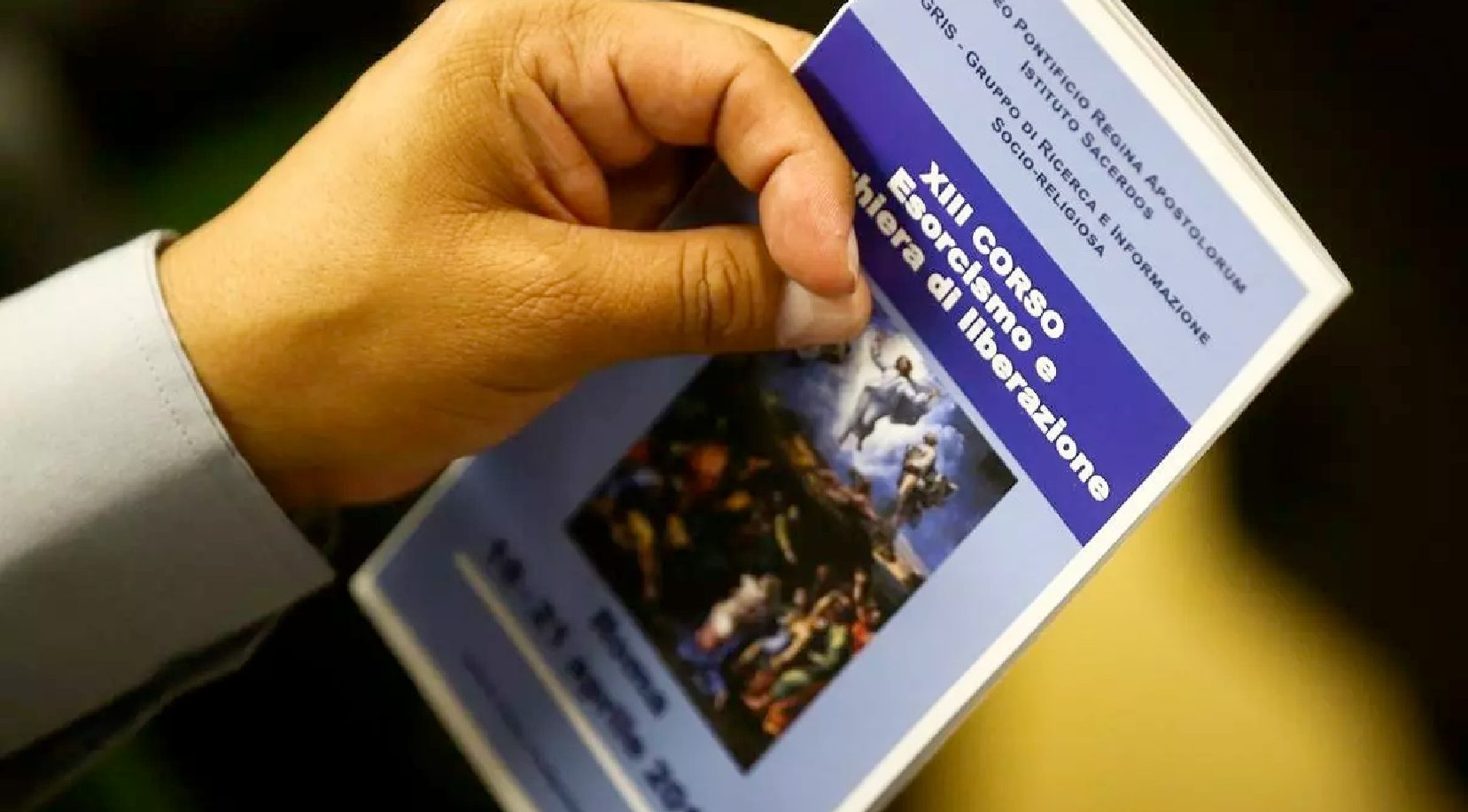
(ZENIT News / Rome, 03.07.2026).- At a time when artificial intelligence, digital culture, and alternative spiritual movements are reshaping the landscape of belief, a specialized academic program in Rome is preparing to examine how the Catholic Church understands and responds to the phenomenon of evil.
From May 11 to 15, scholars, clergy, medical experts and law-enforcement officials from around the world will gather for the twentieth edition of the Course on the Ministry of Exorcism and the Prayer of Liberation, an initiative organized by the Sacerdos Institute of the Pontifical Athenaeum Regina Apostolorum together with the Gruppo di Ricerca e Informazione Socio-religiosa (GRIS) of Bologna.
What began more than two decades ago as a pastoral training program primarily for priests has gradually evolved into an international interdisciplinary forum addressing one of the most delicate and often misunderstood aspects of Catholic pastoral life. According to the organizers, the objective remains clear: to examine the ministry of exorcism and the practice of prayers for liberation through a rigorous, systematic and scientific approach that draws from theology, anthropology, medicine, psychology, law and the social sciences.
The program presented this year reflects the complexity of the topic. Sessions will explore subjects ranging from the role of angels and demons in Sacred Scripture to the theological and liturgical meaning of exorcism as a sacramental practice in the Church. Other lectures will examine the canonical authority of bishops in authorizing exorcists, the pastoral care required when accompanying people who believe they are suffering spiritual oppression, and the delicate distinction between psychological disorders and phenomena interpreted as spiritual.
Yet the twentieth edition also turns its attention to new cultural dynamics that have emerged in recent years. Among the themes announced by the organizers are the possible use of artificial intelligence in magical or occult practices, the links that some criminological studies identify between satanic ritual abuse and networks of pedophilia or child pornography, and the relationship between certain alternative therapies—often associated with the broad spiritual currents of the New Age—and occult or esoteric beliefs.
The course therefore aims not only to study traditional Catholic teaching but also to analyze the evolving cultural environments in which spiritual manipulation and occult practices can flourish.
Father Luis Ramirez, director of the Sacerdos Institute and coordinator of the program, explained that the initiative was first launched in 2004 in response to a practical pastoral need. Many priests were increasingly confronted with people seeking help after experiences involving magic, occult rituals or forms of alternative spirituality that had left them confused or spiritually distressed.
Over the past twenty years, he said, the course has retained its ecclesial identity while expanding significantly in scope. What was once primarily a formation program for clergy has become a place of dialogue between theology, pastoral experience and the human sciences.
One of the most important developments during that period has been the growing attention given to prayers of liberation. While the solemn rite of exorcism is rare and can only be performed by a priest explicitly authorized by a bishop, the prayer of liberation is often the first pastoral step when someone seeks spiritual help. It can accompany a person on a broader path of conversion, interior healing and return to the sacramental life of the Church.
The twentieth edition will devote particular attention to the role of lay collaborators involved in this ministry. In many dioceses around the world, qualified laypeople assist priests in listening to those seeking help and in accompanying them spiritually. Organizers say this reality requires proper formation, careful discernment and close collaboration with ecclesiastical authorities.
The program also highlights the importance of interdisciplinary cooperation. Psychologists are often part of the teams that assist exorcists, helping to distinguish between mental health conditions and situations that may require spiritual guidance. Medical doctors, criminologists and legal experts also contribute perspectives that help prevent misuse of religious practices or manipulative behavior in vulnerable situations.
Another distinctive element of the course is its openness to dialogue with other religious traditions. This year’s program includes an interreligious and ecumenical roundtable bringing together Jewish, Muslim, Pentecostal Christian and Orthodox perspectives on spiritual discernment and practices of liberation. The aim, organizers emphasize, is not syncretism but a serious academic exchange recognizing that the perception of spiritual evil and the search for deliverance appear in many cultures and religions.
The theological foundation of the course remains firmly rooted in the teaching of the Catholic Church. The Catechism of the Catholic Church describes exorcism as a sacramental—a prayer through which the Church asks, in the name of Christ, for protection against the influence of evil and liberation from its power. The rite therefore belongs not to private spiritual experimentation but to the official pastoral life of the Church.
In today’s cultural climate, Father Ramirez believes the Church’s role in offering discernment may be even more necessary than when the course began twenty years ago. While knowledge of Christian faith often declines in secularized societies, interest in esoteric practices, alternative spiritualities and unconventional healing methods appears to be growing.
Many people searching for relief from suffering, fear or personal crises turn to spiritual experiences that promise solutions but can sometimes deepen confusion. In this context, the Church seeks to provide pastoral guidance that avoids both sensationalism and simplistic interpretations.
The course is open primarily to priests and members of religious orders, but also to qualified lay participants such as doctors, psychologists, legal professionals, pastoral workers and researchers. This interdisciplinary dimension, organizers say, has helped transform the initiative into a global reference point for those studying the intersection of faith, psychology and cultural phenomena linked to the perception of evil.
Two decades after its launch, the organizers see the anniversary edition less as a celebration than as a moment of gratitude and renewed commitment. Rapid cultural change continues to reshape the ways in which spiritual manipulation and occult practices can spread—especially through digital platforms.
For those involved in the program, however, the central focus remains unchanged. The study of evil, they emphasize, is never the ultimate goal. The deeper purpose of the course is to deepen understanding of the Christian message of salvation and the conviction that, in Catholic belief, the victory of Christ over evil remains the foundation of every ministry of liberation within the Church.
Thank you for reading our content. If you would like to receive ZENIT’s daily e-mail news, you can subscribe for free through this link.

Publicaciones relacionadas:
 Syro-Malankara Orthodox celebrate Mass in one of Rome’s four main basilicas
 203 Exorcists and 100 Auxiliary Exorcists from All the Continents Met in Rome
 Controversial unknown book by Cardinal Fernandez, Prefect for the Doctrine of the Faith is made public
 The Order of Malta, the 113 countries with which it has relations and the value of religious diplomacy
