

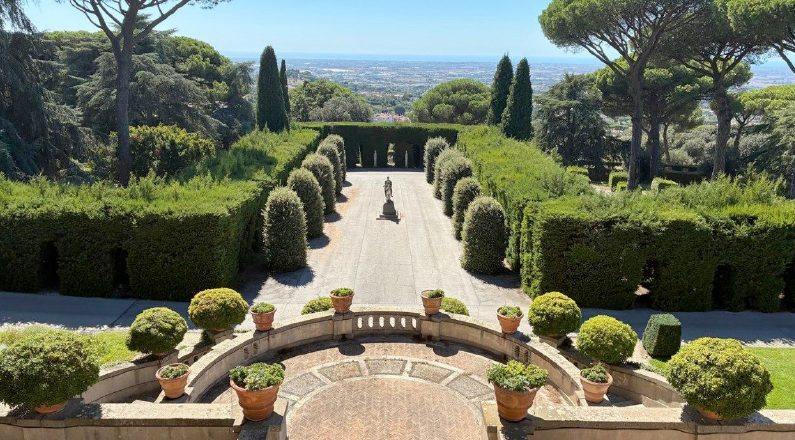
(ZENIT News / Vatican City, 09.06.2025).- On a late summer morning in Castel Gandolfo, the papal residence long associated with rest and retreat has been transformed into something altogether new: a classroom for the planet. Pope Leo XIV on September 5 inaugurated the Borgo Laudato Si’ Center for Advanced Formation, a sprawling 55-hectare project designed to wed ecological education, social inclusion, and spiritual renewal within the lush gardens of the papal villas.
The venture, years in the making, is striking in its ambition. At its heart stands a greenhouse modeled after Bernini’s colonnade in St. Peter’s Square, flanked by a cluster of classrooms and a communal dining space. Here, children, students, families, and even corporate leaders will learn the practical skills of regenerative agriculture, organic cultivation, and sustainable living. Yet the lessons extend far beyond farming. The center is intended as a living catechesis, a tangible embodiment of the Church’s call to embrace what Francis, in his 2015 encyclical, termed “integral ecology.”
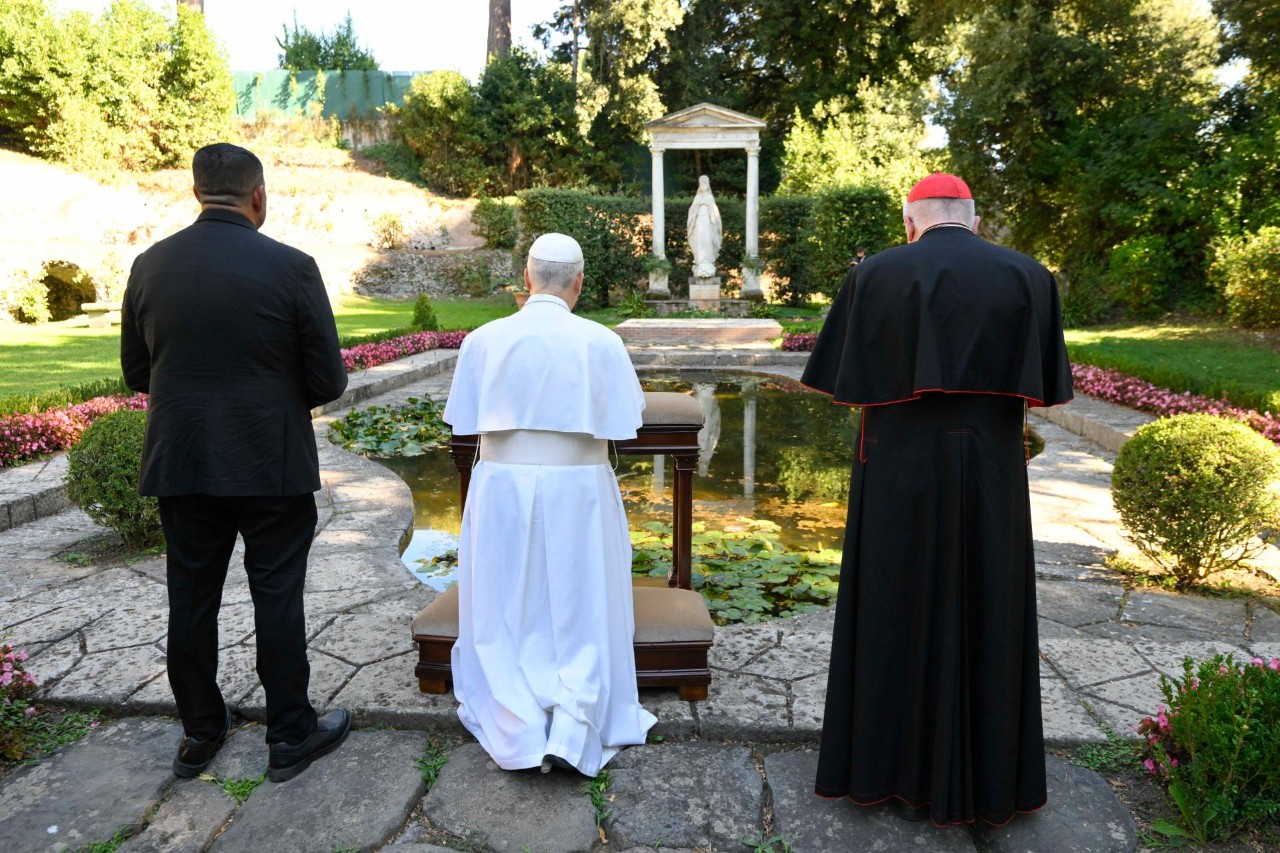
“This is not simply about plants or soil,” explained Cardinal Fabio Baggio, one of the project’s architects and now its most visible champion. “It is about the Creator, creation, and humanity, and how these realities are meant to flourish together.”
The initiative’s roots stretch back to the pandemic, when Francis asked then-Father Baggio to imagine a way of teaching Laudato Si’ through action rather than words. Work began in 2022, with Francis giving his formal blessing before his death in April 2024. For a time the effort risked stalling, but Pope Leo XIV embraced it as his own. According to Baggio, the new Pope even urged that renovations continue during his stays in Castel Gandolfo. His visible support—most recently underscored by Friday’s inaugural ceremony and a concert by Andrea Bocelli—has secured the project’s future.
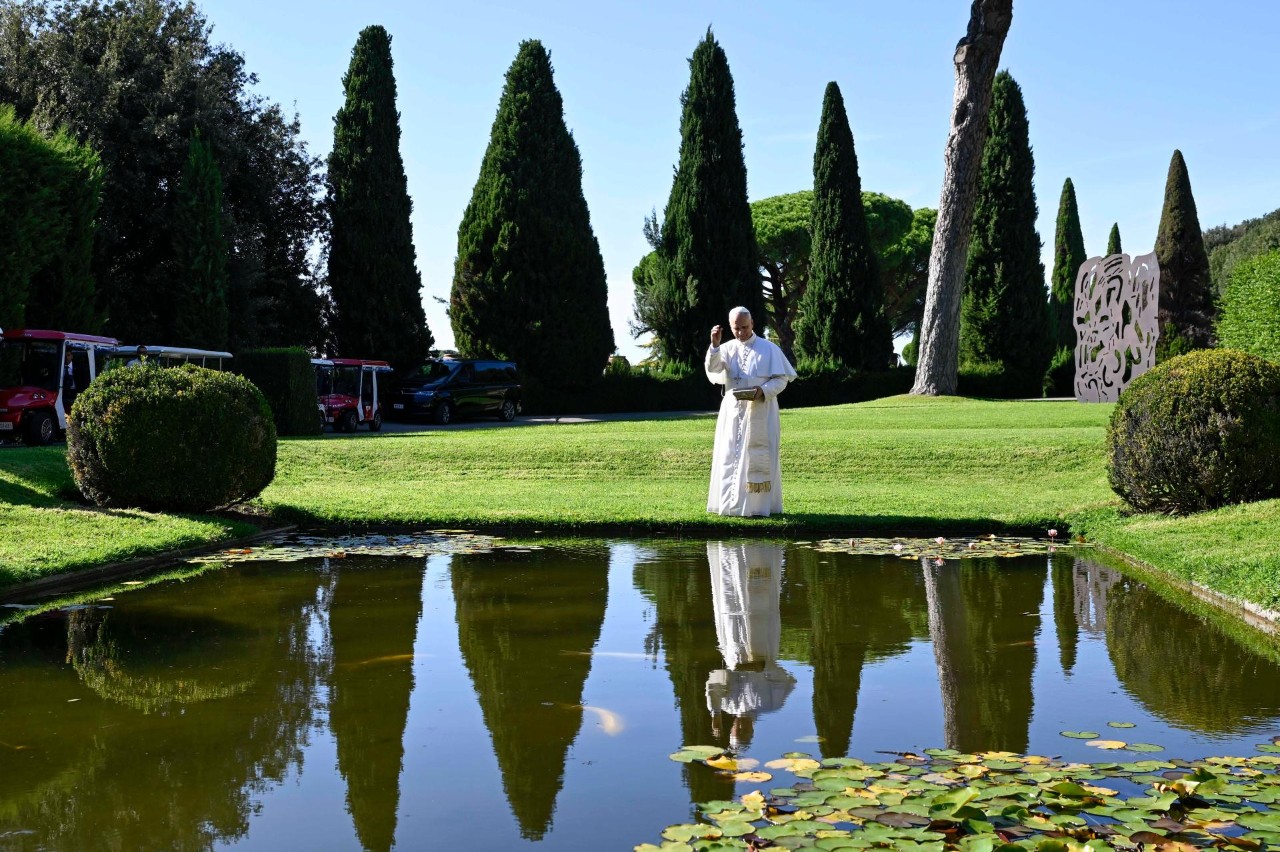
The goals are both lofty and concrete. Borgo Laudato Si’ is envisioned as a hub for global dialogue on sustainability, but also as a place of second chances. Training programs are being tailored for people on the margins: survivors of domestic violence, refugees, ex-prisoners, recovering addicts, and women facing difficult pregnancies. In the words of Father Manuel Dorantes, the center’s director, “if the smallest state in the world can do this, imagine what larger nations could achieve.”
Already, pilot courses have shown promise. Several participants at risk of exclusion have found employment after completing short-term apprenticeships in gardening or organic viticulture. A residential facility for visitors, scheduled to open in January, will allow longer immersion programs.

The environmental vision is equally ambitious. Solar panels are set to produce more energy than the campus consumes. Artificial intelligence regulates irrigation, reportedly cutting water usage by up to 95 percent. Rainwater harvesting, waste-to-fertilizer conversion, and a strict ban on plastics reinforce a commitment to circular economy principles. Sister Alessandra Smerilli, a member of the center’s governing board, calls it “a model of economy that wastes nothing and benefits society without depleting its resources.”
Perhaps most symbolically, the project will soon yield fruit—literally. Within two years the first bottles of “Laudato Si’” wine, developed in partnership with the University of Udine, are expected. Olive oil, cheeses, honey, herbal teas, and dairy products are already being produced on-site, with profits reinvested into the center and into programs supporting vulnerable communities. As Father Dorantes put it, “what once sustained the Popes will now sustain the people.”

The initiative is not without limits. For now, workshops are confined to single-day sessions and space is scarce. Yet the project’s leaders insist this is only the beginning. They hope Borgo Laudato Si’ will become a reference point worldwide, drawing scholars, activists, and ordinary families alike to learn how environmental stewardship and human dignity can grow side by side.
For Pope Leo XIV, whose brief pontificate has already been marked by attention to social and ecological concerns, the inauguration marks an early signature gesture. In Castel Gandolfo, where Popes once withdrew from the world, his vision is the opposite: a place that looks outward, teaching with the language of creation and the labor of human hands.
Thank you for reading our content. If you would like to receive ZENIT’s daily e-mail news, you can subscribe for free through this link.

Publicaciones relacionadas:
 «Vatican Bank» publishes annual report. Moneyval says it is one of the best. There are profits
 The Vatican and Peace in Ukraine: Pope Francis Sends Cardinal Zuppi to Washington
The Vatican Bank Enters the Era of Faith-Based Benchmarks
The Vatican and Peace in Ukraine: Pope Francis Sends Cardinal Zuppi to Washington
The Vatican Bank Enters the Era of Faith-Based Benchmarks
 A Barracks for the 21st Century: How the Vatican Plans to Rebuild the Home of the Swiss Guard
