

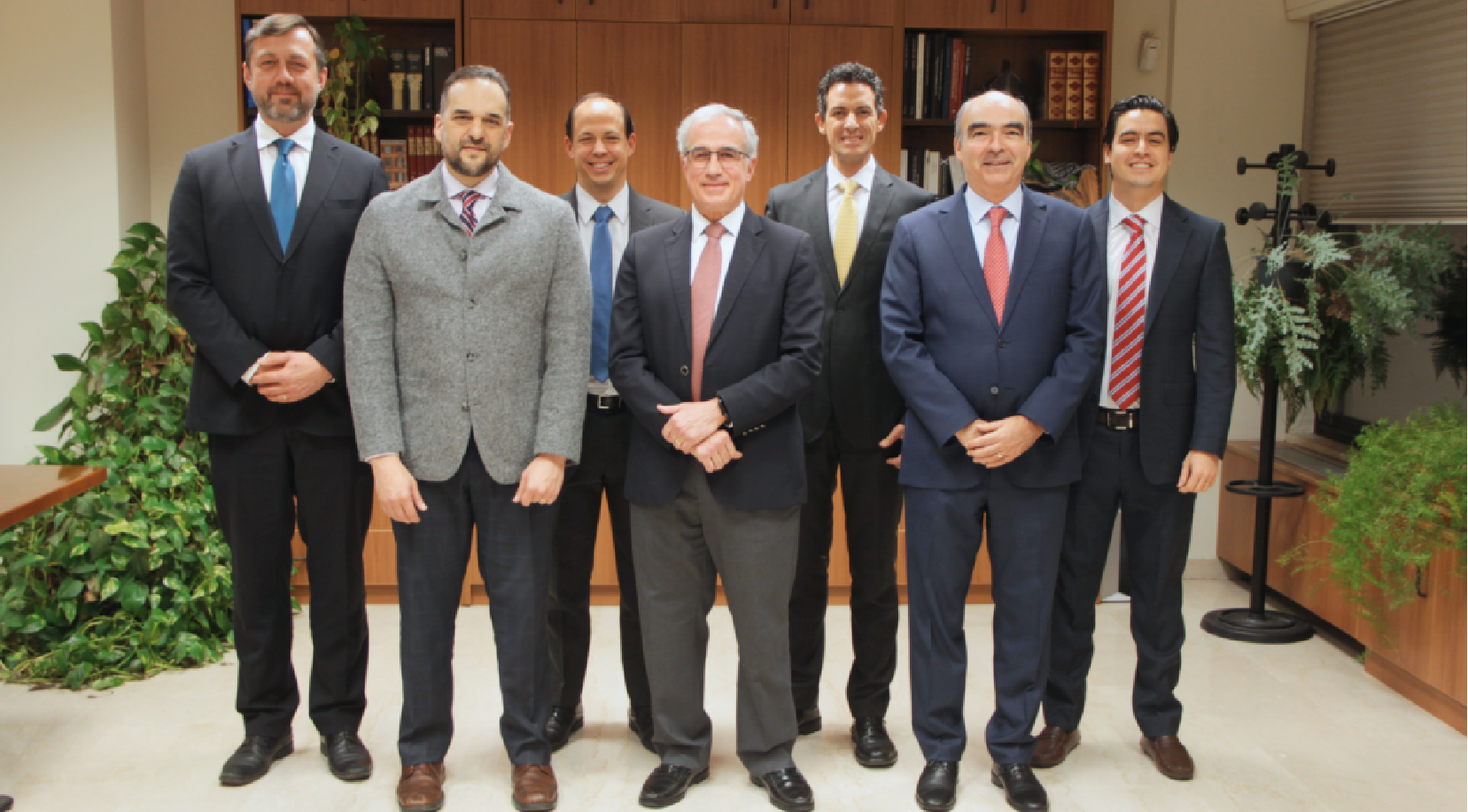
(ZENIT News / Rome, 02.05.2026).- Gathered in Rome at a decisive moment for their institutional life, the Consecrated Lay Members of Regnum Christi have elected a new General Government that will guide the Society of Apostolic Life over the next six years. The election took place on Friday, February 6, during the General Assembly, held at the headquarters of the Direction of Consecrated Laity in the Italian capital.
Beyond the procedural dimension, the Assembly was described by participants as a moment marked by discernment, ecclesial communion, and availability to service—key concepts in a reality that has been reshaping its governance and identity in the wider context of the Regnum Christi Federation.
At the center of the new leadership stands Félix Gómez Rueda, confirmed as Director General. Born in Spain in 1966 and consecrated in 1989, Gómez brings to the role a profile that combines technical expertise, academic depth, and long experience in institutional governance. Trained as an industrial engineer at Universidad Anáhuac México Norte, he also holds graduate degrees in economics, administration, finance, and philosophy, as well as doctoral studies in education. His career has been closely linked to organizational leadership: nearly two decades as territorial administrator in Mexico, and service as a general councilor before assuming the directorship in 2020. He is also a member of the General Governing College of the Regnum Christi Federation and of the Anáhuac Universities Network Council, underscoring the strategic importance of education within apostolic vision.
Supporting him is a council whose members reflect both geographical diversity and a wide range of apostolic competencies.
As first general councilor, José Mateos Brito represents a generation shaped by long-term service in formation and educational governance. Born in Mexico in 1970 and consecrated in 1995, he has worked extensively in youth ministry, institutional management, and theological formation, including initiatives inspired by Saint John Paul II’s Theology of the Body. His current responsibilities in Chile—as vice rector for integral formation at Universidad Finis Terrae, coordinator of vocational promotion, and delegate for safe environments—place him at the intersection of pastoral care and institutional accountability, two priorities increasingly central in contemporary Church governance.
The second general councilor, Guillermo Campillo, belongs to a younger generation. Born in 1984 in Hermosillo, Mexico, and consecrated in 2004, his profile is strongly marked by vocational accompaniment and spiritual direction. With academic formation spanning industrial engineering, religious sciences, and pedagogical training at the Gregorian University, Campillo has dedicated years to the ECYD youth organization and vocational promotion. His recent appointment as director of the candidacy program, effective August 2025, situates him at the heart of initial formation for future consecrated members.
Antonio Maza, elected third general councilor, contributes extensive experience in financial administration and university governance. A native of Mexico City, consecrated since 1995, he has served in Regnum Christi administrations across Europe and North America and in pastoral initiatives in Mexico. His long-standing role at Divine Mercy University, where he currently serves as vice president for finance and administration, highlights the increasing professionalization of ecclesial institutions operating in complex international contexts.
The fourth general councilor, Emilio Martínez, embodies the historical and intellectual memory of Regnum Christi. Born in Vitoria, Spain, in 1968, and consecrated in 1986, he holds doctorates in both civil and ecclesiastical history. His work as director of the General Historical Archive of the Legion and Regnum Christi, professor at the Pontifical Athenaeum Regina Apostolorum, and contributor to the revision of statutes has placed him at the center of key moments of institutional reflection and reform. His presence in the council signals continuity with the movement’s recent efforts toward transparency and historical clarification.
Completing the council is Radek Biernacki, fifth general councilor, originally from Krakow, Poland. Consecrated in 1998, Biernacki combines economic expertise with philosophical and humanistic formation, holding a doctorate in economics from the Autonomous University of Madrid. His academic career in Chile, particularly at Universidad Finis Terrae, and his engagement in youth and university formation illustrate the movement’s sustained emphasis on intellectual apostolates in secular academic environments.
Financial stewardship for the coming term has been entrusted to Abraham Monroy, elected General Econome. Born in 1986 in San Luis Potosí, Mexico, and consecrated since 2004, Monroy has built his mission around economic management and governance, serving in territorial and national roles across Mexico and the United States. His experience as director of finances for Regnum Christi works in Mexico positions him to oversee resources in a period where accountability and sustainability are essential for ecclesial credibility.
In its first public orientation, the new General Government emphasized continuity with the movement’s core mission: safeguarding and promoting the specific vocation of consecrated lay members, strengthening communion within the broader Regnum Christi spiritual family, fostering integral human and spiritual formation, and sustaining apostolic dynamism in diverse cultural contexts.
The newly elected leaders also formally expressed gratitude to the outgoing government—Cristian Nazer, Fernando Rincón, Bernardo Pérez, and Mario Olivieri—acknowledging their service and the fruits achieved during their mandate.
Taken together, the composition of the new government reflects a deliberate balance between experience and renewal, academic rigor and pastoral sensitivity, financial competence and spiritual vision. For a Society of Apostolic Life operating across continents and cultures, the next six years will test its ability to translate internal communion into effective mission—precisely the task now entrusted to its new leadership in Rome.
Thank you for reading our content. If you would like to receive ZENIT’s daily e-mail news, you can subscribe for free through this link.

Publicaciones relacionadas:
 Secretary of the Congregation for the Doctrine of the Faith Calls for Review of Celibacy
 Women’s «Conclave» «Parallel» to that of Cardinals Also Takes Place in Rome
 Nine Questions and Answers Regarding the Process of Adapting Opus Dei’s Statutes
 Case of mismanagement of abuse allegations could halt canonization of Jesuit Pedro Arrupe
