

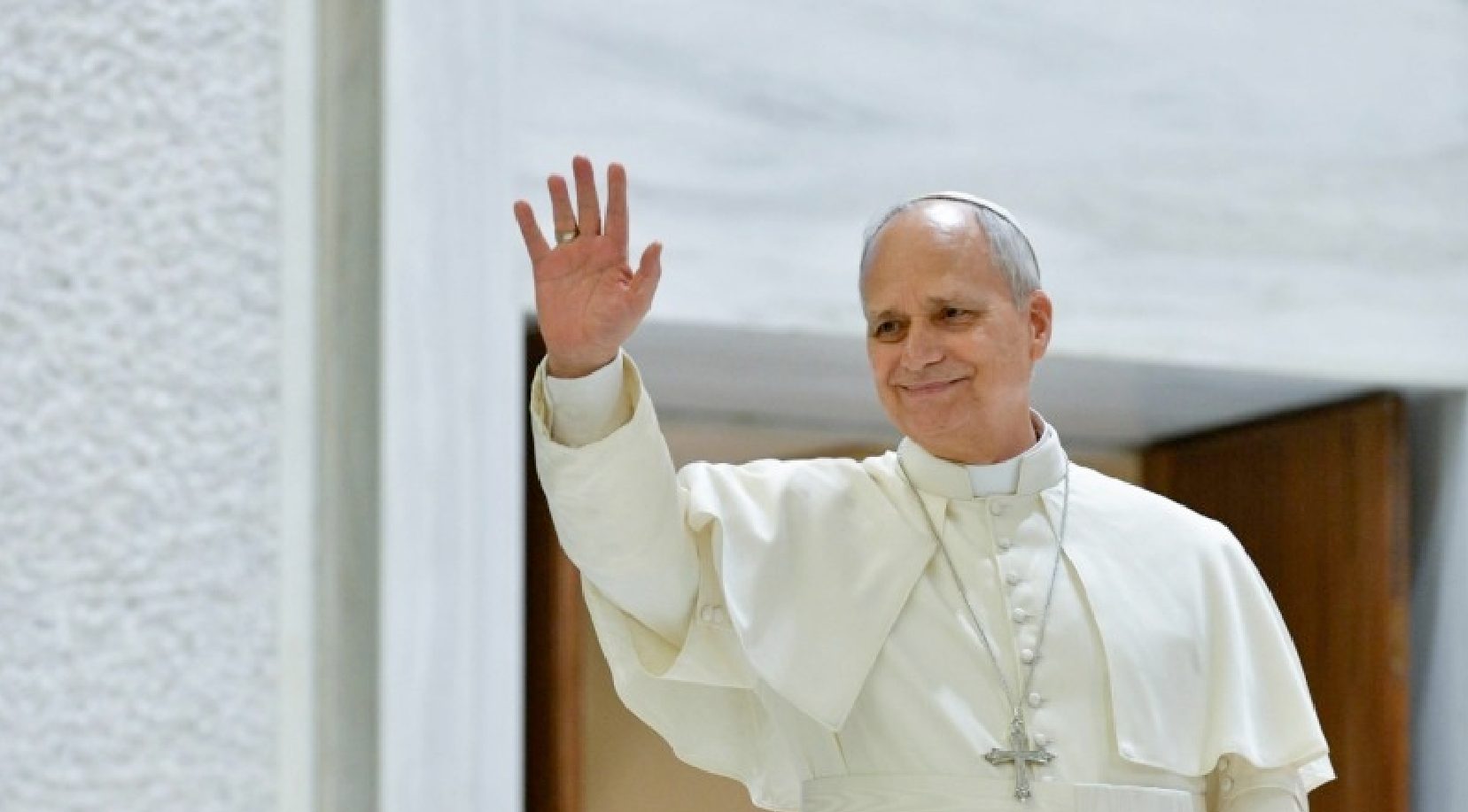
(ZENIT News / Rome, 02.25.2026).- After a first year largely anchored in Rome, Pope Leo XIV is preparing to place travel back at the center of his pontificate. On Wednesday, February 25, the Holy See Press Office unveiled an extensive program of apostolic journeys for 2026 that will take the Pope across Africa and Europe, tracing spiritual memory, geopolitical frontiers and some of the most pressing pastoral challenges of the Catholic Church today.
The schedule outlines three distinct journeys: a ten-day pilgrimage across four African nations, a one-day visit to Monaco, and a six-day trip to Spain that will culminate in the Canary Islands. Together, they form a carefully calibrated map of priorities that blends history, diplomacy, evangelization and social concern.
Africa as the backbone of the year
The most demanding leg will run from April 13 to 23, when Pope Leo XIV will undertake a ten-day journey through Algeria, Cameroon, Angola and Equatorial Guinea. By length and complexity, it recalls the historic African tour of Saint John Paul II in 1985, who visited seven countries in eleven days.
The journey opens in Algeria, with stops in Algiers and Annaba, deliberately placing Saint Augustine at the heart of the itinerary. Augustine, born in Tagaste in 354 and later bishop of Hippo, is not only one of Christianity’s most influential thinkers but also a cultural figure rooted in North African soil. For Leo XIV, the first Augustinian pope of the modern era, the visit is both personal and programmatic. It highlights dialogue with Islam in a country where Christians are a small minority—estimated between 20,000 and 200,000 within a population of 46 million, around 99 percent of whom are Sunni Muslim—while reaffirming Christianity’s ancient presence in the region.
From North Africa, the Pope will move south to Cameroon, visiting Yaoundé, Bamenda and Douala. Cameroon offers a snapshot of religious plurality: Catholics account for roughly 38 percent of its 28 million inhabitants, while Protestants and Muslims each represent about a quarter of the population. Demographically, the country is strikingly young; in 2021, more than 40 percent of Cameroonians were under the age of 15. Bamenda, one of the papal stops, lies in the Anglophone region where a civil conflict has smoldered for nearly a decade, making peace and reconciliation an unavoidable dimension of the visit.
Angola follows, with papal stops planned in Luanda, Muxima and Saurimo. The former Portuguese colony, home to approximately 36.6 million people, is experiencing rapid demographic expansion and is projected to be among the fastest-growing countries globally by the end of the century. Government figures estimate that 44.2 percent of Angolans are Catholic and 34.9 percent Protestant, placing the country at the heart of a vibrant and expanding African Christianity.
The African journey concludes in Equatorial Guinea, the continent’s only Spanish-speaking nation. With fewer than two million inhabitants, about 88 percent of whom are Catholic, it represents a markedly different ecclesial landscape. The Pope will visit Malabo, Mongomo and Bata, underscoring the Church’s deep historical roots in the country, even as political and social challenges persist. Spanish, which Leo XIV speaks fluently, will be a natural pastoral bridge during this final leg.
A historic pause in Monaco
Before Africa, the Pope’s first international trip of 2026 will be a brief but symbolically dense visit to Monaco on March 28, the eve of Palm Sunday. It will mark the first papal visit to the Principality in modern history.
Monaco, the second smallest country in the world after Vatican City, is one of the few nations that still recognizes Catholicism as its state religion. Around 90 percent of its more than 38,000 residents identify as Catholic, and the diocese—created in 1887 by Pope Leo XIII—maintains a distinctive role in public life. The invitation was extended personally by Prince Albert II during a private Vatican audience on January 17.
The visit also highlights the long-standing ties between the Grimaldi dynasty, which has ruled Monaco since 1297, and the Successors of Peter. Diplomatic relations between the two microstates date back to the late nineteenth century, and the journey comes as the Archdiocese of Monaco prepares to mark major anniversaries in 2027, including 140 years since its elevation to an archdiocese.
Spain and the Canaries: faith, culture and migration
From June 6 to 12, Pope Leo XIV will travel to Spain, ending more than a decade of papal absence since Benedict XVI’s visit for World Youth Day in Madrid in 2011. The journey begins in the Spanish capital before moving to Barcelona, where the Pope will inaugurate the newly completed central tower of the Sagrada Familia. With its completion, the basilica becomes the tallest church in the world, fulfilling the vision of its architect, Antoni Gaudí, who died in 1926. The visit coincides with the centenary of Gaudí’s death and comes as his cause for canonization advances; he was declared Venerable in 2024.
The Pope will then continue to the Canary Islands, with stops in Tenerife and Gran Canaria. The archipelago has become one of the main migration routes from Africa to Europe. In 2025 alone, more than 1,900 people are estimated to have died attempting the crossing. A papal presence there brings the migration issue—long central to Vatican diplomacy and pastoral advocacy—into sharp focus.
A pontificate regaining momentum
These journeys follow a period in which Leo XIV’s movements were constrained by the Jubilee Year of 2025, which required his sustained presence in Rome. Apart from a trip to Türkiye and Lebanon—largely planned under his predecessor—his first year was marked by limited international travel. The newly announced schedule signals a shift toward what Vatican officials expect to be a “marathon year” on the road.
Notably, the Vatican has already ruled out one destination: despite being the Pope’s country of birth, the United States will not be on his itinerary in 2026.
From Muslim-majority Algeria to rapidly growing African churches, from Europe’s wealthiest microstate to the migrant frontiers of the Atlantic, Leo XIV’s travel plans outline a pontificate intent on presence. The itinerary does not simply cross borders; it stitches together memory, mission and geopolitics, suggesting that for this Pope, travel remains a primary language of pastoral governance in a fragmented world.
Thank you for reading our content. If you would like to receive ZENIT’s daily e-mail news, you can subscribe for free through this link.

Publicaciones relacionadas:
 To find the Savior, one must not gaze upward, but look below: the Pope’s homily at Christmas Eve Mass
 A «Box Office» Pope: Vatican Reveals Number of People That Attended Events with Leo XIV in 2025
 How Jesus Christ transforms man’s relationship with God, according to Pope Leo XIV
 Pope Leo XIV accepts resignation of bishop whom Pope Francis appointed cardinal, but who “did not want” to receive the appointment
