

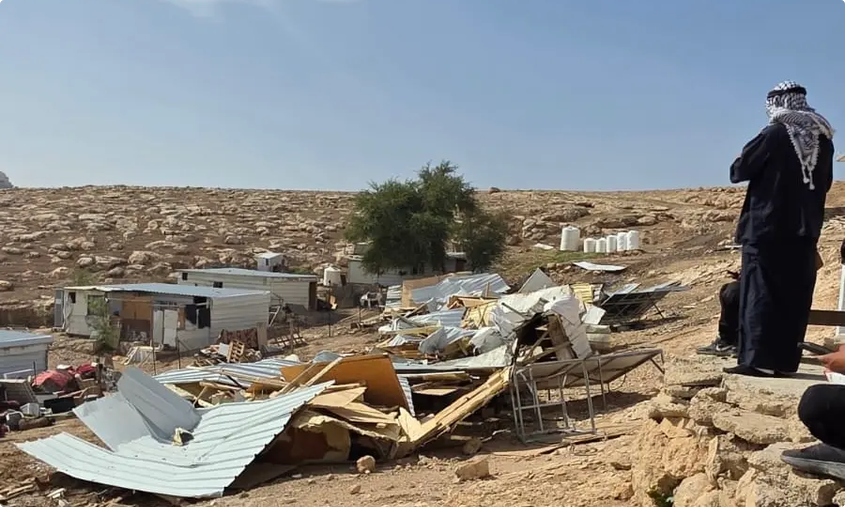
(ZENIT News / Jerusalem, 13.11.2026).- A series of developments across Israel, the Palestinian territories and southern Syria is raising questions about the protection of civilian populations, respect for religious freedom and the prospects for a lasting peace in the Middle East. From the destruction of Palestinian homes and the expansion of Israeli settlements to the killing of a disabled Syrian civilian, the bombardment of a Gaza hospital and the desecration of a Maronite church, the latest events reveal how deeply insecurity has become embedded in the lives of people across the region.
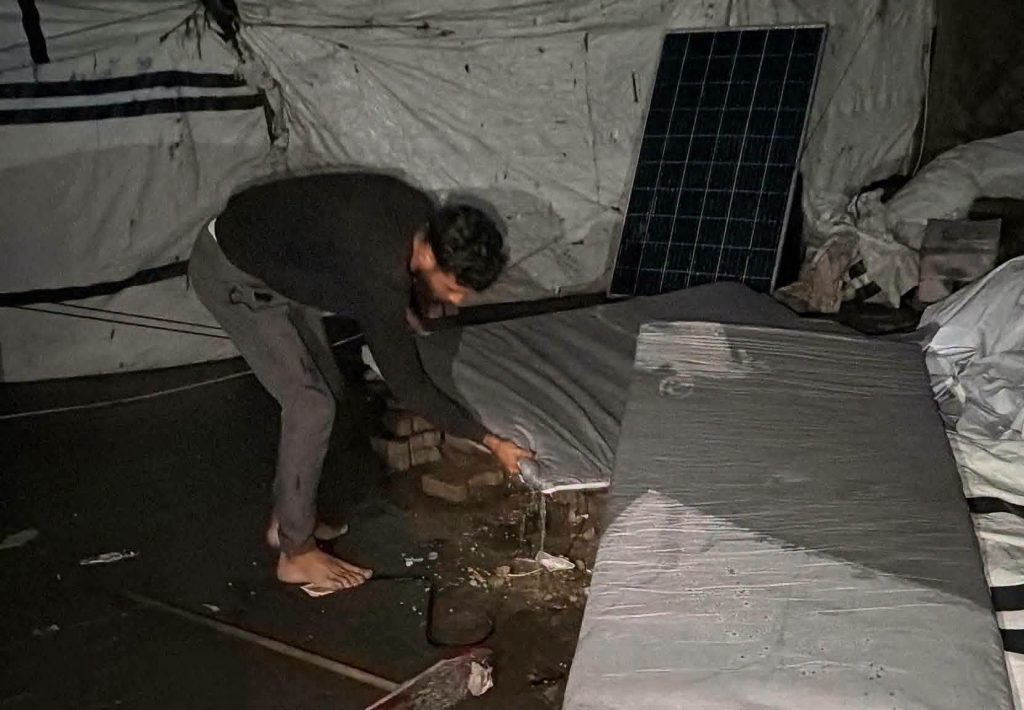
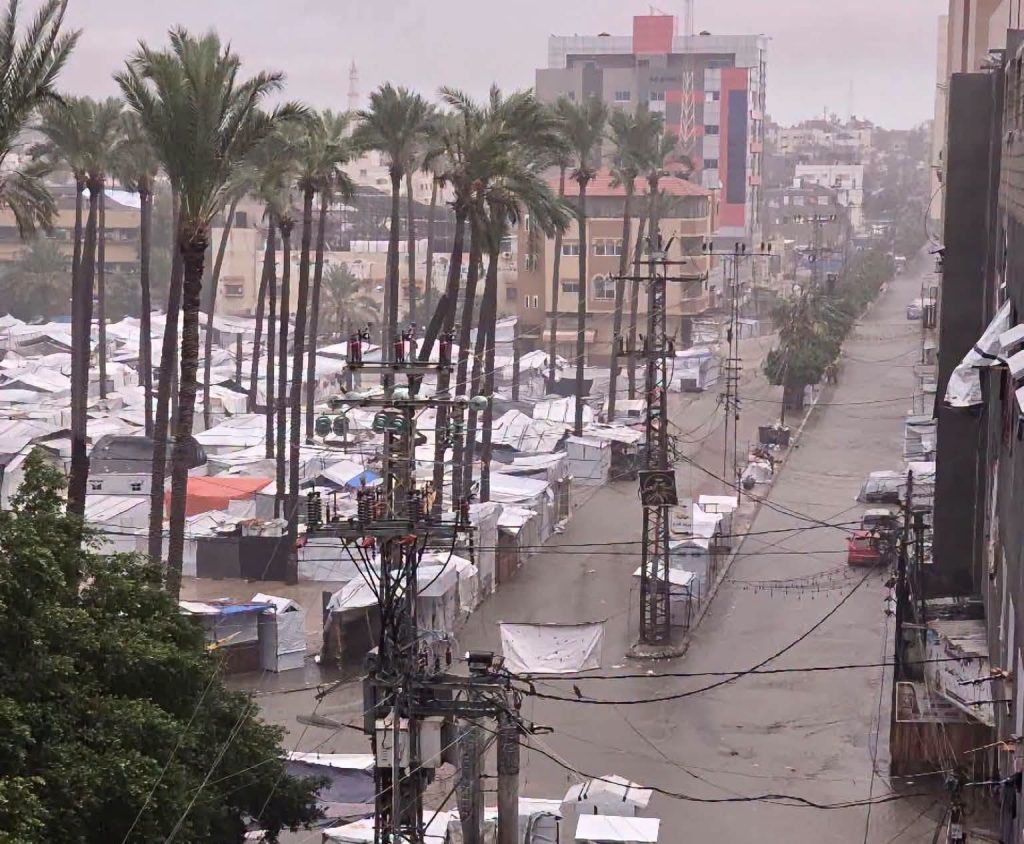
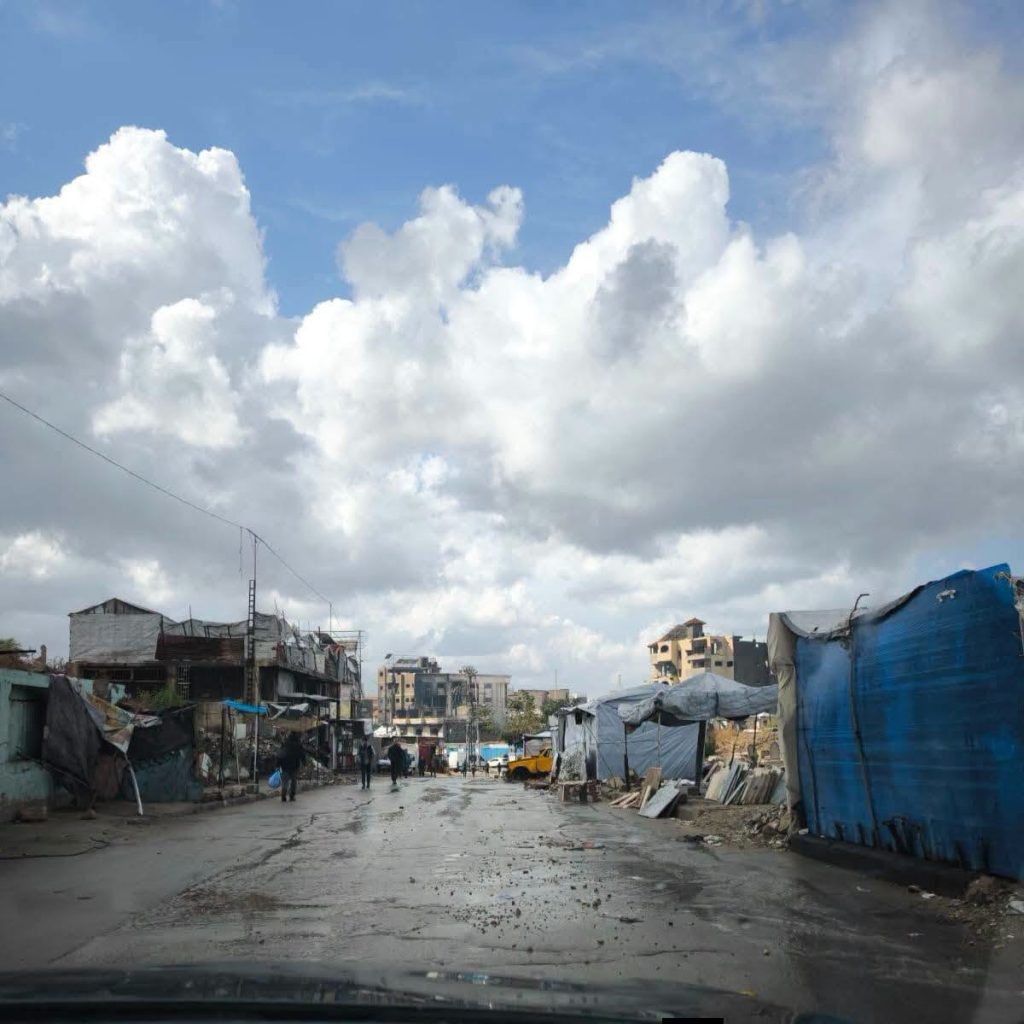
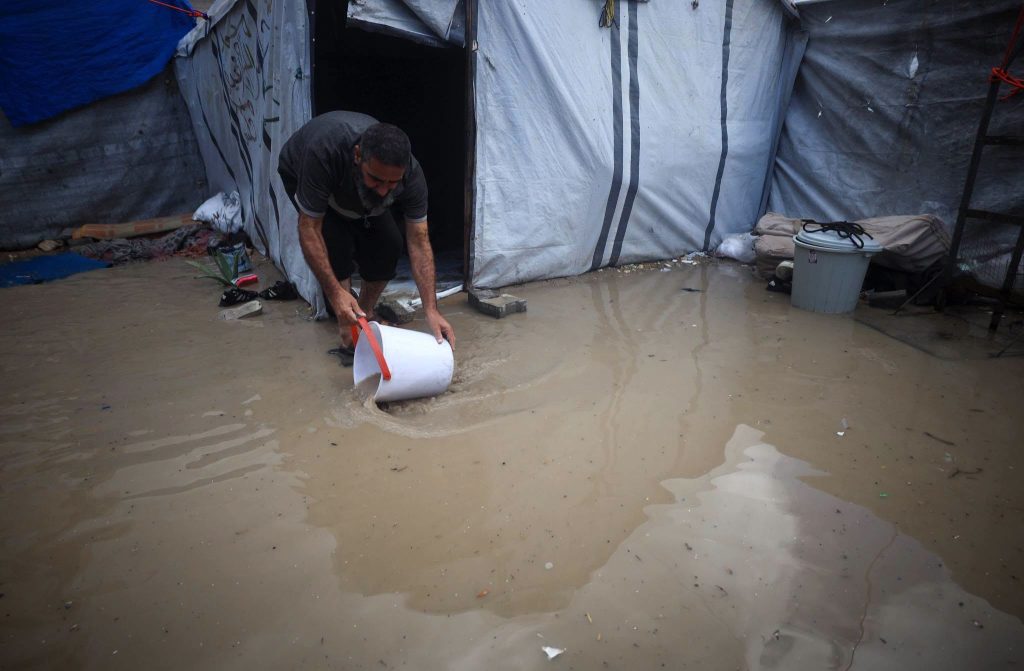
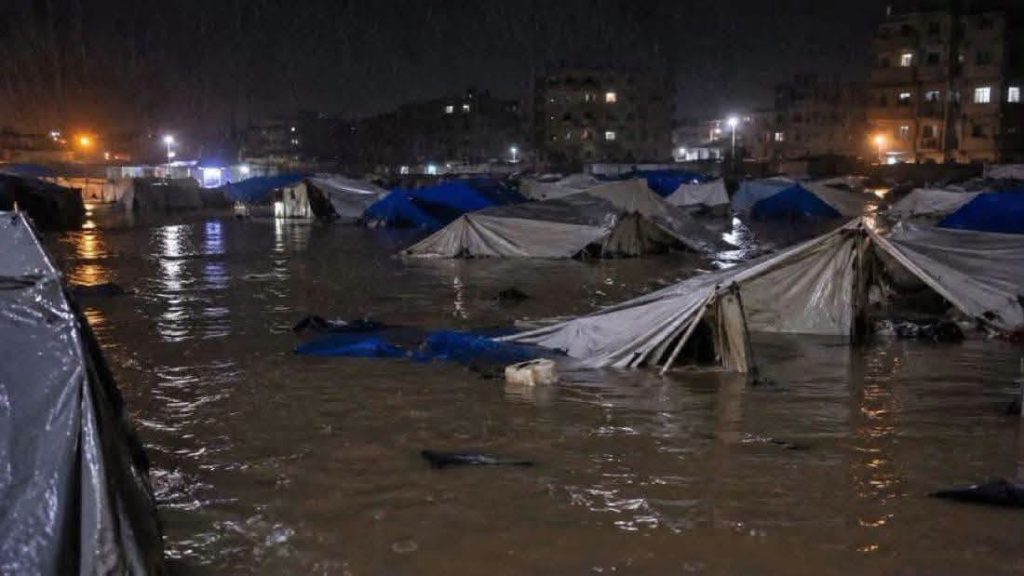
The humanitarian emergency in Gaza has taken another turn with the arrival of heavy winter rains. Thousands of displaced families, already living in makeshift shelters after losing their homes during the war, have seen their tents flooded and their few remaining possessions destroyed. According to Gaza’s Civil Defence authorities, more than 1,500 requests for assistance were received as the rain inundated displacement camps and damaged buildings weakened by months of conflict. The Hamas government press office estimates that approximately 70,000 tents have been affected, with losses attributed to the weather and winter conditions reaching around $3 million.
Father Gabriel Romanelli, parish priest of the Holy Family Church in Gaza, has described the situation as catastrophic. Many families have lost even the basic belongings they had managed to salvage: mattresses, blankets, food supplies and essential household items. In some areas, rainwater has mixed with sewage and waste, worsening an already critical public health situation. Children, elderly people and the sick are particularly exposed to the cold and the deteriorating sanitary conditions.
The small Catholic community around the Holy Family parish continues to assist those most in need, including sick people, elderly residents and children with disabilities cared for by the Missionaries of Charity. Despite the difficulties, the parish is also trying to maintain its educational activities. Romanelli has welcomed the arrival of a new assistant parish priest, Father Luis Montes, restoring the number of priests serving the community to three
Yet the humanitarian response remains far below what is required. UN spokesman Farhan Haq has reported that more than 150,000 tents, already purchased by humanitarian organisations, remain outside Gaza because Israeli authorities have not authorised their entry. The United Nations is calling for all border crossings to be opened and for the admission of shelter materials, fuel, medical supplies and heavy machinery needed for emergency operations. Israel’s Coordinator of Government Activities in the Territories (COGAT) says it has strengthened water and sanitation interventions, including the entry of additional sewage trucks. The dispute over responsibility for the shortages, however, does little to alleviate the immediate suffering of displaced families.
The crisis has been compounded by another Israeli military operation, this time against Nasser Hospital in Khan Yunis. An airstrike during the night of November 11-12 hit the facility’s surgical wing, killing six people and injuring at least 20, according to Gaza health authorities. A doctor was among those killed.
The Israeli military and the Shin Bet security service said the operation targeted a senior Hamas commander and other militants allegedly operating from inside the hospital complex. Israel has accused Hamas of using the facility as a command centre and weapons depot, although it has not presented evidence substantiating those claims. The results of the operation remain under investigation.
The attack is particularly serious because Nasser Hospital is among the few medical facilities still functioning in a territory whose healthcare infrastructure has been devastated by the war. It also raises renewed concerns about the ceasefire that came into force in October 2025. According to Gaza’s health authorities, more than 1,600 people have been killed in Israeli attacks since the agreement began.
Beyond Gaza, the expansion of Israeli settlements in the occupied West Bank is generating further displacement and uncertainty. On November 3, a group of Israeli settlers entered at least eight Palestinian homes in Al-Duyuk al-Tahta, near Jericho, taking possession of the properties while their owners were absent. Palestinian news agency WAFA described the incident as a forcible takeover. Israeli sources, by contrast, reported that the houses had been acquired through a confidential purchasing operation organised by the pro-settlement movement Nachala, with support from the Binyamin Regional Council.
The Israeli military said it had been taken by surprise by the settlers’ uncoordinated arrival and criticised the operation. Troops were subsequently deployed to protect the new residents, with plans to establish a security perimeter around the properties. The houses are located in Area C, which is under full Israeli civil and military control, but close to Area A, administered by the Palestinian Authority.
The incident forms part of a wider pattern of settlement expansion. According to Palestinian official figures, approximately 750,000 Israeli settlers live in 194 settlements and 400 outposts across the occupied West Bank, including East Jerusalem. The Palestinian Wall and Settlement Resistance Commission has also reported the confiscation of 2,536.44 dunams — approximately 253 hectares — of land belonging to three villages northwest of Ramallah: Beitillu, Al-Mazra’a al-Qibliya and Deir Ammar. The Israeli authorities classified the land as state property, a designation that could facilitate further settlement development and restrict Palestinian agricultural and residential expansion.
The consequences are also becoming increasingly visible around Jerusalem. In the Bedouin community of Bir al-Maskub, almost half of the existing structures were demolished on November 3, displacing around 20 residents. The demolitions affected four residential compounds, including homes, kitchens and sanitation facilities. Israeli authorities have also renewed demolition orders covering the remaining buildings, raising fears that the entire community could eventually disappear.
The village lies within the area designated for the controversial E1 settlement project, which envisages the construction of 3,401 housing units east of Jerusalem, linking the settlement of Ma’ale Adumim with the city. Human rights organisations Bimkom, Ir Amim and Peace Now argue that the demolitions represent a significant escalation, particularly because the destroyed structures were more than a kilometre from the nearest homes in Ma’ale Adumim. They maintain that the measures are intended to remove Palestinian residents from territory earmarked for settlement construction. Legal challenges to the E1 plans are reportedly still pending before an Israeli court.
The international concern surrounding E1 stems partly from its potential consequences for the territorial continuity of a future Palestinian state. Its implementation could divide Palestinian areas around Jerusalem and make the establishment of a geographically viable independent state considerably more difficult. The fate of Bedouin communities, whose traditional way of life depends on access to extensive grazing areas, has become an especially sensitive aspect of the dispute.
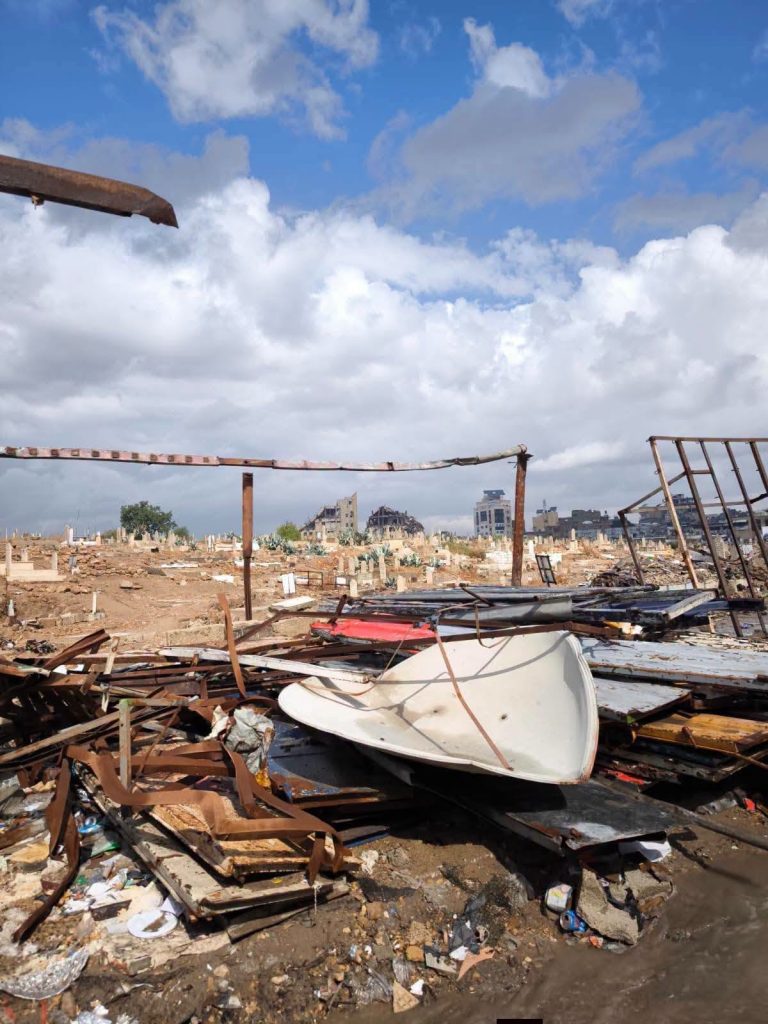
Meanwhile, Israeli military activity has extended beyond the traditional boundaries of the occupied Golan Heights into southern Syria following the fall of Bashar al-Assad on December 8, 2024. The killing of Muath Salama al-Baeer, a deaf man with Down syndrome, during an Israeli operation in the village of Jamla on October 22 has intensified public anger.
According to testimony from a local resident, Israeli soldiers entered the village, searched homes and established a checkpoint. Muath allegedly failed to respond to an order to stop because of his deafness, prompting soldiers to shoot him. Residents said he was unarmed and lived with his sisters following the death of their parents. His killing triggered demonstrations in several Syrian cities and towns, including Damascus, Homs, Hasakah and Quneitra.
His death is not an isolated incident in a region where military incursions, arrests and demolitions have increasingly disrupted civilian life. An Amnesty International investigation published in May documented at least 23 civilian structures damaged or destroyed in three villages and nine Israeli military bases established in Quneitra and Daraa since December 2024. The organisation concluded that the demolitions it examined were not justified by absolute military necessity and called for investigations into possible war crimes.
In September 2026, the UN Independent International Commission of Inquiry on Syria also warned that Israel’s military presence was becoming entrenched through incursions, searches, checkpoints and permanent infrastructure. It identified 49 people, including two minors, who had been arrested in Syria and were believed to have been transferred to Israel, warning that some of the acts under investigation could constitute war crimes.
Syrian transitional president Ahmed al-Sharaa has repeatedly demanded the withdrawal of Israeli forces to their positions . Speaking at the UN General Assembly, he insisted that the Golan remained Syrian territory. However, the gap between diplomatic declarations and the daily experience of people living in the south remains considerable. Families want information about detained relatives, access to their agricultural land and guarantees that they can return safely to their homes.
Religious freedom has also come under scrutiny in northern Israel. On November 1, unidentified individuals broke into the Maronite Church of Saints Peter and Paul in Nahariya, damaging and destroying statues and religious images. The incident, which took place on All Saints’ Day, prompted a strong response from the Maronite Archdiocese of Haifa.
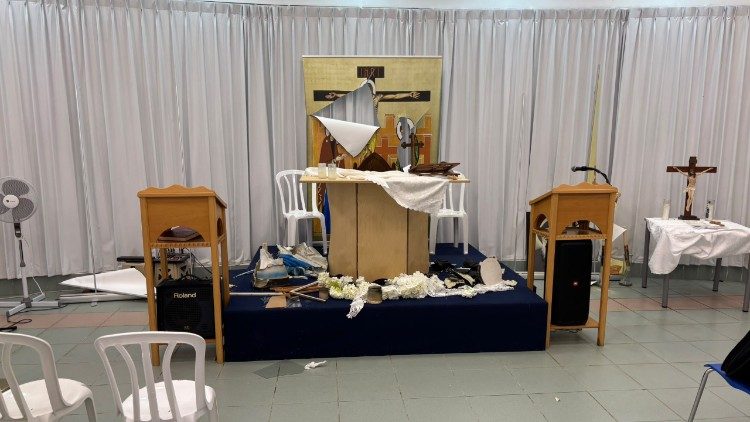
Archbishop Moussa El-Hage described the desecration as an unacceptable attack not merely against Church property but against the sanctity of a place of worship and the right of believers to practise their faith freely and safely. The archdiocese has called on the authorities and security services to investigate the incident, identify those responsible and bring them to justice.
Its statement also made an important distinction between forgiveness and the renunciation of justice. Christians, it said, would continue to pray and celebrate their liturgies in the church, refusing to allow vandalism or intimidation to undermine their religious life. Forgiveness does not require silence in the face of aggression, nor does love mean abandoning one’s rights.
The desecration is a reminder that the protection of Christian communities and their places of worship must remain an essential element of any serious commitment to religious freedom in the Holy Land. Churches, mosques and other religious sites must be safeguarded regardless of the identity of their congregations. Attacks against them cannot be dismissed as minor acts of vandalism or tolerated as an inevitable consequence of regional tensions.
Taken together, these developments expose a region where civilian security, the right to remain on one’s land and the freedom to practise one’s religion are under mounting pressure. Palestinians face displacement and increasingly restricted access to their homes and agricultural property; Syrians in the south live with the consequences of a growing military presence; Gaza’s displaced population confronts winter without adequate shelter; and Christian communities continue to demand protection for their churches and freedom of worship.
Security concerns, including the threat posed by armed groups such as Hamas, cannot be ignored. But neither can they provide an unlimited justification for measures that endanger civilians, destroy homes or undermine fundamental rights. International humanitarian law requires the protection of civilians and the distinction between military objectives and civilian infrastructure, including medical facilities. The allegations surrounding the Nasser Hospital strike, the demolitions in southern Syria and the displacement of Palestinian communities therefore require credible investigation and accountability.
Thank you for reading our content. If you would like to receive ZENIT’s daily e-mail news, you can subscribe for free through this link.

Publicaciones relacionadas:
 Maronite Cardinal of Lebanon speaks out on Israeli aggression against Lebanese civilians
 Israel to Draft 7,000 Ultra-Orthodox Men Amid Ongoing Military Pressure in Gaza
 Israel’s Ban on UNRWA Sparks International Outcry, Raises Alarm for Gaza’s Humanitarian Crisis
 Joint Statement by the Greek Orthodox Patriarchate of Jerusalem and the Latin Patriarchate of Jerusalem in response to Israel’s full invasion of Gaza
