

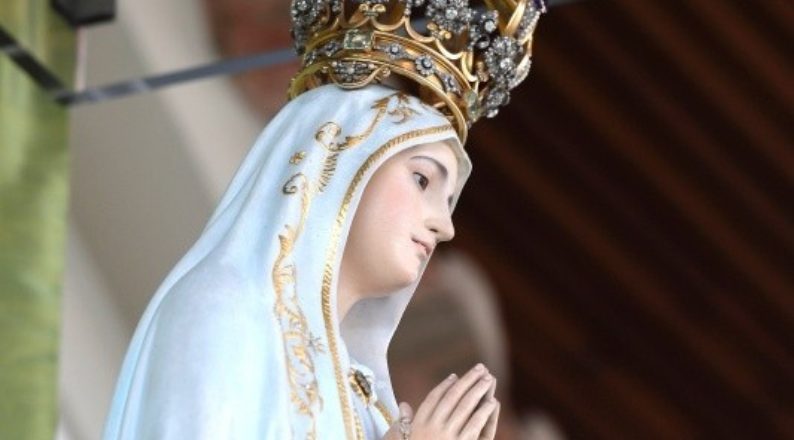
(ZENIT News / Rome, 07.07.2025).- A new Vatican document on Marian themes and mystical phenomena is on the horizon, aiming to shed light on the evolving standards by which the Catholic Church discerns reports of supernatural events. The initiative, spearheaded by Cardinal Víctor Manuel Fernández, prefect of the Dicastery for the Doctrine of the Faith (DDF), reflects an ongoing effort to bring clarity and consistency to a topic that has long stirred both devotion and controversy among the faithful.
Speaking to journalists in Rome on July 3, Cardinal Fernández revealed that the document is nearing completion and will offer theological reflections and pastoral criteria regarding Marian devotion, particularly as it relates to alleged apparitions and private revelations. While no publication date has been set, the cardinal confirmed that final approval will depend on the endorsement of Pope Leo XIV, the successor to Francis under whose pontificate the project was initiated.
The forthcoming text follows the introduction of a major reform in May 2024, when the DDF overhauled its procedures for assessing claims of supernatural phenomena. That reform replaced the older binary system with a more nuanced six-tier classification model, designed to reflect both the complexity and ambiguity often present in such cases.
Instead of attempting to declare definitively that a phenomenon is of supernatural origin—a claim the Church now formally avoids—the DDF may grant a nihil obstat, indicating that the event in question presents no doctrinal or moral obstacles and appears to bear good spiritual fruit. According to Fernández, such approval acknowledges positive outcomes, such as genuine conversions or deepened prayer lives, without guaranteeing the authenticity of every claim or message associated with the event.
“We see many beautiful things—spiritualities that build up, people whose lives are transformed,” said Fernández, “but we also notice recurring problems in these contexts.” Among such concerns are manipulative leadership, commercialization of sacred messages, or theological imprecision. The new document will aim to help bishops, theologians, and laypeople navigate these tensions with greater discernment.
The DDF’s updated approach has already been applied to high-profile cases across multiple continents. Since May 2024, the Vatican has issued statements or conducted evaluations concerning alleged supernatural events in Italy (Trevignano Romano, Brescia, Madonna dello Scoglio, Santuario de Maccio, Maria Valtorta), France (Estelle Faguette), the Netherlands (Amsterdam), Croatia (Medjugorje), Spain (Chandavila), India (Vailankanni), and Puerto Rico.
While details of the upcoming document remain confidential, it is expected to integrate theological insights with canonical and pastoral guidance, drawing on lessons learned from the first year of applying the revised evaluation standards. Observers believe it may also address the balance between freedom of Marian devotion and the responsibility of Church authorities to protect the faithful from potential confusion or deception.
Thank you for reading our content. If you would like to receive ZENIT’s daily e-mail news, you can subscribe for free through this link.

Publicaciones relacionadas:
 The Challenge of the Priest’s Loneliness Explained by the Cardinal Responsible for the Clergy Worldwide
 New Brazilian cardinal confirms: new Amazonian rite and viri probati are on the table
 Vatican Assembles Independent Tribunal to Try Former Jesuit Marko Rupnik
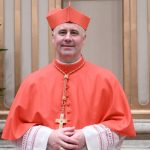 Cardinal Makrickas takes the helm of the Roman basilica of St. Mary Major: the oldest Marian church in the West
