

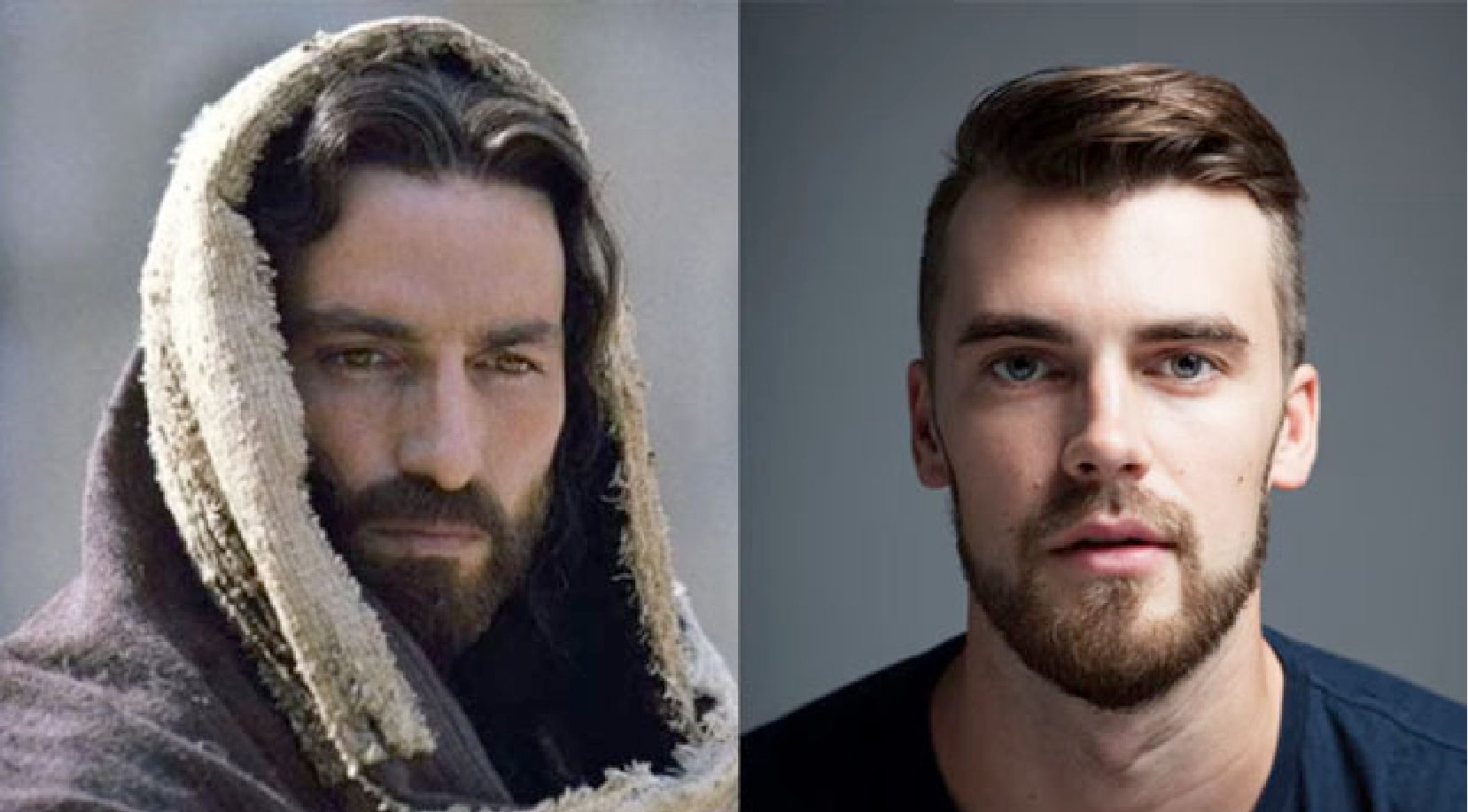
(ZENIT News / Rome, 10.20.2025).- More than two decades after Mel Gibson’s The Passion of the Christ shook the global box office and stirred a generation of believers, the director’s long-rumored sequel, The Resurrection of Christ, is finally taking shape—and with an entirely new cast. In a move that has surprised Hollywood and faith audiences alike, Gibson has chosen Finnish actor Jaakko Ohtonen to step into the sandals once worn by Jim Caviezel.
The announcement, confirmed by Variety and later echoed by several industry outlets, marks a pivotal creative turn for a project already steeped in myth. Ohtonen, 36, is best known to international audiences for his work in «The Last Kingdom and Vikings: Valhalla». Now, the actor faces the towering task of portraying the risen Christ in a film that seeks to capture not agony, but transcendence.
Filming began this month at Rome’s Cinecittà Studios—the same soundstages where Gibson shot The Passion in 2002—before expanding to locations in southern Italy, including Matera, whose ancient stone streets once doubled as Jerusalem. Produced by Icon Productions in partnership with Lionsgate, the film will unfold in two parts: the first premiering on Good Friday, March 26, 2027, and the second on Ascension Day, May 6.
The sequel picks up in the stillness of the tomb, tracing the mysterious three days between crucifixion and resurrection—a space that Gibson has described as “a drama of the unseen, where faith and eternity intersect.” While Caviezel’s haunting performance in «The Passion» defined the image of Christ for a generation, Gibson’s team opted for a complete creative reset. “It made sense to rebuild the world from the ground up,” a source close to the production told Variety. “It’s been more than twenty years. Technology, storytelling, and audience expectations have all evolved. So has the way people experience faith on screen.”
The decision, however, was not merely artistic. At nearly 60, Caviezel would have required costly CGI rejuvenation to reprise a role representing a 33-year-old Messiah. “That kind of digital work—facial reconstruction, de-aging—would have been massive,” said one insider. “Gibson wanted authenticity, not technology.”
Ver esta publicación en Instagram
Authenticity, though, is now at the center of debate. Ohtonen’s personal beliefs remain largely unknown, and his social media presence—highlighted by inclusive messages and the use of pronouns in his biography—has already sparked criticism from some conservative commentators. Yet others see in this casting a paradoxical echo of the film’s message: faith found in unexpected places.
As Gibson’s agency announced, “This marks a new chapter in cinematic storytelling about the life of Christ. Ohtonen brings both a physical intensity and a contemplative stillness to the role—qualities that transcend language and creed.”
Ohtonen will be joined by a fully renewed ensemble. Cuban actress Mariela Garriga (Mission: Impossible – Dead Reckoning) steps into the role of Mary Magdalene, originally played by Monica Bellucci; Polish star Kasia Smutniak will portray the Virgin Mary; Italian actors Pier Luigi Pasino and Riccardo Scamarcio will appear as Peter and Pontius Pilate, respectively. Rupert Everett also joins the cast in what sources describe as a “brief but crucial” supporting role.
The replacement of Caviezel, Bellucci, and Maia Morgenstern—figures once synonymous with The Passion—marks the definitive break between Gibson’s earlier vision and this new, more introspective cycle. “This is not simply a continuation,” said one Vatican-based film historian familiar with the project. “It’s an exploration of the aftermath—what resurrection means not only for the disciples, but for humanity. The first film dealt with suffering; this one seeks hope.”
Indeed, Gibson’s creative choices reflect that shift. Where The Passion was visceral, grounded in the brutality of the cross, The Resurrection aims for something closer to theological poetry. Insiders describe early footage as “luminous,” relying less on graphic realism and more on visual metaphor: light, breath, and silence as vehicles of revelation.
The production’s schedule also suggests a deliberate rhythm. Releasing the first part on Good Friday 2027 and the second on Ascension Day bridges the forty days of the Easter season—a liturgical arc that mirrors the narrative’s progression from death to divine glory.
For Ohtonen, the role could prove transformative. Two decades ago, Caviezel’s portrayal defined his career—and, by his own admission, his faith. Whether Ohtonen’s journey follows a similar path remains to be seen. Yet for Gibson, the story’s resonance transcends the actors who embody it.
“The Passion was about the price of love,” he once said in an earlier interview. “The Resurrection will be about the power of that love—what it conquers, and what it awakens.”
If Gibson’s vision holds, audiences may once again find themselves standing at the threshold between cinema and contemplation—where suffering yields to mystery, and a familiar story is seen anew through different eyes.
Thank you for reading our content. If you would like to receive ZENIT’s daily e-mail news, you can subscribe for free through this link.

Publicaciones relacionadas:
 Cardinal Ouellet Says “The Interpretation and Diffusion of Accusations as Sexual Aggressions Is Defamatory”
 Pope face to face with more priests in Rome: from gays to ideologies, these were the topics discussed
 Vatican Dicastery for Communication «absorbs» Pontifical Urbaniana University publishing house
 Vatican definitively approves statutes of international association of exorcists
