

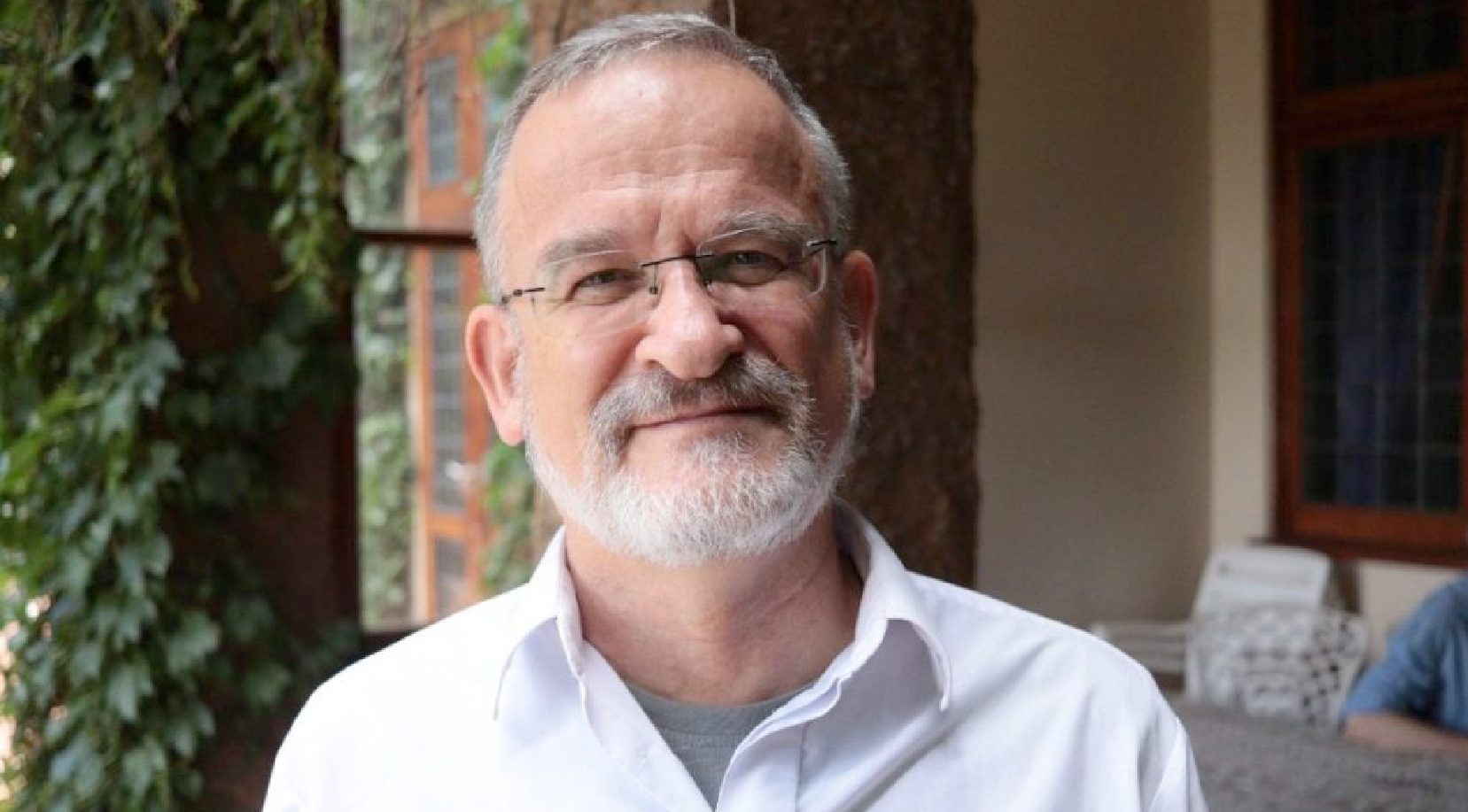
(ZENIT News – Caffe Storia / Rome, 16.10.2025).- The history of the Israel-Palestine conflict is a book of many pages, and many are yet to be written. The truth is that, one way or another, we will be forced to read them. What space will be given now to peace in this context? «The conflict is primarily between two National Movements,» explains Father David Neuhaus, Israeli Jesuit and Professor of Sacred Scripture. Born in South Africa to German-Jewish parents who fled Germany in the 1930s, he was Patriarchal Vicar of the Latin Patriarchate of Jerusalem for Catholics of Jewish expression and for migrants. «Violence is not a legitimate means to resolve a conflict. However, we must ask ourselves: does religion, in its current form, really help people recognize this?»
Father Neuhaus, what is the weight of religious roots in the history of the Israeli-Palestinian conflict?
I consider it important to emphasize that the conflict between Israel and Palestine is not a religious conflict. Its origins lie in the migration of European Jews — especially from Eastern Europe — to Palestine, which began in the 1880s under the shadow of modern European antisemitism, and in their demand for the right to found an ethnocentric State there, a Jewish State. The conflict is primarily between two National Movements: Zionism, a Jewish National Movement that redefined what it meant to be Jewish, and the Palestinian Arab National Movement. Both Movements redefine identity by linking it to the people, the land, and the State. Religion is a useful resource, but it does not constitute the primary root of either Movement.
Both National Movements have exploited religious identities, texts, rituals, and traditions to gain legitimacy. The use of religious language can have a more powerful effect than secular language. The Zionist reading of Jewish religious texts, which emphasizes the Bible and marginalizes the Talmud, played an important role in the formation of a modern Jewish consciousness that links Jewish identity to the land of Israel. Secular David Ben-Gurion, Israel’s founding Prime Minister, emphasized, for example, the importance of biblical books such as Joshua, which narrate the conquest of the land.
Palestinian Arab nationalists, both Muslim and Christian, have also turned to religion. The leader Hajj Muhammad al-Hussayni, for example, used religious titles and attire, performed a religious function, and regularly exploited the sacredness of Jerusalem for Muslims. Traditional practices, such as the pilgrimage to the shrine of Nabi Musa or the religious significance of the Tomb of the Patriarchs in Hebron, aroused sentiments that might appear religious but primarily served nationalist ideology.
Since the 1960s, new forms of religious nationalism have emerged among Israeli Jews and Palestinian Arabs. The incorporation of «God» into nationalist ideology often generates greater fanaticism and militancy. Extremist groups of Israeli Jews and Arab Muslims promote ideologies of ethnocentrism, exclusion, and even genocide, based on religious slogans.
To what extent, then, do Biblical, Quranic, and Rabbinic narrations continue influencing the identity of the different communities today?
Both Israeli Jews and Palestinian Arabs — Christians and Muslims — are, to some extent, rooted in the religious traditions and practices of their ancestors. Among Israeli Jews, nearly half the population is secular, yet the Bible continues to play an important role in public discourse, especially in defining the Jewish connection to the land and offering ancient myths of patriotism and militarism.
Many, though not all, modern religious Israeli Jews use the Bible to promote the expansion of Jewish settlements in the occupied West Bank and beyond. Some also resort to Rabbinic discourse to insist on the separation between Jews and non-Jews. Some extremists mobilize religious texts to legitimize violence against Palestinian Arabs.
Among Palestinian Arabs, Muslim political activists exploit Quranic texts and Islamic tradition to promote the defense of the Palestinian cause. Some more extremist Muslims also use religious texts to show hostility toward Jews and their supporters.
Within Judaism, Christianity, and Islam, there are different visions of the land, the people, and the promise of inheritance. How do these theologies confront each other, and what religious interpretation can open paths toward reconciliation?
It is important to note that these ancient texts do not speak directly to the modern realities of nation-states, ethnic nationalism, or contemporary political ideologies. Each religious tradition has been mobilized by ideologists to legitimize modern positions on land, people, and the State. Ancient texts must be «extracted» in order to say something relevant today. The realities they addressed thousands of years ago and our modern context are profoundly different.
Within each religious community, texts are sometimes read as if they spoke directly to the needs of the present. Zionist Jews choose texts that emphasize the promise, conquest, possession, and defense of the land, ignoring those that speak of equality, universality, and the overcoming of particularism.
Christian Zionists, prior to the development of Jewish Zionism, focused on texts that justified their vision: that Jesus would only return if the Jews were resettled in their land, and that, once He returned, all nonbelievers would perish.
Religious Muslims who advocate for the defense of Palestine focus on texts from the Quran about war, resistance, and violence, ignoring others that promote harmony, dialogue, and peace.
Religious peacebuilders from all communities seek alternative texts and traditions, which challenge the militant stances that dominate today. The challenge is not only to offer alternative texts, but also to deconstruct the use of religious texts to promote war, violence, and exclusion.
What other challenges does this war pose to the moral conscience of believers, both inside and outside the region?
The central challenge is to recognize that every human being is created in the image and likeness of God. An Israeli Jew is no more valuable than a Palestinian Arab. Every man, woman, and child has the right to life, liberty, and dignity. Violence is not a legitimate means of resolving conflict. However, we must ask ourselves: does religion, in its current form, really help people recognize this?
We must ask ourselves: what real impact do the positions of the Holy See, Muslim Authorities, and Rabbinical Authorities have?
Most Christians, Jews, and Muslims seek the authority that best suits their own needs. Jewish religious Zionists have created Rabbinical Authorities that provide the necessary religious support for their ideological positions, whether moderate or extremist. The same is true of many Muslims and Christian groups.
Catholics are entrenched in a particular position: the Church has a hierarchical structure, and religious authority is concentrated in the Magisterium of the Holy See. However, the real impact of the Holy See on the positions of Catholics at the heart of the conflict between Palestine and Israel should not be overestimated.

Publicaciones relacionadas:
 INTERVIEW: Integrating Faith & Science at Catholic Polytechnic University
 FEATURE: Cardinal Parolin to ZENIT: We Appeal to International Community to Respond to ‘New Threat’ & ‘New Bomb’ in Syria
 Israel-Palestine conflict: Vatican offers to mediate as needed
 Pope’s Cousin, Who Attended His Funeral, Talks About Him
