

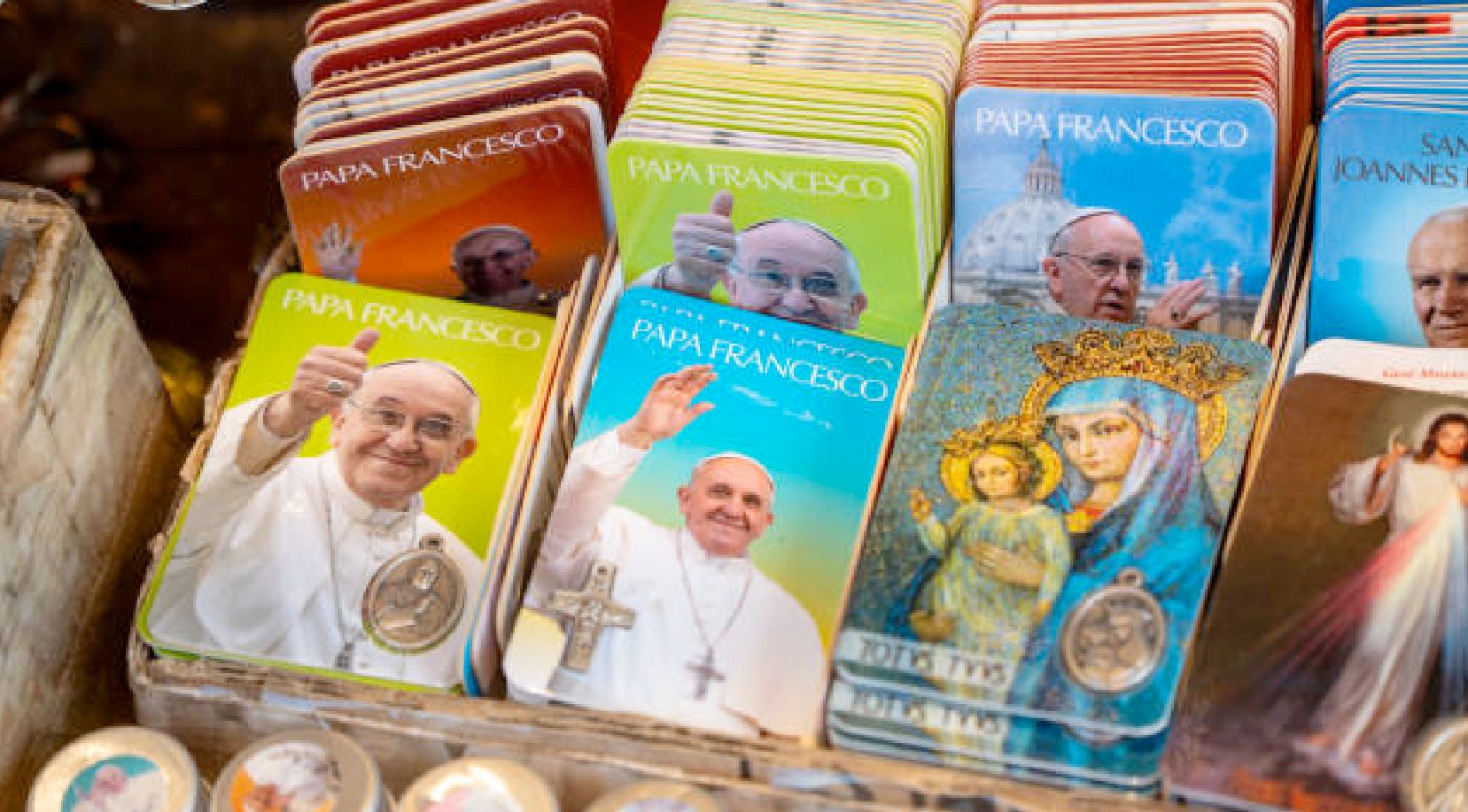
(ZENIT News / Rome, 07.16.2025).- Two months have passed since Cardinal Robert Prevost was elected Bishop of Rome, taking the name Leo XIV and making history as the first pope born in the United States. Yet, in an unexpected «decision» that has stirred both curiosity and confusion, his image remains conspicuously absent from Vatican souvenir shops.
Stroll through the maze of stores that surround St. Peter’s Square, and you’ll still find Pope Francis smiling from mugs and keychains, and even Saint John Paul II or Benedict XVI immortalized on everything from postcards to fridge magnets. But Leo XIV? Nowhere to be found.
According to shopkeepers and media outlets such as Spain’s EFE agency and COPE, the Spanish bishops’ radio network, the reason is simple: no official authorization has been granted by the Holy See for the commercial use of the new pope’s image. And without that green light, retailers are prohibited from producing or selling any merchandise bearing his likeness.
This decision—whether temporary or intentional—marks a break from the protocol followed in recent decades. Traditionally, permission is granted within days or a week of a new pontiff’s election, allowing merchants to meet the demand from pilgrims and tourists eager to take home a tangible reminder of their encounter with history. This time, the wait has turned into silence, and the silence into a statement.
There’s no explicit ban, of course. The Vatican has always walked a delicate line between respecting the sacredness of the papal office and tolerating a cottage industry that, for many Roman families, represents a legitimate livelihood. But Pope Leo XIV seems to be charting a different course—one that resonates with his discreet and austere profile so far.
“It’s the first time this has ever happened,” said one veteran vendor near the Borgo Pio, visibly puzzled. “Even with Benedict and Francis, we had something to sell almost immediately. Tourists ask every day.”
That absence is more than commercial. For many pilgrims, souvenirs are more than novelties—they’re signs of belonging, of memory, even of spiritual connection. The omission, then, has left more than just shelves empty; it has raised quiet questions about the papacy’s evolving relationship with public imagery and presence.
Is this a deliberate message from a pope who wishes to refocus attention on the office rather than the person? A reflection of his American roots and discomfort with celebrity culture? Or simply a bureaucratic delay? For now, no one knows—and the Vatican has offered no comment.
In the meantime, the face of the Successor of Peter remains unseen in the very city where his name echoes daily from the loggias of churches and the lips of the faithful. A silent gesture, perhaps, but one that speaks volumes.
Thank you for reading our content. If you would like to receive ZENIT’s daily e-mail news, you can subscribe for free through this link.

Publicaciones relacionadas:
 Why is he called Leo XIV? The official answer given by the Pope
 “Only informed individuals peoples can make free decisions”: Leo XIV’s full speech to journalists
 Leo XIV will go to Turkey at the end of 2025. Patriarch of Constantinople confirms it after audience
 In the Heart of Rome, the Pope Becomes Its Citizen
