

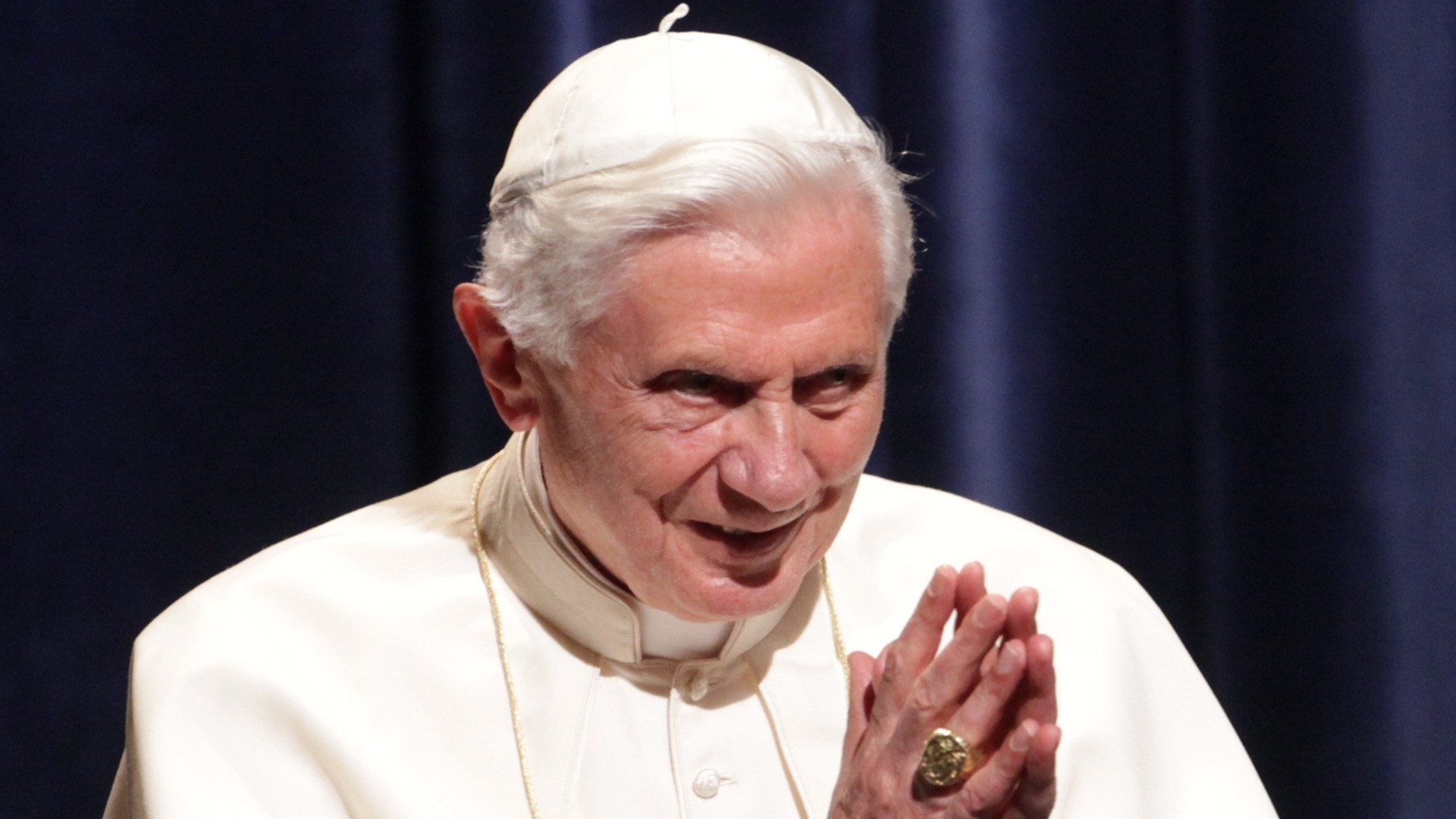
(ZENIT News / Rome, 08.09.2025).- A newly revealed letter from Benedict XVI, written more than a year after his historic resignation, has reopened — and for some, decisively closed — one of the most enduring debates in contemporary Catholic history: whether he truly stepped down from the papacy in February 2013.
The letter, dated August 21, 2014, was addressed to Monsignor Nicola Bux, a former Vatican official and close collaborator of Benedict during his years in the Congregation for the Doctrine of the Faith and later in key synods. Bux had written to express his theological and canonical doubts about the resignation, seeking clarity from the man who, for the first time in six centuries, had voluntarily left the Chair of Peter.
Benedict’s reply was firm and unambiguous. A pope, he wrote, can freely resign; such a decision is both theologically sound and canonically valid. To suggest otherwise — for instance, to claim that he had abandoned only the “exercise of ministry” but retained the papal “munus” — was, in his words, contrary to clear dogmatic and canonical teaching. Those advancing such theories were, he insisted, neither true historians nor serious theologians. As for talk of a creeping schism, he dismissed it outright.
In the same letter, Benedict revealed that his own predecessor, John Paul II, had once seriously considered resigning as he approached his 75th birthday, ultimately choosing not to but affirming the same principle of papal freedom. He also defended the right of a pope to speak and write in a personal capacity, citing his own books on Jesus written during his pontificate as works outside the formal duties of the papal office — a “mission from the Lord” undertaken alongside his role as Bishop of Rome.
Bux chose not to publish the letter during Benedict’s lifetime, fearing it would be weaponized in the polarized climate that followed the resignation. In the intervening years, fringe theories flourished, particularly in Italy, where some traditionalist groups claimed Benedict had been coerced or had orchestrated a hidden “dual papacy” in which he remained the true pope. One of the most prominent advocates, journalist Andrea Cionci, built a complex conspiracy narrative in his 2022 book The Ratzinger Code.
The letter’s first public release now comes as an appendix to Bux’s new volume, “Reality and Utopia in the Church,” co-authored with Vito Palmiotti. The book situates the correspondence within a broader critique of post–Vatican II currents in Catholicism, contrasting what the authors see as the grounded realism of John Paul II and Benedict with what they call the “utopian” tendencies of Pope Francis and figures like the late Italian bishop Tonino Bello.
For Bux and Palmiotti, this utopianism — renewed under Francis after being tempered in the previous two pontificates — has manifested in documents like Amoris Laetitia and Fratelli Tutti, where, they argue, Christ is no longer presented as the foundation of marriage or universal fraternity. The letter from Benedict, in this reading, is not just a personal clarification but a theological marker: a reaffirmation of the papacy as a real, relinquishable office, bound to the concrete realities of Church law and tradition rather than to speculative or symbolic reinterpretations.
While the missive may not persuade every critic, it now stands as Benedict’s own final word on a question that has fueled a decade of rumor. It is, in the eyes of its publisher, a historical document that both explains his mind at the time and underscores his resolve. Whatever else might be said of his resignation, Benedict XVI wanted the Church — and history — to know that he meant exactly what he did.
Thank you for reading our content. If you would like to receive ZENIT’s daily e-mail news, you can subscribe for free through this link.

Publicaciones relacionadas:
 Pope Francis to preside over 24 hours for the Lord initiative on March 8 at Rome parish
 Pope Francis is the author of the Stations of the Cross to be prayed this Good Friday 2024 in Coliseum
 Parliamentarians from around the world gather in Rome to discuss interfaith dialogue
 A Truly Inclusive Jubilee: Vatican Presents Inclusive Itinerary for the Holy Door
