

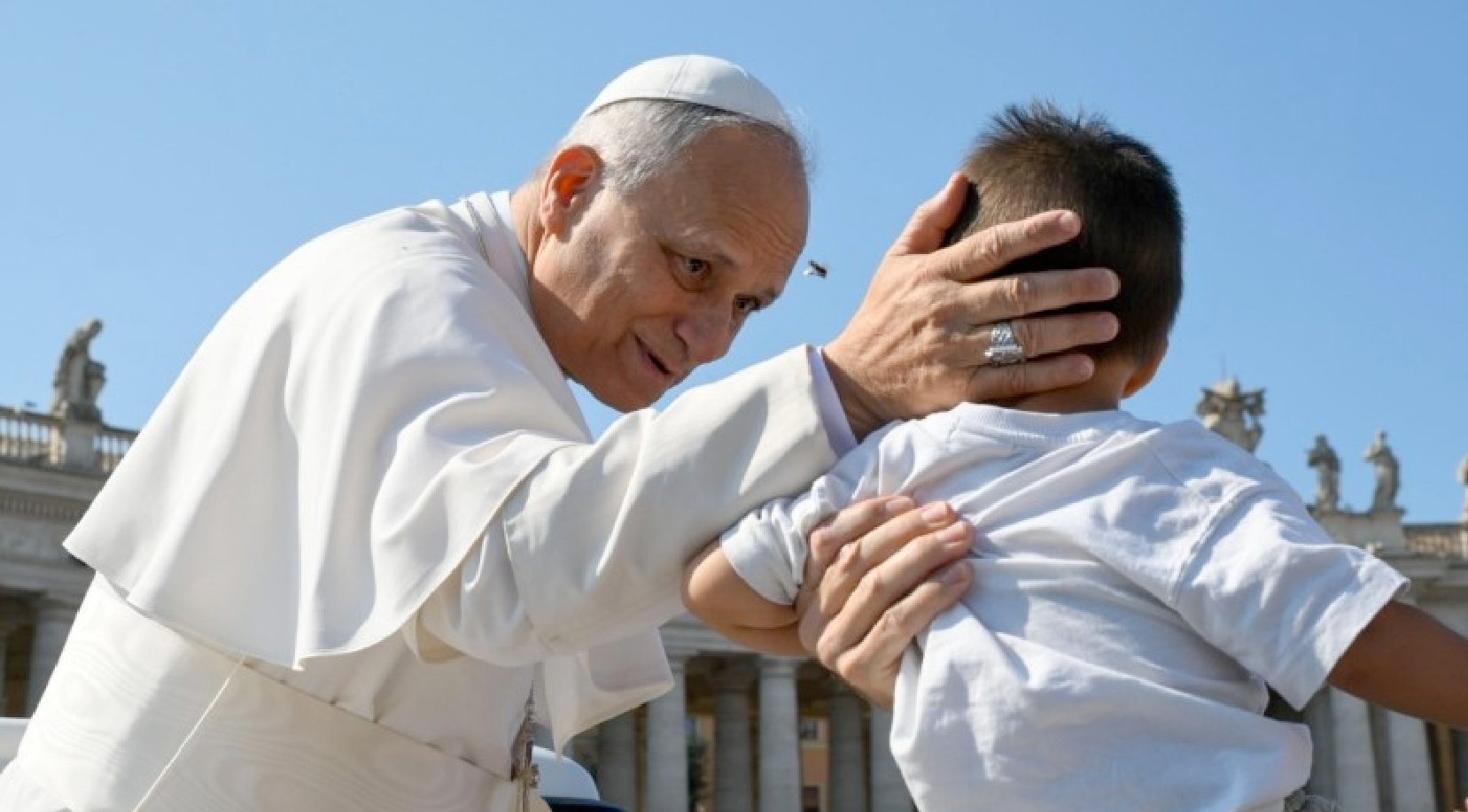
(ZENIT News / Vatican City, 08.11.2025).- In a move underscoring the Vatican’s commitment to the dignity of family life, Pope Leo XIV has approved a sweeping update to labor policies for employees of the Vatican City State, granting expanded parental rights and new benefits for families caring for disabled children. The measures, announced in an August 11 decree, reflect the Holy See’s effort to align its internal labor rules with the pastoral vision it has long championed worldwide.
Signed by Maximino Caballero Ledo, Prefect of the Secretariat for the Economy, the Rescript builds on recommendations from the Council of the ULSA — a body bringing together representatives from various Vatican departments, the Governorate, and its workforce. Pope Leo XIV formally endorsed the proposals after a July 28 meeting with Caballero, giving the reforms his direct blessing.
At the heart of the new provisions is the recognition of fathers as active caregivers. For the first time, Vatican employees will have the right to five fully paid working days of paternity leave following the birth of a child. These days can be taken consecutively or separately, but must be used within the first month after birth. Officials emphasize that the full salary applies for the entire period, with no loss of seniority benefits.
Parents of children with severe disabilities will also see significant changes. The decree grants them three paid working days per month, which may be taken together, to devote to the care of their child — provided the child is not in full-time residential care. In an effort to ensure this time is used exclusively for family needs, outside work during these days is prohibited unless expressly authorized by the competent authority.
Determining eligibility for these benefits will fall to the Medical Board of the Vatican’s Directorate of Health and Hygiene. Its rulings, the document makes clear, are final and binding. Once a disability is recognized, the family — or in some cases Vatican pensioners — will qualify for a family allowance, extending the scope of financial support beyond active employees.
The Rescript also updates the rules for family allowances in general. Families will now be eligible for support for children over 18 who are still completing secondary school, up to the age of 20, and for those in university or equivalent studies recognized by the Holy See, up to the age of 26, provided they supply proof of enrollment.
Vatican officials describe the reforms as more than an administrative adjustment. They see them as a concrete application of Catholic social teaching, particularly the legacy of Pope Leo XIII’s 1891 encyclical Rerum Novarum, which defended the rights of working families and affirmed that labor should serve the good of the household. While the challenges facing 19th-century factory workers differ from the realities of today’s microstate employees, the principle remains the same: the well-being of the family is inseparable from the dignity of work.
By extending these rights within its own walls, the Vatican sends a clear signal to governments and institutions worldwide — that promoting a humane and family-friendly workplace is not just a matter of policy, but of moral responsibility.
Thank you for reading our content. If you would like to receive ZENIT’s daily e-mail news, you can subscribe for free through this link.

Publicaciones relacionadas:
 Why did Pope Leo give 500 euros to each Vatican employee?
 Leo XIV Appoints Former Doctor of Pope Francis New Director of Health of the Vatican
 Pope Leo XIV’s warm words to his army and a challenge: may they be a message of unity for the entire Roman Curia
 The traditional Latin Mass celebrated in St. Peter’s Basilica marks a new chapter under the pontificate of Pope Leo XIV
