

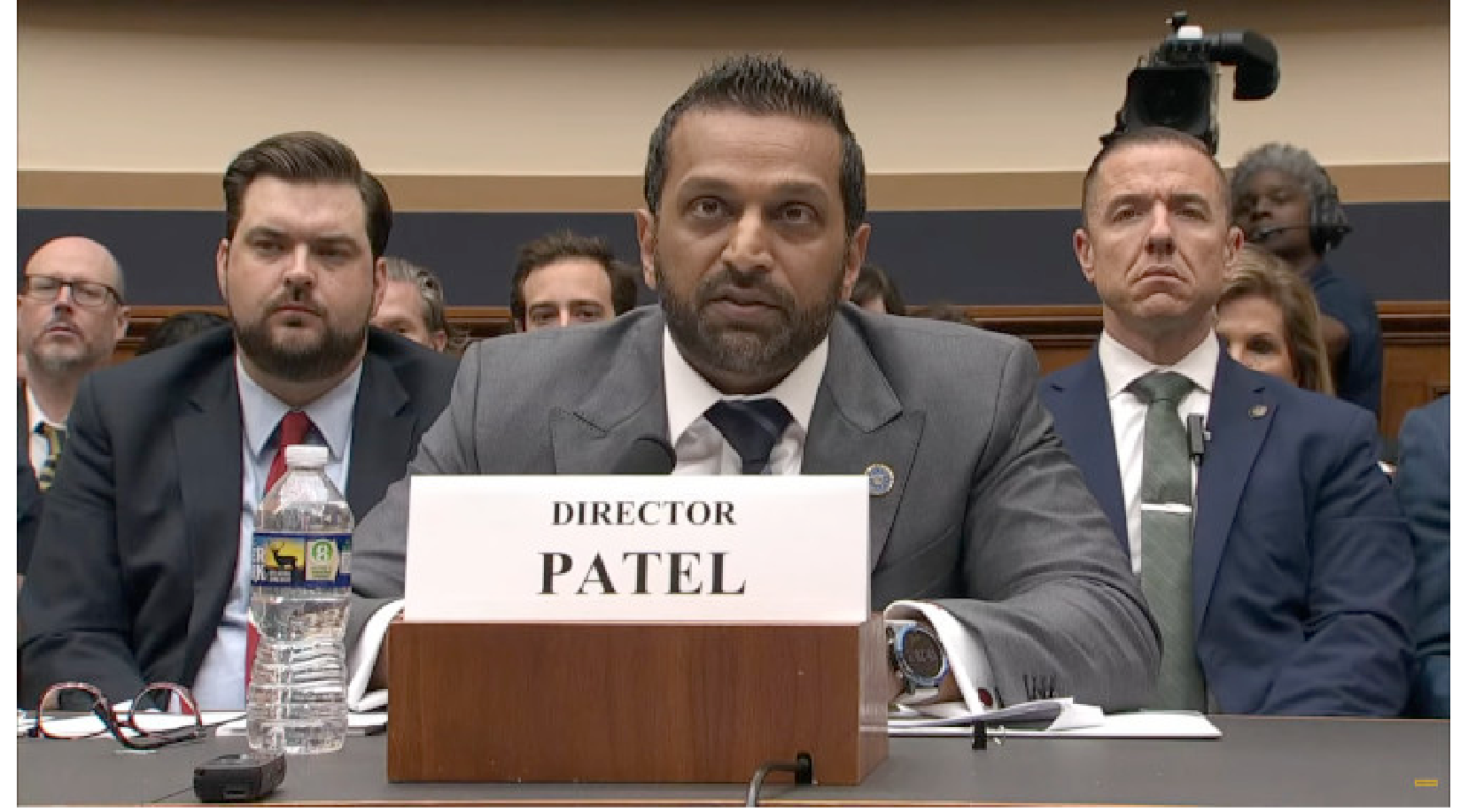
(ZENIT News / Washington, 09.19.2025).- The director of the Federal Bureau of Investigation, Kash Patel, told U.S. senators that dismissals and resignations have followed the controversial “Richmond memo” of 2023, a document that sparked outrage for targeting traditionalist Catholics as potential extremist threats.
Appearing before the Senate on September 16, Patel faced pointed questions from Missouri Senator Josh Hawley about how the bureau has handled the scandal and what it is doing to address the growing number of attacks on Catholic and Christian communities nationwide.
Patel confirmed that disciplinary action was taken against bureau employees linked to the memo but declined to specify numbers. He emphasized that the FBI has since revised its policies, barring the placement of informants inside houses of worship unless there is credible evidence of an immediate criminal or terrorist threat. “We will not use sources in this FBI to collect information simply for the sake of collecting it in places of worship,” Patel said, stressing that faith communities are not to be treated as surveillance grounds.
The Richmond document, made public in early 2023, had recommended monitoring “radical traditionalist Catholics” and suggested infiltration of parishes offering the Latin Mass. The FBI quickly disavowed it, but subsequent investigations revealed similar language circulating in more than a dozen bureau offices, raising concerns of systemic bias.
The scandal reignited amid Patel’s testimony, where he underscored the bureau’s cooperation with congressional oversight. He contrasted the current approach with that of his predecessor: “We provided 700 documents to this committee on the Richmond Catholic memo. My predecessor gave 19 pages.”
Beyond the memo, Patel acknowledged a broader crisis: a surge in violence against Christian institutions and individuals. The FBI is currently tracking 60 active investigations into anti-Catholic hate crimes across cities such as Houston, Louisville, Kansas City, Nashville, and Richmond. These include vandalism, arson, bomb threats, and shootings.
The director, himself a Hindu, spoke personally: “Any ideological attack against any faith will not be tolerated. As a man of faith, I am committed to ensuring this bureau uses all its resources to protect houses of worship.” He pledged not only investigations but also financial incentives, announcing that monetary rewards will be offered for information on all ideologically motivated attacks.
Patel said investigators are following financial trails to identify not only perpetrators but also potential backers: “We are reverse engineering these crimes. We will not stop at the individual attacker. We will take action against those who knowingly financed them.”
Senator Hawley pressed for more structural safeguards, suggesting the appointment of a dedicated senior FBI liaison to faith communities. Patel signaled openness: “You’re speaking my language. Collaboration with houses of worship is transformative. With your help, if you can identify someone with expertise, we would work with them.”
The hearing also touched on the recent killing of Christian conservative activist Charlie Kirk. Hawley asked whether the FBI is treating the case as part of a broader pattern of anti-religious violence. Patel responded that the investigation is “comprehensive and ongoing,” with results to be shared “at the appropriate time.”
The exchange in Washington laid bare a paradox for the FBI: an agency tasked with defending civil liberties that now faces accusations of having violated them. For many Catholics, the Richmond memo remains a reminder of how fragile religious trust in public institutions can be. For Patel, the challenge is twofold—repairing that trust and confronting a troubling rise in violence against communities of faith.
Thank you for reading our content. If you would like to receive ZENIT’s daily e-mail news, you can subscribe for free through this link.

Publicaciones relacionadas:
 Jesus Wasn’t Against the Wealthy Nor Did He Condemn Profit
 Cuba responds to the Pope by releasing half a thousand prisoners in the context of Jubilee 2025
 After Pope’s letter, U.S. bishops sue Donald Trump administration in court
 U.S. bishops on immigration program: we will not renew existing cooperation agreements with federal government
