

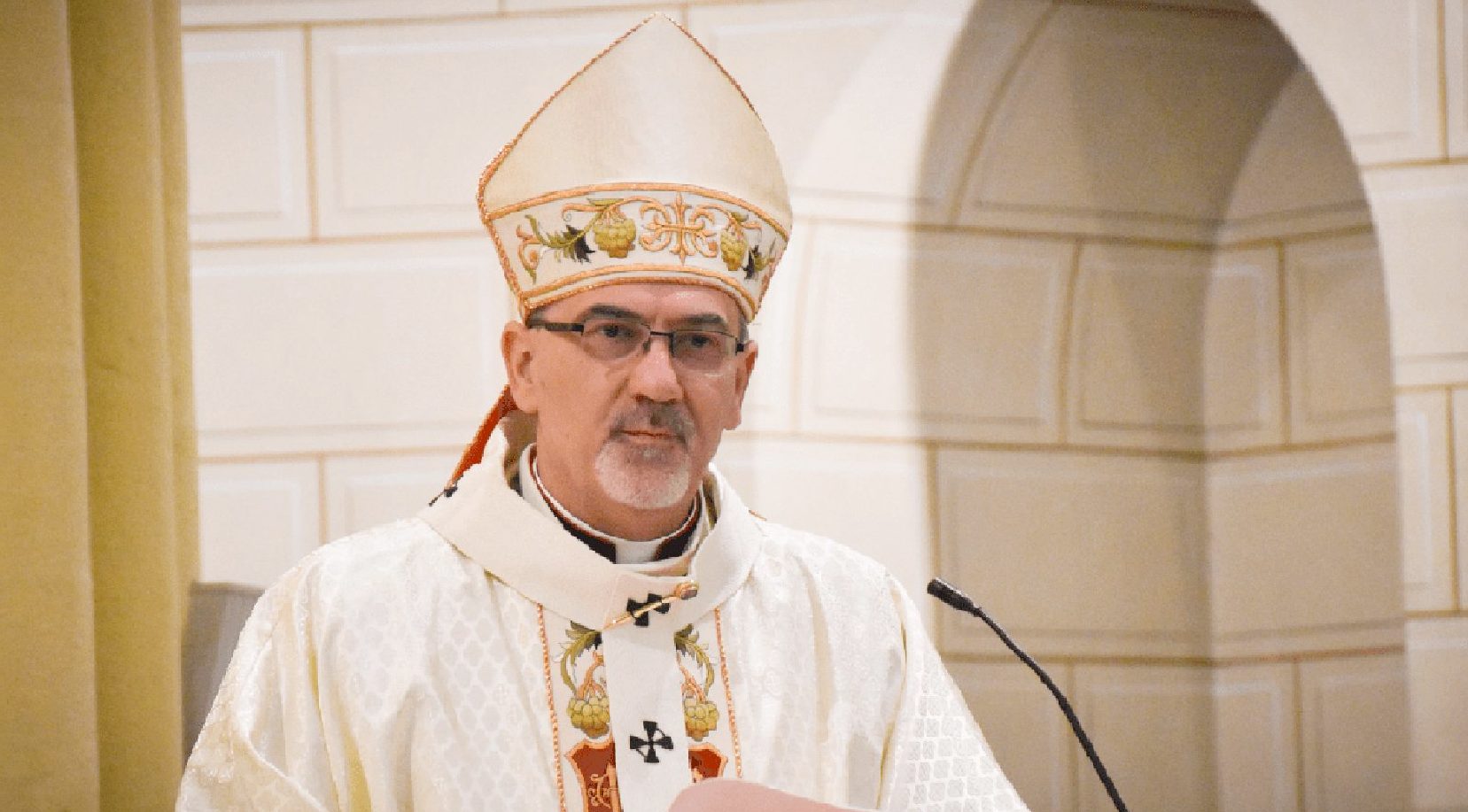
(ZENIT News / Jerusalem, 10.03.2025).- The voice of Cardinal Pierbattista Pizzaballa, Latin Patriarch of Jerusalem, often resonates with particular weight in the turbulent Middle East. His credibility does not rest solely on official statements but on his physical presence in Gaza itself: repeated visits to wounded civilians, time spent with the tiny Christian community, and a willingness to speak candidly even when that means holding Israel to account.
This dual quality—pastoral closeness and political frankness—made his recent remarks on the “Global Sumud Flotilla” especially noteworthy. Speaking to journalist Mario Calabresi in the podcast «Vivavoce», the Patriarch acknowledged his relief that the boats’ crews returned unharmed. He also recognized the flotilla’s ability to awaken international awareness about Gaza’s humanitarian plight. Yet he did not conceal his skepticism. Such ventures, he argued, do not alter the conditions of Gaza’s people: “I would have avoided such a direct confrontation… it does not bring anything concrete to the people of Gaza. It does not decisively change the situation.”
His assessment carried extra weight because Italian authorities had consulted him regarding a possible humanitarian corridor to deliver aid carried aboard the flotilla vessels. That initiative ultimately did not materialize, but the Patriarch’s remarks suggested that the careful negotiation of official channels—however slow—remains more fruitful than symbolic maritime confrontations.
The comments came as Pope Leo XIV himself voiced hope that the latest U.S. peace proposal, advanced by former President Donald Trump, might be received and tested in good faith. Against that backdrop, Pizzaballa’s equilibrium offered a lens through which to interpret the flotilla phenomenon: recognizing the sincerity of activists while questioning whether their strategies help or inadvertently politicize Gaza’s suffering.
This balance matters at a time when the Gaza tragedy risks becoming a tool in Italy’s domestic political battles. Demonstrations inspired by the flotilla, often loud and emotional, have been directed as much against national institutions and the government in Rome as toward the humanitarian crisis itself. The Patriarch’s warning—implicit but unmistakable—is that the plight of Gaza should not be exploited as a prop for agendas elsewhere.
Pizzaballa’s words remind the international community of the enduring pastoral role of the Latin Patriarchate of Jerusalem: to keep Gaza’s suffering before the world, yes, but also to shield that suffering from appropriation by others. In the end, his reflections offer less a commentary on activists at sea than a call to preserve the dignity of a people long trapped between desperation and politics.
Thank you for reading our content. If you would like to receive ZENIT’s daily e-mail news, you can subscribe for free through this link.

Publicaciones relacionadas:
 Catholic Patriarch of Jerusalem’s moving letter on the situation in the Holy Land
 Lebanon: Maronite Catholic patriarch says Lebanese oppose war against Israel
 Pope Francis Decries Israeli Bombing of Catholic School in Gaza
 [PHOTO GALLERY] this is how Our Lady of Palestine was celebrated in the Holy Land
