

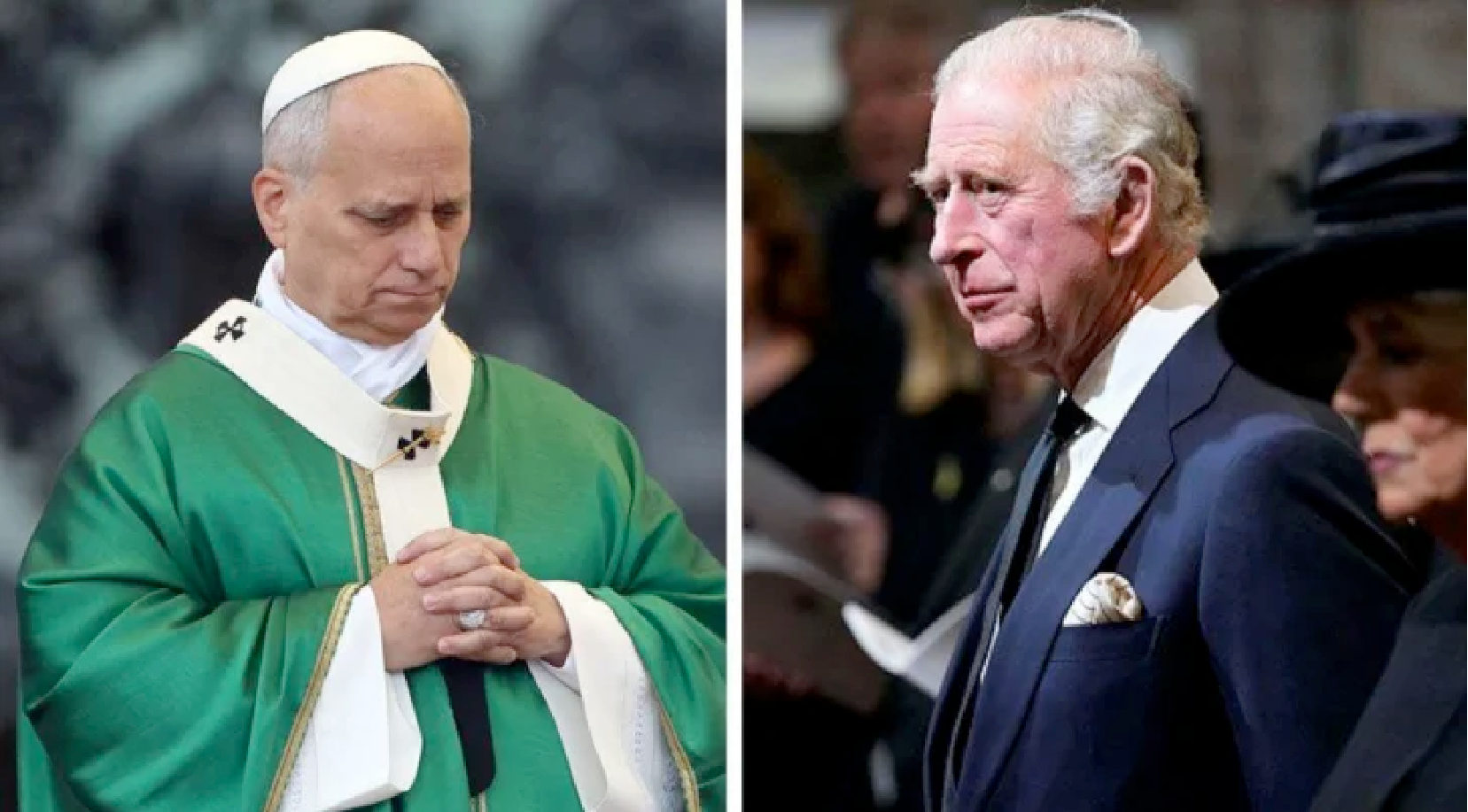
(ZENIT News / Rome, 10.20.2025).- When King Charles III and Queen Camilla step into the Sistine Chapel on October 23, history will quietly bend back on itself. For the first time since Henry VIII severed ties with Rome in 1534, a reigning British monarch will pray publicly with the Pope—an image unthinkable for centuries and now a symbol of a long journey from rupture to reconciliation.
The visit, confirmed by both Buckingham Palace and the Holy See, carries dual significance: a milestone in ecumenical dialogue and a renewed call for environmental responsibility. It is not just diplomacy at work, but something more subtle—a gesture of conscience, faith, and shared stewardship in an era of global instability.
The royal couple will be welcomed in the Apostolic Palace with the full ceremonial honors of a state visit. At mid-morning, after being greeted in the Cortile di San Damaso, King Charles will meet Pope Leo XIV for a private audience in the papal library, while Queen Camilla visits the Pauline Chapel. Later, the King will confer with Cardinal Secretary of State Pietro Parolin before joining the Pope for an ecumenical prayer service for the care of creation inside the Sistine Chapel.
The prayer—jointly led by Pope Leo XIV and the Archbishop of York, Stephen Cottrell—will include psalms and readings centered on the praise of the Creator. The service’s opening hymn, written by St. Ambrose of Milan and translated into English by St. John Henry Newman, bridges the faiths: Ambrose, the early Church Father of the West, and Newman, the 19th-century convert once torn between Canterbury and Rome. The symbolism is deliberate. Newman, canonized in 2019 in the presence of the then-Prince of Wales, will be declared Doctor of the Church on November 1, an act meant to underline the theological and cultural kinship now quietly reemerging between Catholics and Anglicans.

Music for the ceremony will unite three choirs—the Sistine Chapel Choir, the Chapel Royal Choir of St. James’s Palace, and the Choir of St. George’s Chapel at Windsor—singing under the frescoes of Michelangelo, where popes are elected and history is measured in centuries.
Later in the day, the royal family will travel across the Tiber to the Basilica of St. Paul Outside the Walls, a site whose links with the English crown date back to the Saxon kings Offa and Æthelwulf, who once funded its maintenance. There, King Charles will be formally installed as Royal Confrater of St. Paul, an honorary spiritual brotherhood conferred by the basilica’s Benedictine abbey with papal approval. His personal seat, crafted with his coat of arms and the Latin inscription Ut unum sint—“That they may all be one” (John 17:21)—will remain in the apse, reserved for his successors.
The honorary title, as Church of England officials emphasize, does not alter the King’s constitutional position as Supreme Governor of his Church, but it acknowledges his lifelong commitment to fostering understanding among faiths. Vatican observers view the gesture as an elegant act of friendship between two ancient institutions once locked in mutual suspicion.
After the service, Pope Leo XIV and the King will meet again in the Sala Regia with leaders from the Vatican, the UN, and the private sector to discuss environmental collaboration. The meeting builds upon the legacy of Pope Francis’s 2015 encyclical «Laudato Si’», marking its tenth anniversary, and on Charles’s decades-long advocacy for ecological responsibility. Sister Alessandra Smerilli, secretary of the Vatican’s Dicastery for Promoting Integral Human Development, described the gathering as “a symbol of joint moral leadership at a time when both Churches recognize that social and ecological crises are inseparable.”

Recent Vatican initiatives—the introduction of the «Missa pro custodia creationis» and the planned opening of the “Borgo Laudato Si’” in 2025—reflect the same ethos that has long animated Charles’s public life: a conviction that care for the planet is a sacred duty.
“This visit is not simply a protocol event,” said Archbishop Flavio Pace, secretary for the Dicastery for the Promotion of Christian Unity. “It is the fruit of decades of dialogue and a sign that reconciliation is not only possible but already unfolding.”
If Queen Elizabeth II’s 1961 audience with Pope John XXIII marked the end of estrangement, King Charles’s prayer with Pope Leo XIV may well mark the beginning of spiritual partnership. It will not erase the Reformation’s history, but in the vaults of the Sistine Chapel—beneath a fresco of creation itself—two heads of Church and State will kneel together, invoking the same Creator, and perhaps, the same hope: that unity, like peace, is made not by decree, but by shared prayer.
Thank you for reading our content. If you would like to receive ZENIT’s daily e-mail news, you can subscribe for free through this link.

Publicaciones relacionadas:
 Blood That Unites: Pope Leo XIV to Lead Ecumenical Memorial for Modern Christian Martyrs
 “We cannot and do not want to forget”: Pope Leo XIV at ecumenical celebration for martyrs and witnesses of the faith
 This is what the Pope’s trip to Turkey, Lebanon, and Latin America would look like: more details and even dates are emerging
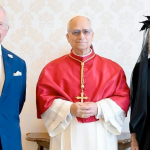 [PHOTO GALLERY] This is how the first historic day of the King of England’s state visit to Pope Leo XIV unfolded
