(ZENIT News / Rome, 11.13.2025).- More than half a century after a French woman claimed to have seen Christ and to have received a divine request to build a monumental “Glorious Cross,” the Holy See has delivered its final word. The Dicastery for the Doctrine of the Faith (DDF) has determined that the alleged apparitions in Dozulé, Normandy, “are not of supernatural origin,” closing one of the most persistent and controversial chapters in modern Catholic mysticism.
The decision, approved by Pope Leo XIV on November 3 and communicated to Bishop Jacques Habert of Bayeux-Lisieux on November 12, 2025, represents the culmination of a long process of discernment that began decades ago. While the events in question inspired fervent devotion among some groups, the Vatican’s judgment makes clear that the phenomenon lacks divine authenticity and has generated doctrinal and pastoral confusion that now demands resolution.
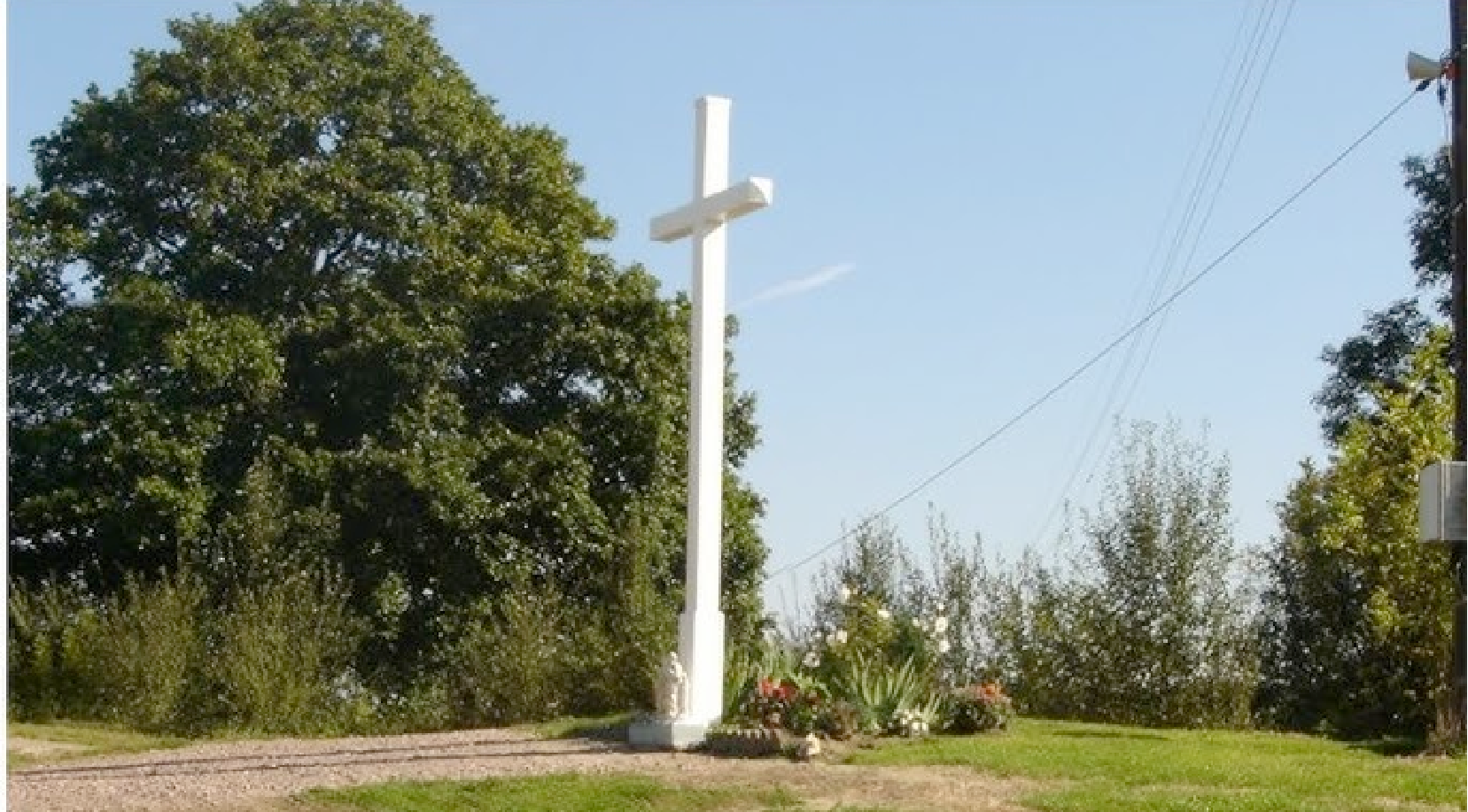
The Dozulé story traces back to 1972, when Madeleine Aumont, a local housewife, claimed that Jesus appeared to her, calling for the construction of an immense illuminated cross—738 meters high—and a “Sanctuary of Reconciliation.” The alleged messages also foretold the imminent return of Christ and promised salvation to all who repented at the foot of the proposed cross.
The DDF’s statement acknowledges that these reports stirred genuine spiritual interest but warns that they also introduced serious theological distortions. Chief among them is the attempt to equate the proposed “Glorious Cross” with the Cross of Calvary, the unique and unrepeatable sign of Christ’s redemptive sacrifice. The document emphasizes that the mystery of the Cross cannot be replicated or reproduced through any physical structure: its salvific power already permeates every Eucharist, every church, and every believer united to Christ’s passion.
Cardinal Víctor Manuel Fernández, prefect of the DDF, explained that the cross is not a material charm or sacred object endowed with independent power. “No cross, no relic, no private revelation can replace the means of grace established by Christ,” he wrote. “To confuse the sign with the mystery is to risk turning faith into a form of material sacrality foreign to the heart of the Gospel.”
Particularly troubling to Church authorities were the assertions attributed to Aumont that linked the physical contemplation of the Dozulé cross to the forgiveness of sins. The DDF called such claims “incompatible with Catholic doctrine on grace, salvation, and the sacraments.” The Church teaches that absolution flows from Christ through the sacrament of reconciliation, not from contact with or proximity to a physical object.
The Vatican document also addresses another recurring theme in Aumont’s messages: the prediction of Christ’s imminent return. While affirming the certainty of the Second Coming as a truth of faith, the DDF warns against “millenarian or chronological interpretations” that claim to identify its timing or external signs. Such speculation, it cautions, risks reducing Christian hope to an apocalyptic expectation of extraordinary events rather than a daily journey of faith and conversion.
The letter, which Bishop Habert is now authorized to publish as a diocesan decree, reiterates earlier judgments made by his predecessors, notably Bishop Jean Badré, who had already declared the Dozulé phenomena non-supernatural decades ago. With this new and definitive pronouncement, the Vatican seeks to end the confusion that has long surrounded the site.
The DDF’s position does not deny the sincerity of the devotion that developed in Dozulé, nor does it discourage the veneration of the Holy Cross itself, which remains central to Christian faith. Rather, it reaffirms the Cross’s true meaning—as a sacramental sign that leads believers to grace, not as a source of grace in itself. “The Cross does not need 738 meters of steel or concrete to be recognized,” one passage of the statement notes pointedly.
In a pastoral reflection accompanying the decree, Bishop Habert expressed his intention to guide the faithful toward authentic devotion rooted in the Church’s teaching. “My sole concern,” he wrote, “is to accompany believers in fidelity to the Catholic faith as it has been received and lived within the Church.”
With the publication of this final decree, Dozulé’s long and often divisive saga draws to a close. For the Vatican, the judgment is not merely a disciplinary act but a reminder: faith does not depend on grand constructions or private revelations, but on the quiet and enduring mystery of the Cross already present in the heart of every believer.
Thank you for reading our content. If you would like to receive ZENIT’s daily e-mail news, you can subscribe for free through this link.