

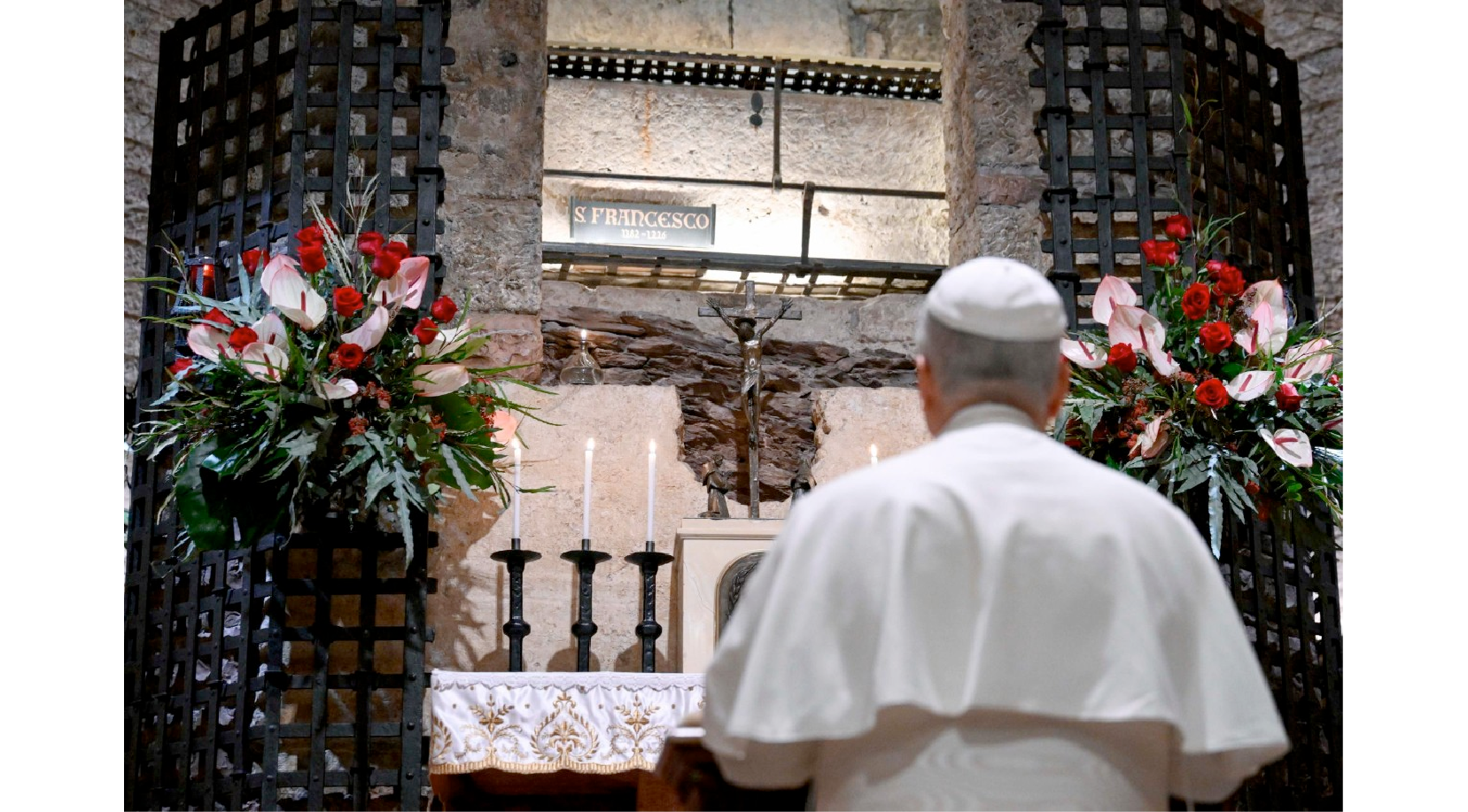
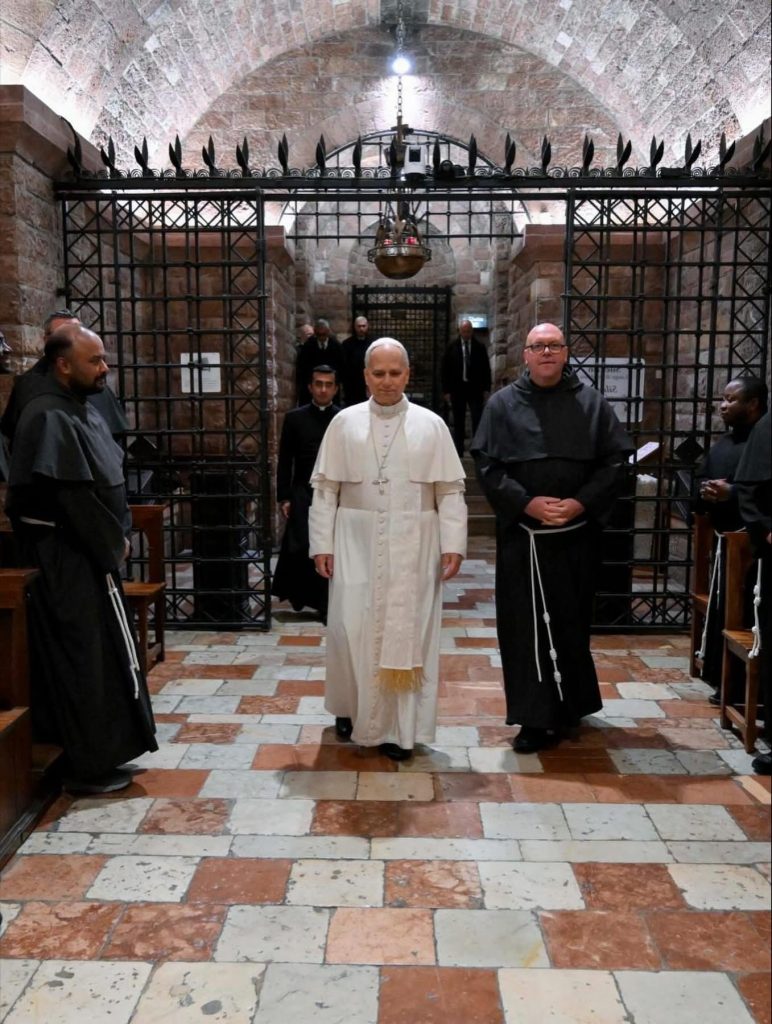
(ZENIT News / Assisi, 11.20.2025).- The early hours in Assisi often carry a certain stillness, but on Thursday, November 13, that silence took on a particular weight. Before the usual stream of pilgrims filled the basilica, Pope Leo XIV slipped into the crypt of the Sacro Convento for a private moment before the tomb of Saint Francis. No speeches, no cameras, no ceremonial procession. Only the soft echo of the Pope’s footsteps and the quiet murmuring of the friars who had gathered to pray with him.
The encounter lasted only a short while, yet it left a distinct impression—an intimate gesture at a time when the Church is preparing for one of its most significant milestones of the decade: the 800th anniversary of the death of the Poverello of Assisi, to be commemorated in 2026.
Observers close to the community say the Pope chose this format intentionally. Rather than inaugurating preparations with a formal declaration, Leo XIV preferred a silent prayer at the saint’s resting place, a gesture that mirrors Francis’s own instinct for simplicity. His brief reflection to the friars afterward, described by those who heard it as tender yet direct, underscored how Saint Francis’s witness—rooted in fraternity, peace and a stubborn hope—remains as urgent today as it was eight centuries ago.
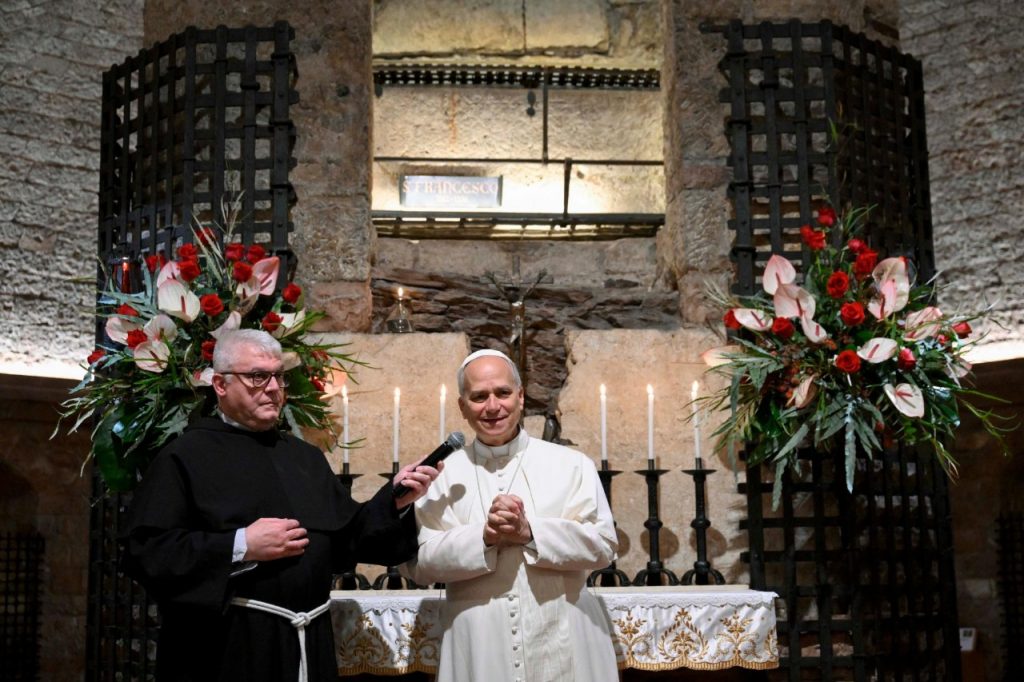
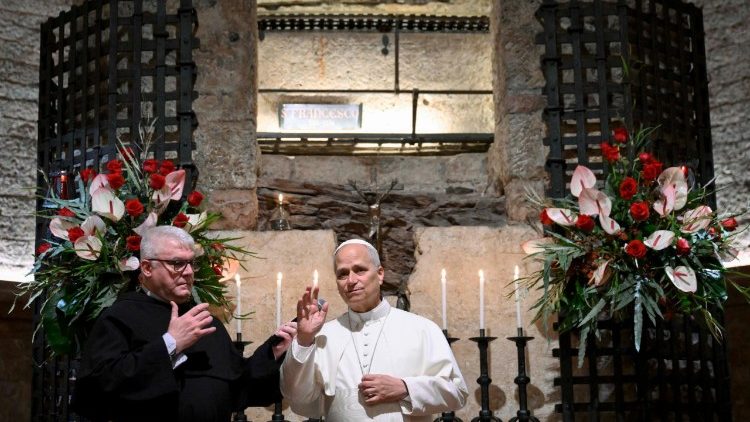
The friars, custodians of the basilica and of what they call the “living memory” of Francis, listened as the Pope encouraged them to continue embodying these values not through slogans or programmes but through daily witness.
Shortly after the Pope departed, Fray Giulio Cesareo, OFMConv, director of the Sacro Convento’s Communications Office, emerged from the crypt with a visible sense of gratitude. “There was a joy among us that is difficult to describe,” he said. “The Holy Father prayed there in silence, and afterward he reminded us of the anniversary approaching. He encouraged us to live as signs—signs of hope, of peace, of fraternity—precisely at a time when the world seems to be searching for them. We are deeply thankful for his words.”
In his reflection, Cesareo referred to the community’s anticipation of what he called “the Franciscan centenary,” a two-year path the friars have already begun shaping with events, study initiatives, and renewed commitments to service. Yet his emphasis fell not on institutional planning but on the spiritual resonance of the Pope’s visit: a reminder that the heart of the commemoration lies not in logistics but in living out Francis’s legacy with renewed authenticity.

Thank you for reading our content. If you would like to receive ZENIT’s daily e-mail news, you can subscribe for free through this link.

