

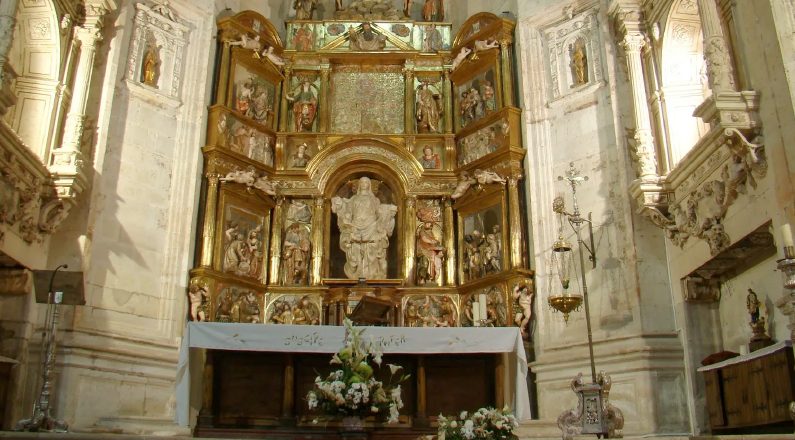
(ZENIT News / Valladolid, 12.30.2025).- The Archdiocese of Valladolid has publicly condemned the profanation of the tabernacle at the parish church of Santa María del Monasterio de La Santa Espina, a site of deep historical and spiritual significance. During the incident, the consecrated hosts kept within the tabernacle were stolen, an act the archdiocese has described as an offense of exceptional gravity against both the Catholic faith and the believing community.
In response, Archbishop Luis Argüello, who also serves as president of the Spanish Bishops’ Conference, will preside over a solemn act of reparation on Saturday, 3 January, at 6:00 p.m. The liturgical gesture is intended not only to repair the sacrilege committed, but also to gather the faithful around the central mystery of the Eucharist, reaffirming belief in what the Church understands as the real presence of Christ in the consecrated bread and wine.
Through an official statement, the archdiocese emphasized that the Eucharist is not merely a symbol but the heart of Catholic worship, making its desecration a wound felt far beyond the walls of the affected church. The incident has also revived painful memories within the local Church: it is the second reported profanation in the archdiocese within a year, following a similar violation at the parish of Our Lady of the Vega in Arroyo de la Encomienda.
That earlier episode, dating back to March 2015, likewise involved the forced opening of the tabernacle and the theft of the sacred hosts. At the time, church authorities informed civil officials and organized an act of reparation during the Lenten liturgy, stressing the need for vigilance and renewed reverence in the celebration and reservation of the Eucharist. The repetition of such events has heightened concern among clergy and faithful alike, who see in these acts not isolated vandalism but a challenge to the respect owed to what Catholics consider the most sacred reality of their faith.
The setting of the latest profanation adds further gravity. The monastery of La Santa Espina is known for safeguarding a revered relic traditionally identified as one thorn from the crown placed on Jesus during his Passion. For centuries, the monastery has been a place of pilgrimage, prayer, and contemplation, linking the suffering of Christ to the lived faith of generations of believers.
Church leaders in Valladolid have reiterated their call to condemn such acts unequivocally while urging the faithful not to respond with fear or resignation. Instead, they invite renewed care for the Eucharist, deeper catechesis on its meaning, and a collective commitment to safeguarding sacred spaces. The forthcoming act of reparation is intended as both a response to desecration and a public affirmation that, even when the sacred is violated, the Church answers not with despair, but with prayer, unity, and hope.
Thank you for reading our content. If you would like to receive ZENIT’s daily e-mail news, you can subscribe for free through this link.

Publicaciones relacionadas:
 German Franciscans Elect as Provincial Superior a Friar Openly Declared Homosexual
 Germany Answers the Vatican: It’s Not a Testimony of Communication if Statements Aren’t Published by Name”
 Pope Gifts Edmonton Seminary with a Sculpture of Saint Joseph
 Pope Averts Schism in Germany: Full Text of Vatican Letter
