

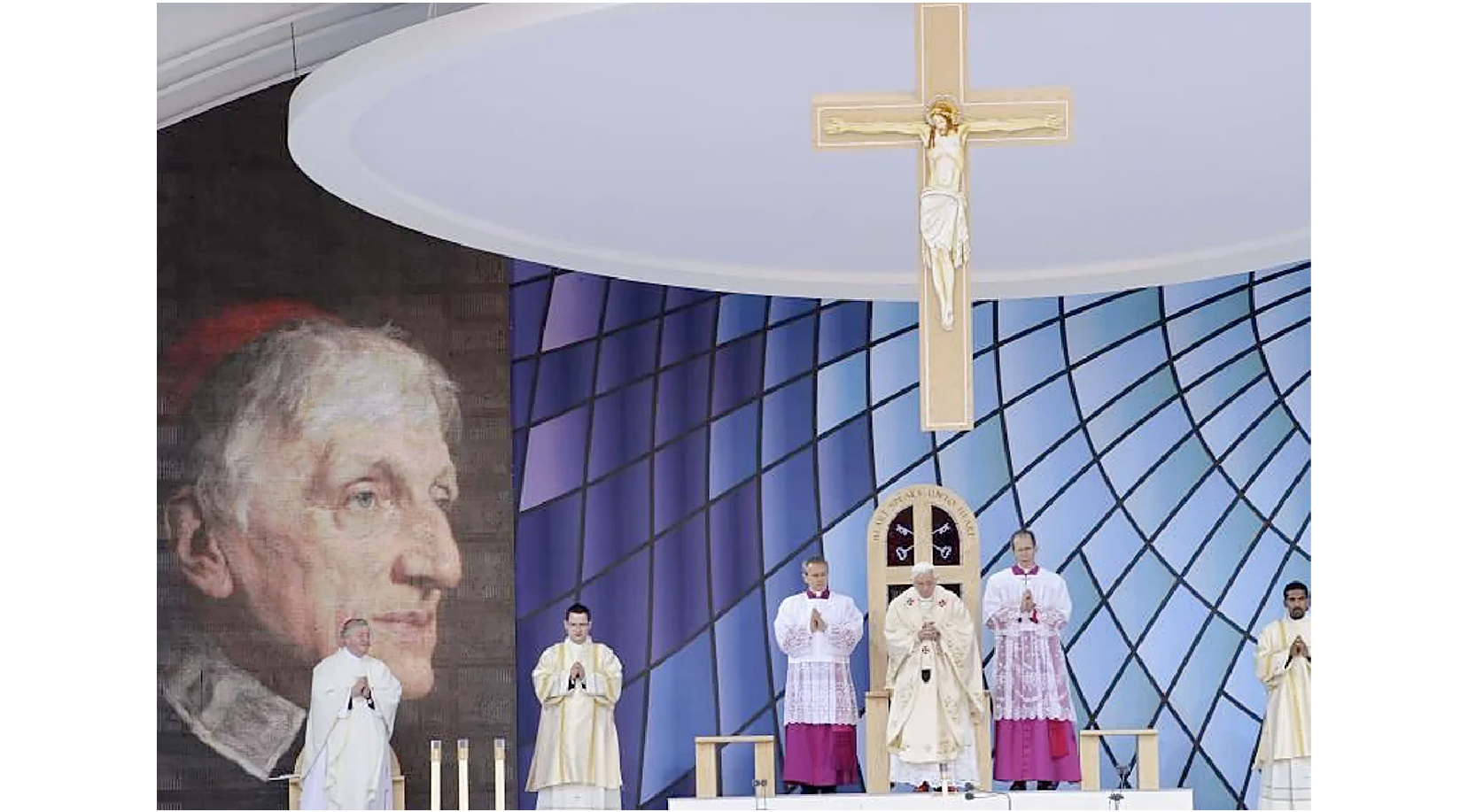
(ZENIT News / Rome, 02.04.2026).- The Catholic Church has formally woven the spiritual legacy of St. John Henry Newman into its global liturgical life. With the publication of a new decree from the Dicastery for Divine Worship and the Discipline of the Sacraments, Pope Leo XIV has ordered that Newman be entered into the General Roman Calendar, granting him a universal optional memorial to be celebrated every year on October 9.
The decision means that, from now on, Catholics across the world may commemorate Newman not only privately, but officially in the celebration of Mass and the Liturgy of the Hours. His name will appear in missals, breviaries, and national liturgical calendars, alongside the Church’s best-known saints .
The decree, released on February 3 and signed by Cardinal Arthur Roche, prefect of the dicastery, together with Archbishop Vittorio Viola, gives concrete form to a recognition already made at the highest level: Newman was canonized in 2019 and proclaimed Doctor of the Church on November 1, 2025, by Pope Leo XIV during the Solemnity of All Saints and the Jubilee of the Educational World. On that same occasion, the Pope named him co-patron—together with St. Thomas Aquinas—of all those involved in education.
October 9 was chosen deliberately. It marks the anniversary of Newman’s conversion to Catholicism in 1845, a turning point that reshaped not only his own life but also the intellectual landscape of English-speaking Catholicism.
In the decree, the Vatican describes Newman as a tireless servant of truth whose journey was guided by what it calls “the gentle light of God’s grace.” It recalls his lifelong dedication to scholarship, preaching, teaching, and care for the poor, praising him as a Christian thinker of rare depth whose theological, ecclesiological, poetic, and devotional writings remain enduring reference points. His persistent desire to move “beyond shadows and images toward the fullness of truth,” the document says, offers a model for every disciple of the risen Christ.
The practical implications are significant. Episcopal conferences worldwide are now tasked with translating and approving the official Latin liturgical texts attached to the decree—including the collect prayer, Scripture readings, materials for the Liturgy of the Hours, and Newman’s entry in the Roman Martyrology—before submitting them for Vatican confirmation and publication.
For readers less familiar with Catholic structures, the General Roman Calendar governs the rhythm of the Church’s year, determining which saints are celebrated universally and on which dates. Inclusion in this calendar is reserved for figures whose spiritual and doctrinal influence extends well beyond local or national boundaries. Newman now joins that select company.
Born in London on February 21, 1801, into an Anglican family, John Henry Newman was ordained a minister of the Church of England in 1825 and served as a university pastor in Oxford. During these years, he emerged as a leading voice in the Oxford Movement, an effort to recover the ancient roots of Anglicanism and resist the growing secularization of English religious life.
A journey through Italy in 1832–33 inspired him to write «Lead me, kind light», a meditation that later became one of the most beloved hymns in the English-speaking world. Yet his theological studies gradually led him to question Anglican claims to apostolic continuity. After years of intense interior struggle, Newman was received into the Catholic Church in 1845.
He was ordained a Catholic priest in Rome on May 30, 1847, and soon afterward introduced the Oratory of St. Philip Neri to England, establishing communities dedicated to prayer, study, and pastoral care. His intellectual output during these years was formidable, but one work stands out for its historical impact: his 1875 Letter to the Duke of Norfolk, in which he clarified the relationship between conscience and papal authority, helping many English Catholics accept the dogma of papal infallibility proclaimed at the First Vatican Council.
Pope Leo XIII recognized Newman’s stature by creating him a cardinal on May 12, 1879, assigning him the title of San Giorgio in Velabro. Despite this honor, Newman chose to remain in Birmingham, living simply at the Oratory until his death on August 11, 1890.
The path to sainthood unfolded slowly. Nearly seventy years after his death, his cause was opened. St. John Paul II authorized the decree recognizing his heroic virtues in 1991. Pope Benedict XVI beatified him in Birmingham on September 19, 2010. Pope Francis canonized him on October 13, 2019. And in 2025, Pope Leo XIV elevated him further by naming him a Doctor of the Church—a title reserved for saints whose teaching is considered of lasting importance for the whole Catholic world.
Newman himself once wrote that God had created him for a specific purpose, calling him “a link in a chain, a bond of connection between persons.” With his addition to the General Roman Calendar, that sense of vocation now becomes part of the Church’s daily prayer.
Thank you for reading our content. If you would like to receive ZENIT’s daily e-mail news, you can subscribe for free through this link.

Publicaciones relacionadas:
 Archbishop of Melbourne asks for permission for traditional mass in cathedral: Vatican answers «no» and these are the reasons why
 Vatican’s Official 2022 Report Shows That the Traditional Mass Was Allowed Only to 57 Churches Worldwide
 Vatican Limits Traditional Latin Mass in Texas Diocese Following Bishop’s Removal
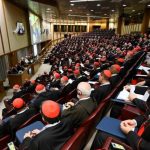 This is the controversial text (in English) on the liturgy that was given to the cardinals at the first consistory of Leo XIV
