

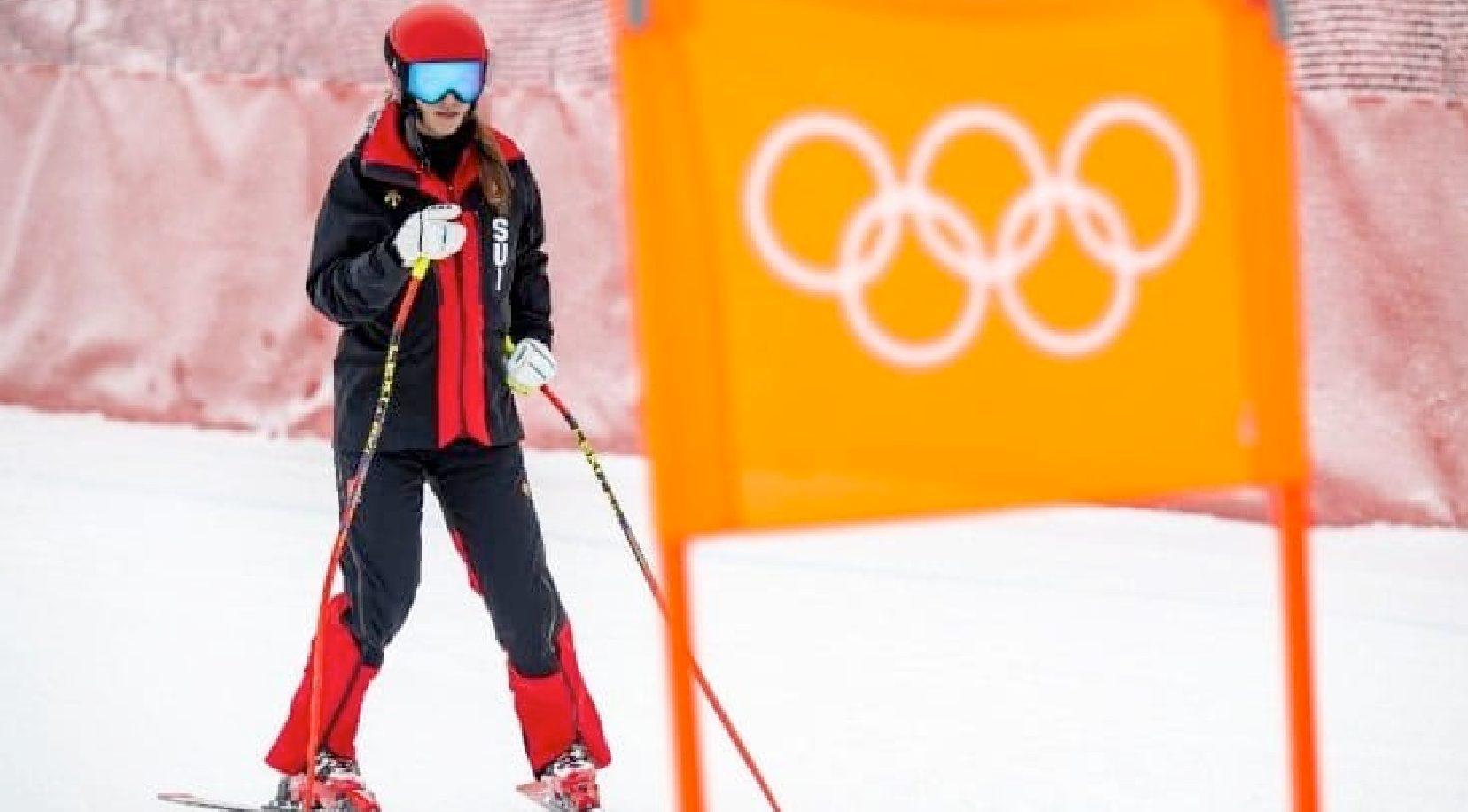
(ZENIT News / Rome, 02.10.2026).- On 6 February, just hours ahead of the opening ceremony of the Winter Olympics, Pope Leo XIV released a letter with an intentionally expansive title — Life in Abundance — setting out a vision of sport that reaches far beyond competition, spectacle or national prestige.
The timing was not accidental. The XXVI Winter Olympic Games, held from 6 to 22 February, followed by the XIV Winter Paralympic Games from 6 to 15 March, offer one of the rare moments when the world pauses to watch the same event. For the Pope, this convergence is not merely athletic but cultural and moral: a contemporary forum where humanity reveals both its aspirations and its contradictions.
Addressing athletes gathered in Milan and Cortina d’Ampezzo, Leo XIV frames sport as a shared human language rather than a specialized elite pursuit. Physical exercise, he writes, is accessible to all and beneficial not only to the body but also to the inner life, capable of expressing something universal about the human condition itself. Sport, in this reading, becomes a mirror in which society can recognize what it values — and what it risks losing.
Much of the letter is structured around a series of tensions rather than abstract ideals. Sport can educate, but it can also deform. It can unite peoples, or be instrumentalized to divide them. It can cultivate discipline and fraternity, or collapse into pure performance and profit. Leo XIV explores these contrasts by reflecting on sport as a builder of peace, a formative path for young people, a school of life, and even a modern “areopagus” — a space where values are debated and transmitted in public view.
Peace occupies a central place in the Pope’s reflections. Recalling how previous pontificates engaged the Olympic movement, Leo XIV situates his message within a long-standing papal tradition that sees sport as a potential antidote to violence and conflict. He explicitly acknowledges the renewed calls for an Olympic Truce promoted in recent years by the International Olympic Committee and endorsed by the United Nations General Assembly.
The appeal is framed against a stark diagnosis of the present moment. In a world marked by the abuse of power, displays of force and a growing disregard for the rule of law, the Pope argues that symbolic tools still matter. The Olympic Truce, he suggests, remains a fragile but meaningful sign — not a political solution, but a moral reminder that confrontation is not humanity’s only option. On the occasion of the Winter Games and Paralympics, he urges nations to rediscover this tradition as a sign of hope and a promise, however imperfect, of reconciliation.
The letter also turns the lens inward, challenging the Catholic Church to take sport seriously as a field of pastoral responsibility. Leo XIV insists that the Church’s presence in sport cannot be limited to ceremonial gestures or occasional messages. Instead, it should involve concrete accompaniment, ethical discernment and the ability to offer hope within environments often dominated by pressure, visibility and success metrics.
As an example of this approach, the Pope cites Athletica Vaticana, founded in 2018 as the official sports association of the Holy See under the Dicastery for Culture and Education. The initiative, he notes, illustrates how sport can be lived not as self-promotion but as service, integrating athletic commitment with ecclesial mission.
A particularly sharp section of the letter addresses the imbalance between elite sport and grassroots activity. While acknowledging professional competition as a legitimate expression of sport — complete with media attention and public acclaim — Leo XIV warns against neglecting amateur and community-level sport. These settings, often underfunded yet relationally rich, are portrayed as privileged spaces where sport reveals its most authentic social value.
The Pope also issues a clear warning against the reduction of sport to entertainment or commodity. When athletic performance becomes primarily a product, he argues, it risks losing its formative and humanizing power. The same danger applies when sport is exploited for political leverage or economic gain, severing it from its deeper purpose of fostering personal development and the common good.
Life in Abundance ultimately proposes a countercultural definition of success. Leo XIV invites both the sporting world and the Church to recognize that fullness does not arise from winning at any cost. True abundance, he concludes, is found in sharing, in respecting one’s opponent, and in the quiet joy of moving forward together. As Milan–Cortina takes the global stage, the Pope’s message reframes the Games not as a celebration of domination, but as a test of humanity’s capacity for encounter.
Full text of Pope Leo XIV’s letter on sports.
Thank you for reading our content. If you would like to receive ZENIT’s daily e-mail news, you can subscribe for free through this link.

Publicaciones relacionadas:
 Pope asks to define principles, norms, and guidelines for Latin rite priests accompanying Eastern rite Catholics arriving in the West
 How God makes us into his dwelling places: a reflection of Pope Leo XIV
 Leo XIV to Personally Bestow Palliums in Return to Historic Ritual: A Subtle but Symbolic Shift in Papal Style
 The Trinity of God “explained” (respectfully) with sport by Pope Leo XIV
