

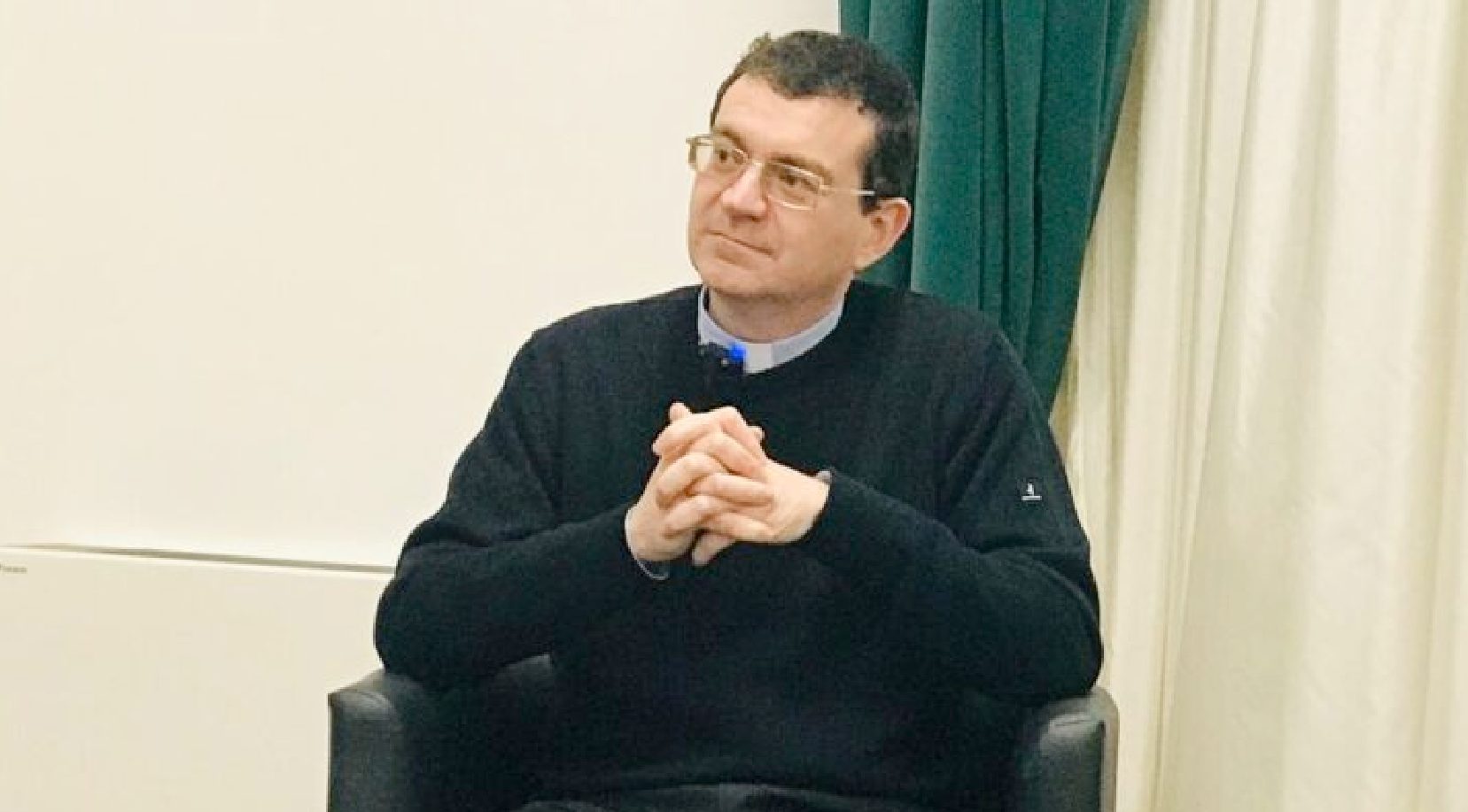
(ZENIT News / Rome, 02.15.2026).- On Monday, February 2, the Prior General of the Camaldolese Congregation of the Order of Saint Benedict addressed a letter to all Priors, Local Priors, Administrative Priors, Vice-Priors, those responsible for residences, Masters of Novices, and those professed with simple vows, on the topic of the digital world and its impact on religious life. The letter resonated widely in Italy because, the day before, a well-known Italian priest (Alberto Ravagnani) left the priesthood. The former priest had a significant online presence. While not a direct response to his departure from the priesthood, the letter raises reflections applicable to this and any other case, primarily as a preventative measure.
* * *
The internet, smartphone use, social media, online videos and movies, and the unregulated use of instant messaging present a challenge to monastic and religious life. We cannot pretend this challenge doesn’t exist. We, who are not «digital natives,» are only concerned with the productivity and possibilities that social media and the Internet can offer. But for new generations, these «media» are the way they understand themselves and relate to the world. Therefore, I believe that a deep and courageous reflection on these issues is necessary, especially for those in formation. The use of these media is also being questioned in the secular world, especially by young people. All the more reason for us to be concerned.
St. Romuald states in the Little Rule: “Sit in your cell as in Paradise. Forget the world and leave it behind.” Is it possible to live this opening of the Little Rule without paying any attention to social media and the Internet, with all that this entails? Can the cell, as a crucible of listening, prayer, and a life of wisdom, truly become a place of distraction, of wasted time, of escaping from oneself and one’s own inner tensions? If the cell becomes a place of distraction and a solitary, individualistic movie theater, where will our monastic and Romualdian spirituality end up?
There are true cinephile «addictions» that can lead monks to become film experts rather than seekers of God. Addiction then generates an inability to question oneself and recognize the absurdity of certain lifestyles. I believe that the monastic cell is not the place for watching films individually and that it is much healthier to think about communal moments, which could have formative value for everyone and also foster growth in communion and fraternity. Netflix and other online streaming platforms, as well as social networks like Instagram and TikTok, specifically designed to create addiction, should be avoided completely, also as a matter of poverty and sobriety. In particular, I believe it is essential to include this topic in the formation program of our communities. I propose a provisional framework for reflection that covers the different stages of monastic life:
1)
The postulate (and pre-postulate): the time of critical thinking. The Constitutions, regarding the postulate period, state: «The postulate aims to foster in young men a psychological and spiritual adaptation to the new situation, so that, in an atmosphere of serenity and under the expert guidance of the Master, they may thoroughly study their vocation» (Cost 131). For this to be possible, it is necessary to gradually lead candidates to develop a critical sense regarding the use of the Internet and social media, the risks involved, and the value of living in a cell and in solitude. During this time, in dialogue with the Master, a healthy discipline and detachment can begin to mature. For many, this involves questioning their past way of experiencing these aspects of life, a way in which they often fail to see the risks and incompatibility with the monastic vocation.
2)
The novitiate: a time of detachment. The Constitutions state: «The novitiate has as its principal objective to make known and allow the candidate to experience the fundamental demands of the monastic life that he will one day profess in response to that personal call of love with which God has called him to live his Baptism» (Cost. 135). During this time, it is necessary to live a true detachment, suspending the use of social media, Internet use in the cell, individual viewing of videos or films, subscriptions to platforms like Netflix, and regulating communication with family and friends via WhatsApp. Even smartphone use should be agreed upon with the Master. In an age like ours, I believe that we must seriously value healthy discipline, also through concrete decisions, such as entrusting one’s smartphone to the Master.
3)
The simple profession: a time of responsibility. The Constitutions state: “A prolonged and special deepening of formation after the novitiate is absolutely necessary for everyone for effective progress in the monastic life, even though achieving this goal may involve one’s entire existence (cf. PC, 18)” (Cost. 150). During the time of simple profession, it is necessary for those in formation to learn to use the Internet and social media prudently, even responsibly choosing not to use them if community duties do not require it. These tools should not be demonized — that would simply be counterproductive — but we cannot ignore that they shape how we relate to the world, to ourselves, and also to God. It is necessary to guide those professed with simple vows to use these media responsibly and coherently. For example, it would be helpful to abstain from any use of social media or the Internet, except for work or community service, after dinner or after Compline. The Rule speaks clearly of «silence» after Compline: «Monks must always keep silence with love, but especially during the night» (RB XLII, 1). I believe that this observance of silence with love also applies today, especially to social media, the Internet, and movies. Those professed with simple vows should become accustomed to using these media responsibly as tools for work and as a prudent use of time, and not as an occasion for distraction, escapism, and «idleness,» the enemy of the soul (cf. RB XLVIII, 1).
Dear Brothers, I believe that these guidelines, which need more practical application in the life of each community, are fundamental both for those in formation and for those who have already made their solemn profession. It is, in effect, a formative process that begins with arrival at the monastery and continues over time, if only because these are constantly evolving tools.
Rethinking the formation itinerary, taking into account the challenges of the present, I believe is an opportunity for verification and discernment also for solemnly professed monks, so that our monastic life may become ever more authentic and free from hypocrisy. We cannot ask those in formation to do what solemnly professed monks do not live. The use of social media and the Internet risks turning the practice of the cell into a mere formality. Just as in the past certain practices of monastic life could be considered formalistic, today remaining in the cell without seriously experiencing what the cell space entails can be mere formalism. Consideration could be given to the advisability of some community gatherings in which, perhaps with the help of an expert in the field, the opportunities and risks associated with these means of communication could be highlighted. In other words, it is about everyone learning a positive way to use these instruments and, therefore, regulating their use in a positive way and in accordance with the monastic vocation.
I have written these things to initiate a shared reflection and to avoid pretending that this challenge to monastic life today doesn’t exist.
Dom Matteo, Prior General
Translation of the Italian original into Spanish by ZENIT’s Editorial Director and, into English, by Virginia M. Forrester.
Bold texts are ZENIT’s.

Publicaciones relacionadas:
 Blessing of Homosexual Couples: Five Reasons Why the Flemish Bishops Must Be Stopped
 Dicastery for the Doctrine of the Faith Responds to Doubts Regarding Baptism of Transexuals and Homosexuals as Godparents in Sacraments
 What does it mean to be pilgrims? The Pope’s message for the World Day of Vocations
 How Many Legionaries of Christ Are There in 2025? Most Recent Statistics Are Published
