

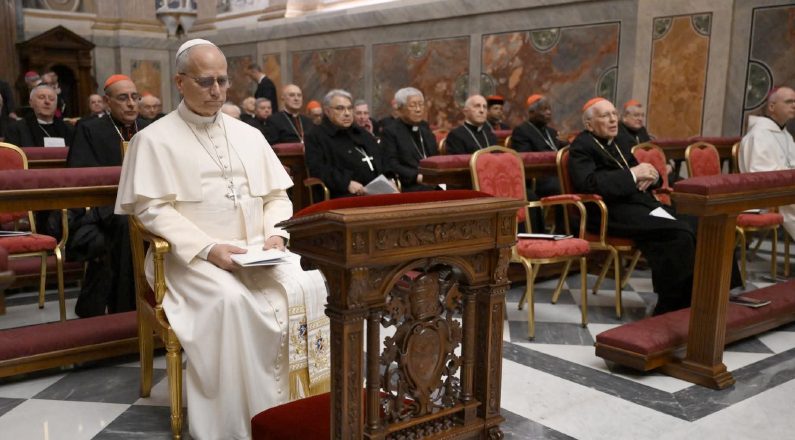
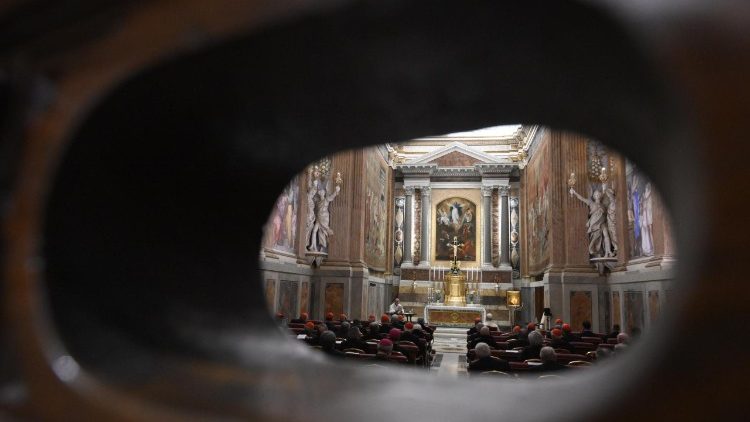
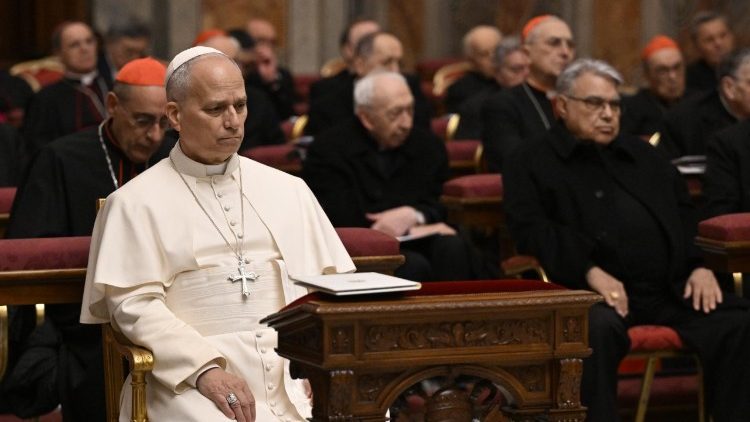
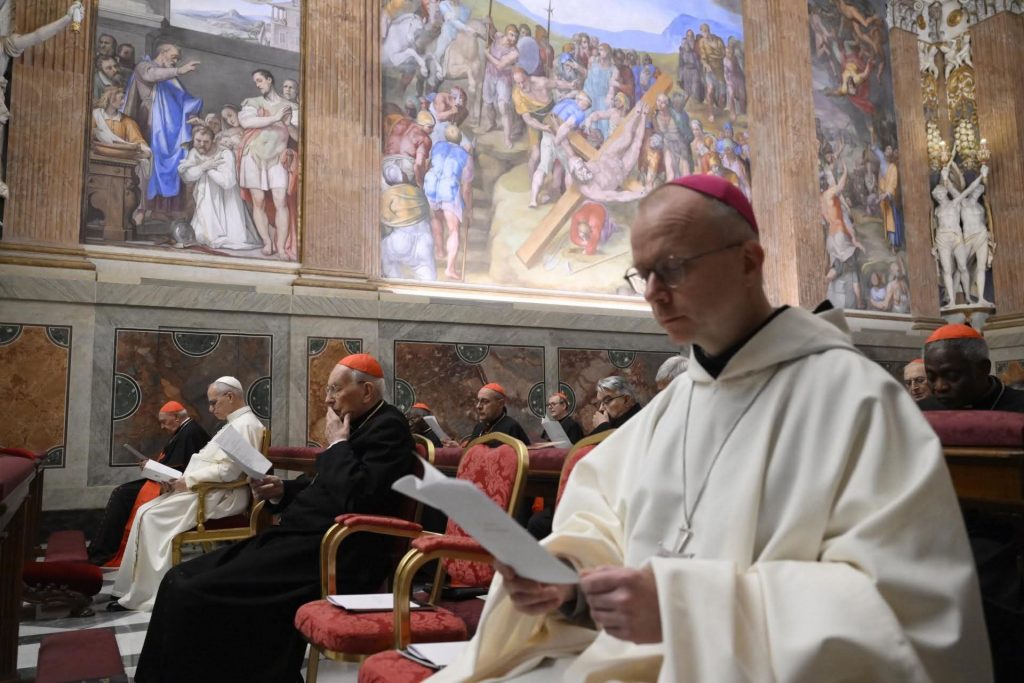
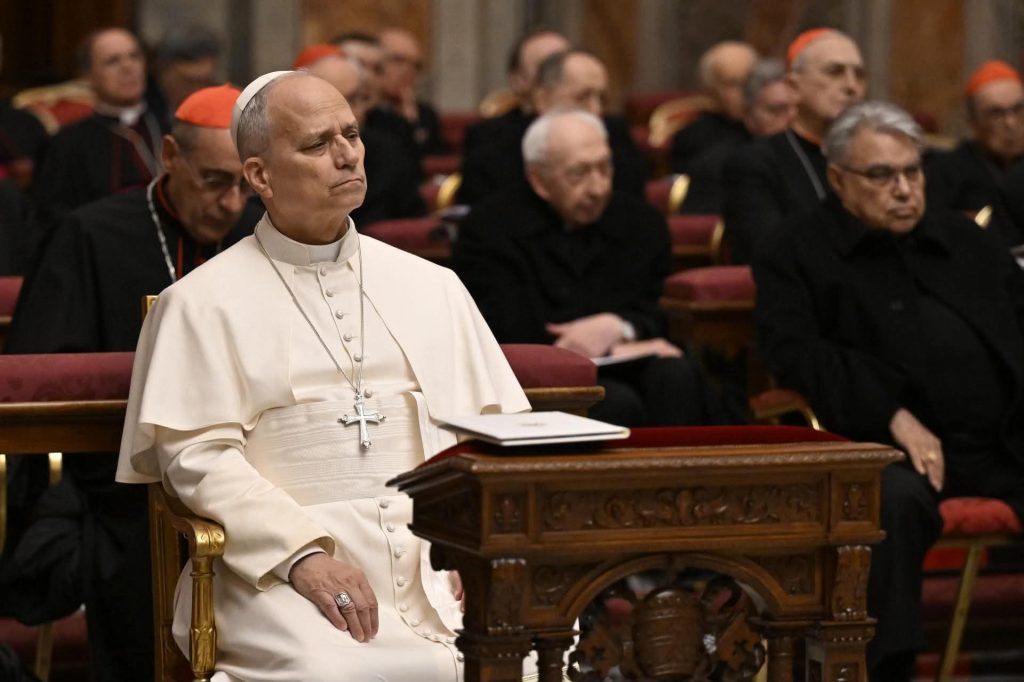
(ZENIT News / Vatican City, 02.22.2026).- On Sunday afternoon, February 22, in the Cappella Paolina in the Apostolic Palace, Pope Leo XIV and the senior leadership of the Roman Curia entered into the silence of Lent. The occasion was the opening meditation of the annual spiritual exercises, a week that suspends ordinary governance in favor of recollection, examination, and prayer.
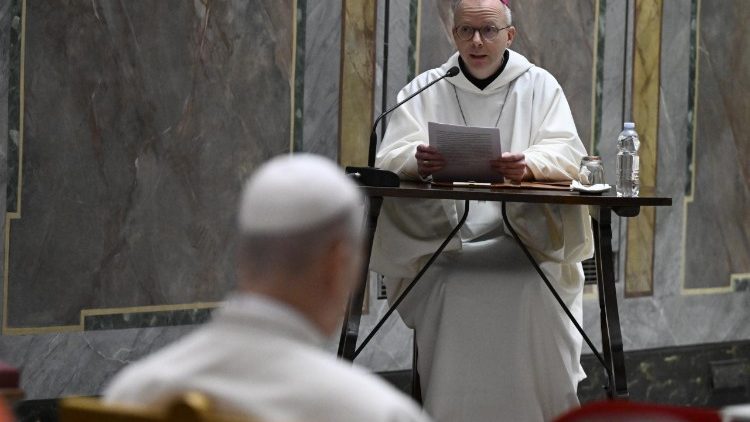
The preacher invited to guide this year’s retreat was Erik Varden, the Cistercian bishop of Trondheim, Norway. A monk of the Order of Cistercians of the Strict Observance—better known as the Trappists—Varden brought to the Vatican a distinctly monastic sensibility: austere, biblical, and unafraid of spiritual combat. His overarching theme for the week, “Illuminated by a Hidden Glory,” set the tone for a meditation cycle that seeks to uncover divine radiance not in spectacle, but in fidelity.
The opening reflection, titled “Entering into Lent,” revolved around a paradox: Christian peace is not the reward of a comfortable life but the precondition for a transformed society. “Christian peace is not a promise of an easy life,” Varden insisted. Rather, it is the fruit of courageous self-gift, rooted in what is just and true. In a world accustomed to equating peace with the absence of tension, the bishop drew a sharper line. The peace to which Lent calls believers, he said, is one “the world cannot give,” echoing the Gospel of John. It is not a negotiated truce but the interior sign of Christ’s abiding presence.
Varden framed Lent as a season of essentiality. The Church, he explained, deliberately strips away excess—both material and symbolic—to create a space in which the believer can confront what truly matters. Even good distractions are temporarily set aside. In this purified environment, spiritual struggle becomes unavoidable. The Church does not dilute its language when speaking of vice and destructive passions, he noted. Its grammar is not relativistic but categorical: “yes, yes” and “no, no.” Lent is not a season for half-measures.
Central to this battle is the purification of anger. Citing the seventh-century ascetic master John Climacus, Varden recalled the uncompromising warning: nothing obstructs the indwelling of the Spirit more than wrath. In an age marked by ideological polarization and digital outrage, the reminder carried contemporary weight. Authentic Christian identity, he emphasized, is measured by fidelity to Christ’s example and commandments—not by rhetorical force or cultural dominance.
The meditation also wove in the liturgical heritage of the Roman Rite. For more than a millennium, on the First Sunday of Lent, the Roman liturgy has proclaimed before the Gospel of Christ’s temptation in the desert the solemn chant known as the “tractus,” drawn almost in its entirety from Psalm 90, the Qui habitat. The psalm’s language—“He who dwells in the shelter of the Most High”—is at once martial and serene, evoking divine protection amid trial.
To illuminate its depth, Varden turned to one of the great Cistercian voices, Bernard of Clairvaux. During Lent in 1139, Bernard preached a cycle of seventeen sermons on the Qui habitat to his monks. In those reflections, Bernard traced the contours of grace at work in the midst of struggle: combating evil, fostering good, defending truth, and persevering along the exodus from slavery toward the promised land. The path, he acknowledged, can feel like walking a razor’s edge. Yet beneath it are “the everlasting arms,” a biblical image that anchors courage in divine fidelity.
From Monday, February 23, through Friday, February 27, two daily meditations are scheduled: one at 9:00 a.m., preceded by the midday office, and another at 5:00 p.m., followed by Eucharistic adoration and Vespers. After Sunday’s inaugural address, two reflections focus explicitly on Bernard of Clairvaux—“Saint Bernard the Idealist” on the morning of February 23 and “Saint Bernard the Realist” on the afternoon of February 26—suggesting a deliberate exploration of the tension between spiritual aspiration and concrete ecclesial life.
Other themes mapped out for the week include reliance on divine help, the process of becoming free, the splendor of truth, the enigmatic biblical phrase “a thousand shall fall,” the promise “I will glorify him,” the ministry of God’s angels, and the virtue of discernment or “consideration.” The final meditation, centered on “Communicating Hope,” will draw the retreat to a close.
That concluding topic resonates beyond the walls of the Apostolic Palace. In recent years, the Vatican has repeatedly insisted that hope is not mere optimism but a theological virtue grounded in the Resurrection. To “communicate hope” presupposes that one has first wrestled with despair, purified anger, and chosen fidelity over convenience. It is, in other words, the outcome of the very spiritual combat with which Varden began.
By opening Lent with a meditation on radical peace and disciplined discipleship, the Norwegian bishop offered Pope Leo XIV and the Curia not a program of administrative reform, but something more foundational: an invitation to interior coherence.
Thank you for reading our content. If you would like to receive ZENIT’s daily e-mail news, you can subscribe for free through this link.

Publicaciones relacionadas:
 Pope Leo XIV to publish new document on Catholic education and declare Newman co-patron of Catholic education
 Are you or do you know someone who is having suicidal thoughts? Here is what Pope Leo XIV has to say about it
 Here you can watch the new documentary about Pope Leo XIV released by the Vatican for free
 Pope Leo XIV opens the Vatican to Hollywood with an audience attended by these actors and actresses
