

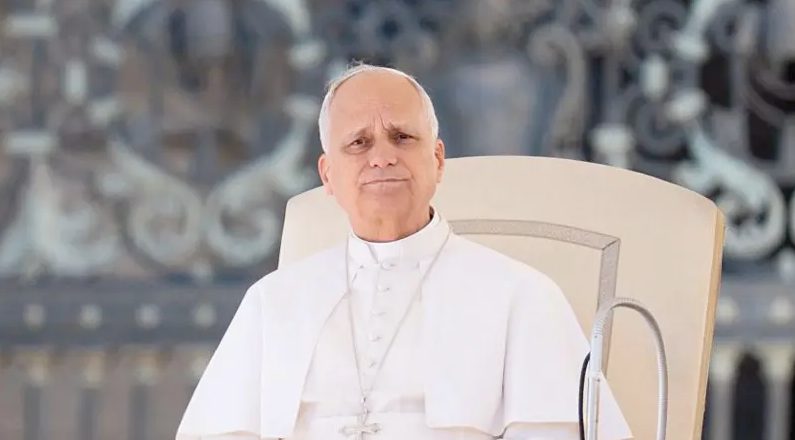
(ZENIT News / Madrid, 02.24.2026).- Spain’s Catholic bishops have moved swiftly to correct what they describe as a distorted reading of a private papal conversation, after a media report suggested that Pope Leo XIV had explicitly warned them about far-right political parties seeking to “weaponize” the Church.
In a statement released on February 24, the executive commission of the Spanish Episcopal Conference made clear that no such reference was made during an audience with the Pope on November 17. According to the bishops, Pope Leo XIV spoke in broader terms about the danger of allowing Christian faith to be subordinated to ideology, without naming any party, movement, or political actor.
The clarification followed a February 23 report by El País, which claimed that the Pope’s main concern in the meeting was the rise of far-right groups in Spain allegedly trying to capture the Catholic vote and instrumentalize the Church. The article cited an unnamed prelate asserting that the Pope believed “the far right uses believers for its own ends,” and it singled out the party VOX as a central example.
The bishops’ statement was also intended to counter secondary reporting that went even further. Catholic weekly Vida Nueva was accused by church officials of falsely claiming that the Pope had explicitly mentioned VOX by name during the audience—something the executive commission categorically denied.
No names, no parties
In their note, the bishops emphasized both loyalty and tone. “We wish to express our respect and closeness to the Pope and to welcome his call to evangelizing communion in the society in which we live, with all its challenges,” the statement said. They stressed that Leo XIV received them “with special affection,” listened attentively to each intervention, and encouraged unity within the Church in Spain.
The nine-member executive commission, which oversees the implementation of decisions taken by the full conference, is led by Archbishop Luis Argüello as president and Cardinal José Cobo as vice president. Both figures have become increasingly visible voices as the Spanish Church navigates a polarized political environment.
A broader political backdrop
The controversy cannot be separated from recent tensions between the episcopate and sectors of the Spanish right. In August 2025, VOX leader Santiago Abascal publicly attacked the bishops after they criticized a local government initiative that would have effectively barred Muslims from holding religious events in certain areas.
At the time, the bishops warned that restricting religious expression on confessional grounds violated fundamental human rights. “Imposing these restrictions for religious reasons constitutes unacceptable discrimination in democratic societies,” they said, adding that such measures harm not only one faith community but believers and non-believers alike.
Abascal responded by accusing the bishops—and specifically Francisco César García Magán, the conference’s secretary general—of failing to confront actions “against our identity, even against religious freedom and against the faith,” allegedly out of fear of losing public funding.
Although the conference did not issue a direct rebuttal at the time, García Magán addressed the ideological climate in a homily delivered in Toledo’s cathedral later that month. He lamented the return of slogans hostile to the Gospel and to the Church, recalling rhetoric heard during the first third of the 20th century, a period marked by intense religious persecution in Spain. The fact that such language, he said, now comes from “self-proclaimed Catholics” made it all the more troubling.
Immigration as a flashpoint
The friction has only intensified with the bishops’ recent support for a government proposal to regularize the status of approximately 500,000 undocumented migrants living in Spain. According to El País, that stance further inflamed far-right groups, which oppose large-scale regularization and criticize the Church’s consistent advocacy for migrants.
It is precisely this intersection of moral teaching and political debate that frames the bishops’ insistence on precision. By denying that the Pope singled out any party, they sought to reaffirm a familiar Vatican line: the Church warns against ideological capture in general, not against one label or movement in particular.
A call to communion, not confrontation
In their closing remarks, the bishops returned to what they described as the heart of the papal message. Leo XIV, they said, urged “communion among all the members and institutions that make up the Church” and encouraged Spanish Catholics to persevere in their evangelizing mission amid social and political pressures.
The episode underscores how quickly nuanced papal language can be refracted through national political debates—and how carefully episcopal conferences now feel compelled to guard the boundary between pastoral guidance and partisan interpretation.
Thank you for reading our content. If you would like to receive ZENIT’s daily e-mail news, you can subscribe for free through this link.

Publicaciones relacionadas:
 Pope Leo XVI to visit Spain: here’s everything we know so far
 Pope Leo XIV approves a jubilee year to mark 800 years since the death of St. Francis: here’s what you need to know
 Leo XIV, a pro-life Pope, sends a message to participants in the March for Life in the USA
 Monaco will be the second destination for a trip by Pope Leo XIV at the end of March 2026: here is what is known
