

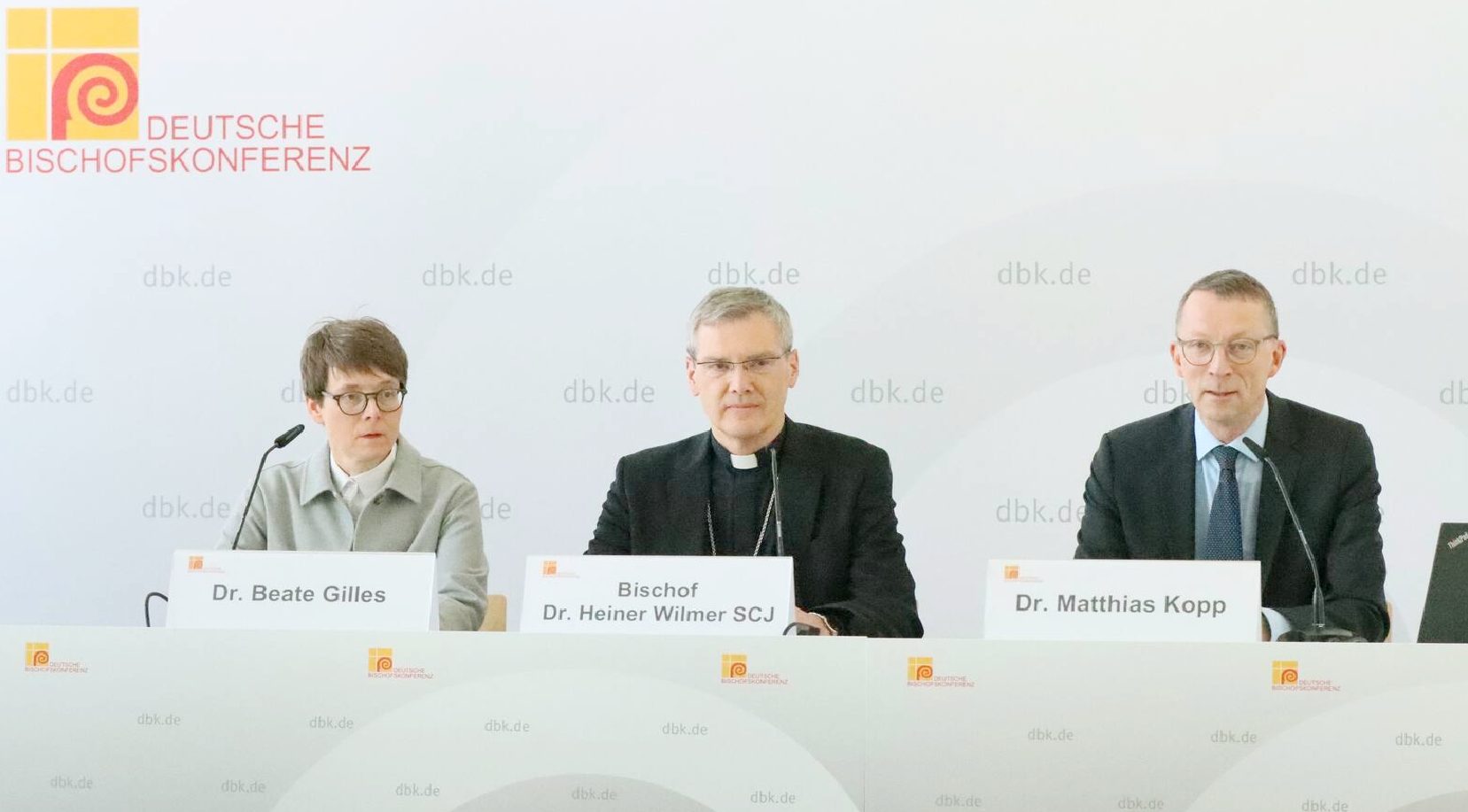
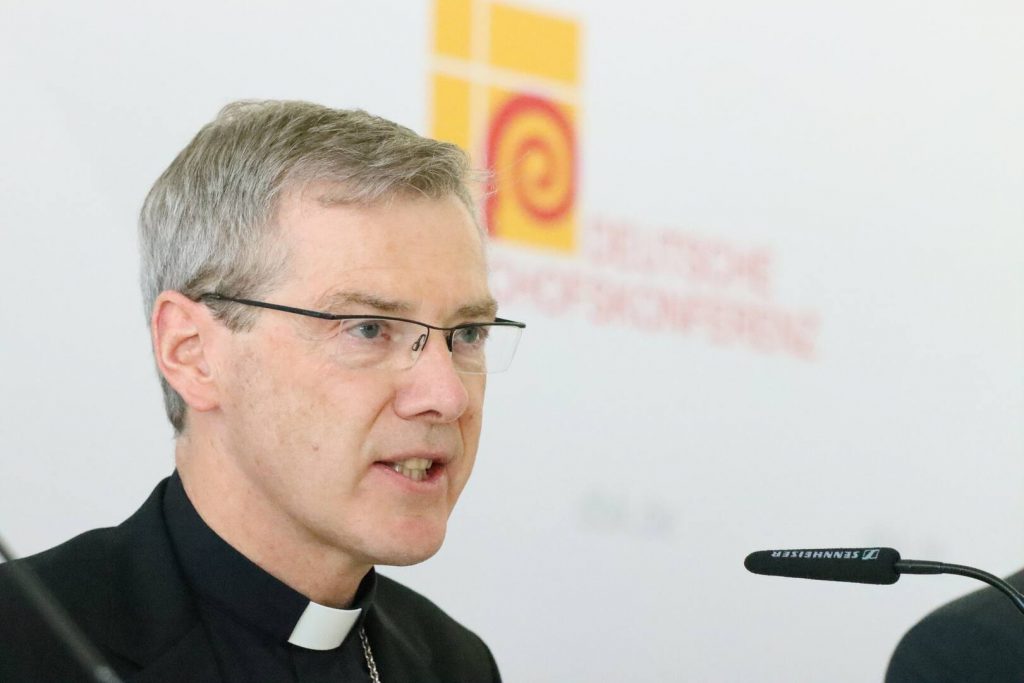
(ZENIT News / Würzburg, 02.25.2026).- The election of Bishop Heiner Wilmer as president of the German Bishops’ Conference marks more than a routine change of leadership. It comes at a moment when the Catholic Church in Germany is navigating internal polarization, unresolved questions with Rome, and growing pressure to articulate a credible Christian witness in a fractured society.
Wilmer, bishop of Hildesheim since 2018, was chosen on February 24 during the spring plenary assembly of the German episcopate in Würzburg, succeeding Bishop Georg Bätzing of Limburg, who had led the conference since 2020 and declined to stand for a second term. The mandate is for six years, a full cycle that will likely define the next phase of the German Church’s reform trajectory.
Speaking shortly after his election, Wilmer struck a tone that combined realism and confidence. He acknowledged that the Catholic Church in Germany has gone through a difficult period, but insisted it remains a structural pillar of society through its social commitment. Catholic social teaching, he argued, must recover a stronger public voice as a prophetic contribution, not only for believers but for society as a whole. Against what he described as a climate where neighbors too easily become adversaries, Wilmer contrasted what he called Christian hope: neither naïve optimism nor resignation, but a hope capable of resisting defeatism and destructive instincts.
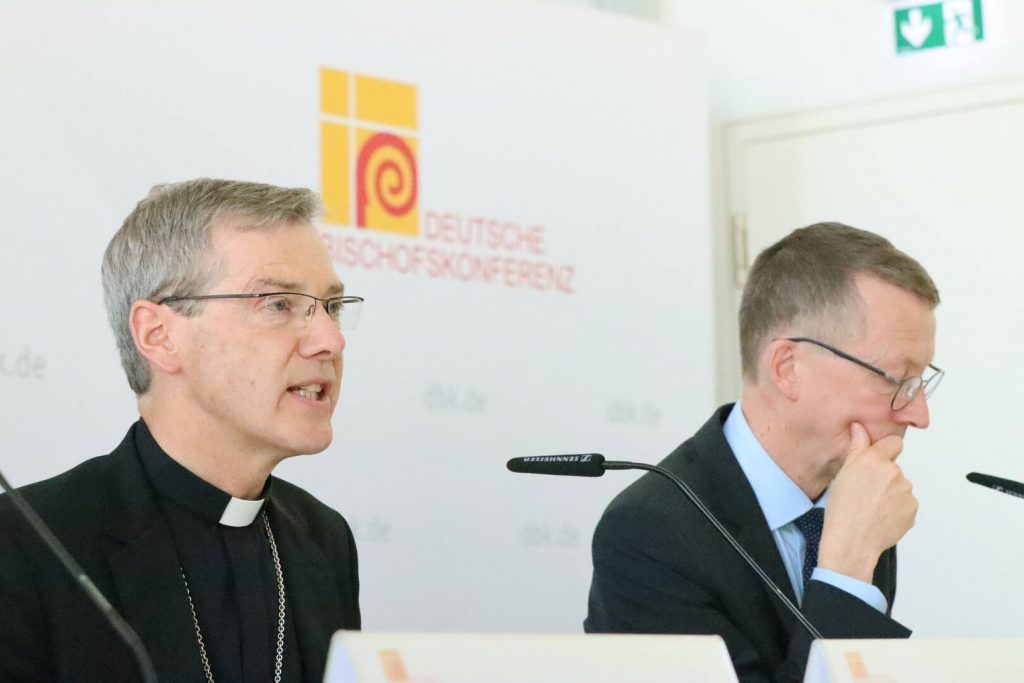
The new president placed peace at the center of his first public interventions. His election coincided with the fourth anniversary of the full-scale Russian invasion of Ukraine, a date he recalled explicitly. Addressing the war, he spoke of suffering, destruction and tears, adding a direct appeal: in God’s name, this war must end. Peace, he said, is not an abstract ideal but a task that demands responsibility.
A bridge figure in a polarized episcopate
Within the German Bishops’ Conference, Wilmer is widely regarded as a mediator. The conference has been increasingly divided between reform-oriented bishops and those more skeptical of the Synodal Path, the multi-year process launched to address issues ranging from clerical power and sexual morality to the role of women and priestly life. In this context, the choice of Wilmer signals a preference for a figure seen as capable of holding together divergent sensibilities.
His profile is unusual in the German episcopate. A member of the Priests of the Sacred Heart of Jesus, he is the first religious priest to preside over the conference. Born in 1961 in Schapen, in the rural Emsland region, he entered the congregation in 1980 and was ordained in 1987. His academic formation took him to Freiburg, Paris and Rome, where he earned a doctorate in fundamental theology. Between 2015 and 2018, he served as superior general of his order in Rome, an experience that gave him sustained exposure to the life of the universal Church and the workings of the Roman Curia.
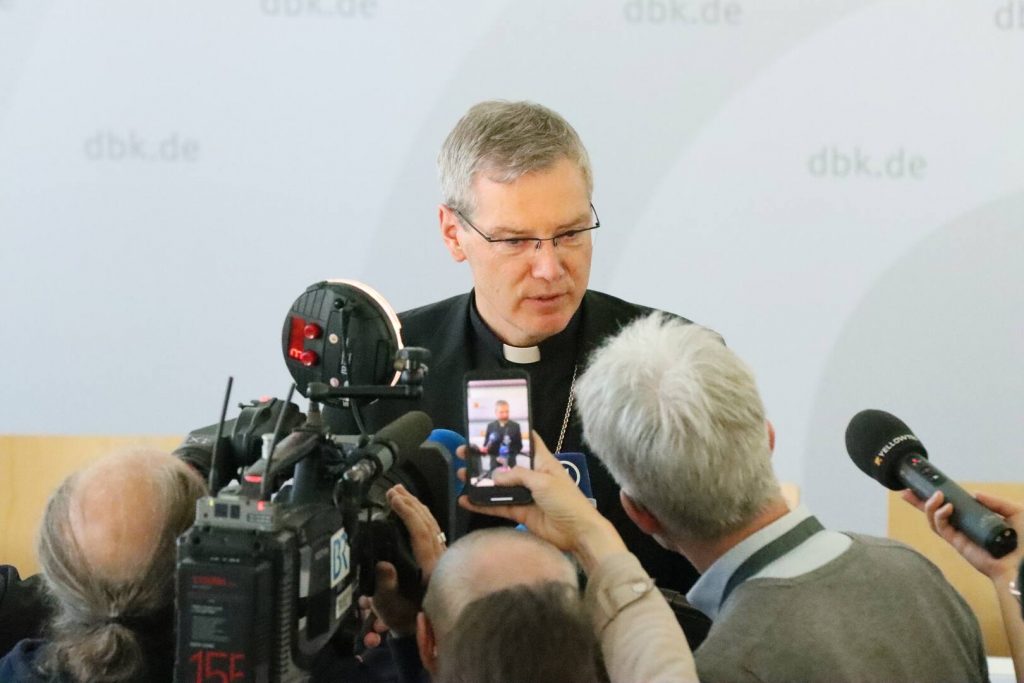
This “Romanity” has been cited by several observers as a key factor in his election. Wilmer is fluent in Italian and familiar with Vatican culture, assets considered crucial at a time when relations between the German Church and Rome have been repeatedly strained. During the Synodal Path, tensions with the Curia were often eased only through direct, personal dialogue in Rome. Wilmer’s existing networks there are expected to play an important role in the coming years.
A reformer with a spiritual register
Theologically and pastorally, Wilmer resists easy categorization. He has publicly supported reforms discussed in the Synodal Path, including reconsideration of mandatory celibacy for diocesan priests, expanded leadership roles for women, and the possibility of blessing same-sex couples. He has also drawn attention with stark language, once stating that abuse of power is “in the DNA of the Church.”
At the same time, he avoids the confrontational rhetoric that has characterized parts of the German debate. In recent years, he has spoken less frequently about internal reform battles and more about social issues, reflecting his previous role as chair of the conference’s Commission for Social Affairs and as president of the German Justitia et Pax Commission from 2019 to 2024. His interventions tend to emphasize patience, spirituality and communion with the universal Church. “We are not a German Church, but a universal Church,” he has repeatedly said, echoing concerns expressed by Rome since the launch of the Synodal Path.
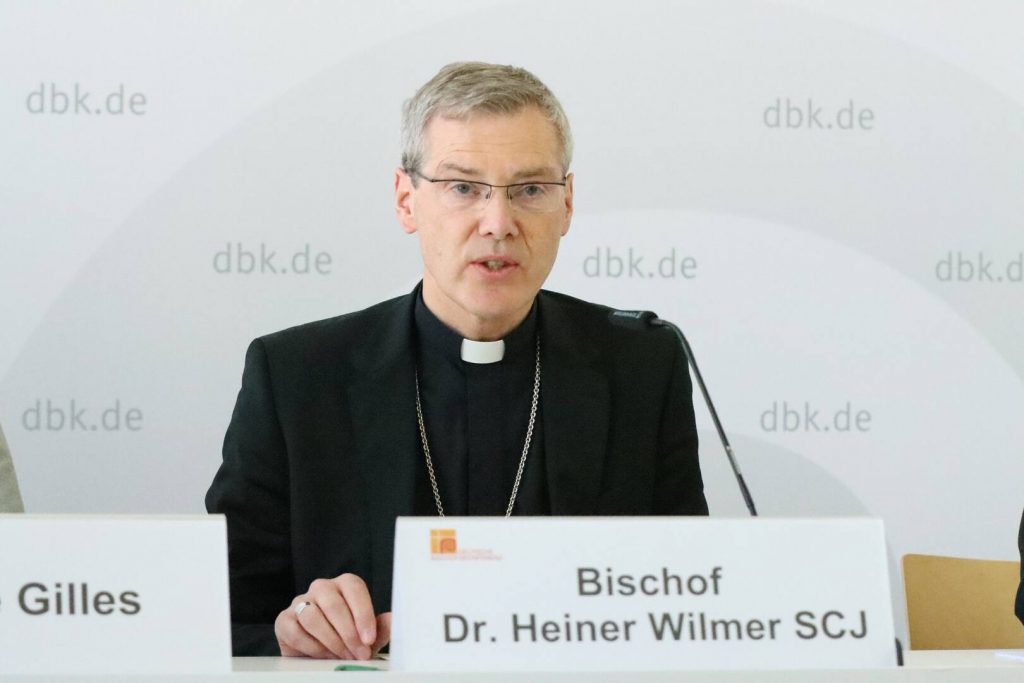
This dual profile was evident in his first address as president, where he coupled reflections on Ukraine with a citation from the Gospel of Luke: “Glory to God in the highest, and on earth peace to those on whom his favor rests.” He described these words as his compass, a formulation likely to resonate with bishops of a more traditional theological outlook.
Listening to victims, redefining credibility
Wilmer also addressed one of the most sensitive issues facing the Church in Germany: sexual abuse. Speaking directly to survivors, he stressed that their voices carry real weight and that every step of ecclesial reflection gains depth and truth through their testimony. He described the path forward as one defined by listening and reliability, signaling continuity with commitments made in recent years but also an awareness that credibility remains fragile.
The Würzburg assembly underlined this continuity in other ways. Alongside Wilmer’s election, the bishops confirmed Beate Gilles as secretary general of the conference and Matthias Kopp as spokesperson. Gilles, in office since 2021, is the first woman to hold the position; Kopp has served as spokesperson since 2009 and was appointed adviser to the Vatican Dicastery for Communication in 2024. Their reconfirmation suggests institutional stability rather than a sharp break with the recent past.
Synodal statutes and the Roman horizon
That stability, however, does not mean calm waters ahead. During the same plenary assembly, the bishops approved the statutes of the future Synodal Conference, intended as a permanent body bringing together bishops and representatives of the Central Committee of German Catholics. The text has been sent to Rome for recognitio, the formal approval required for canonical validity.
The issue is not procedural but ecclesiological. Vatican authorities have repeatedly warned against national structures that could, in practice, limit episcopal authority or alter the hierarchical constitution of the Church. A previous attempt to establish a Synodal Council with decision-making powers met explicit objections from Rome. Whether the revised statutes overcome those concerns remains an open question, and the outcome will have implications beyond Germany, touching on the balance between papal authority and national reform processes across the Church.
A presidency without command power
Formally, the president of the German Bishops’ Conference has no jurisdiction over fellow bishops. The role is one of coordination, representation and moderation rather than command. Wilmer himself has rejected the image of a president as a ruler, preferring to describe a bishop as a player who opens spaces and connects people.
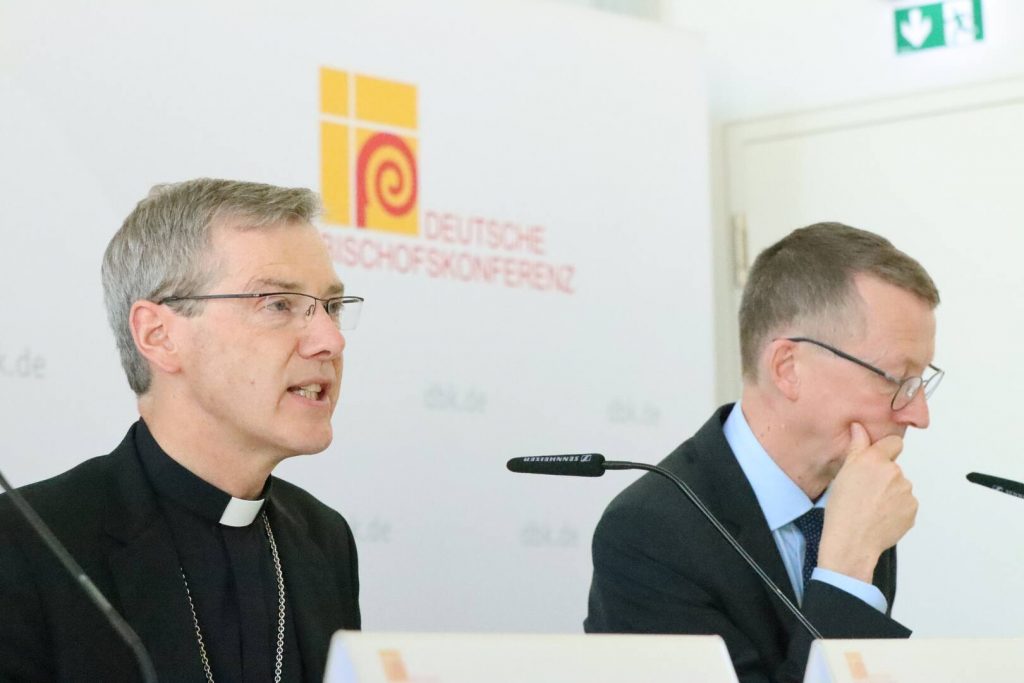
Whether that style will be sufficient in a conference of 61 members, marked by theological diversity and public scrutiny, remains to be seen. What is clear is that Wilmer assumes leadership at a moment when the German Church’s internal debates, its relationship with Rome, and its public credibility are tightly intertwined. His task will be to keep those threads from unraveling while convincing both critics and supporters that reform, communion and evangelization need not be mutually exclusive.
Thank you for reading our content. If you would like to receive ZENIT’s daily e-mail news, you can subscribe for free through this link.

Publicaciones relacionadas:
 Bishop: Church’s true influence is sharing God’s mercy, not chasing ‘likes’
 Bishop Barron announces founding of new congregation dedicated to digital evangelization
 China recognizes first bishop appointed by Pope Leo XIV for a Chinese diocese
 This is how the inauguration of the new Catholic Archbishop of Westminster went
