

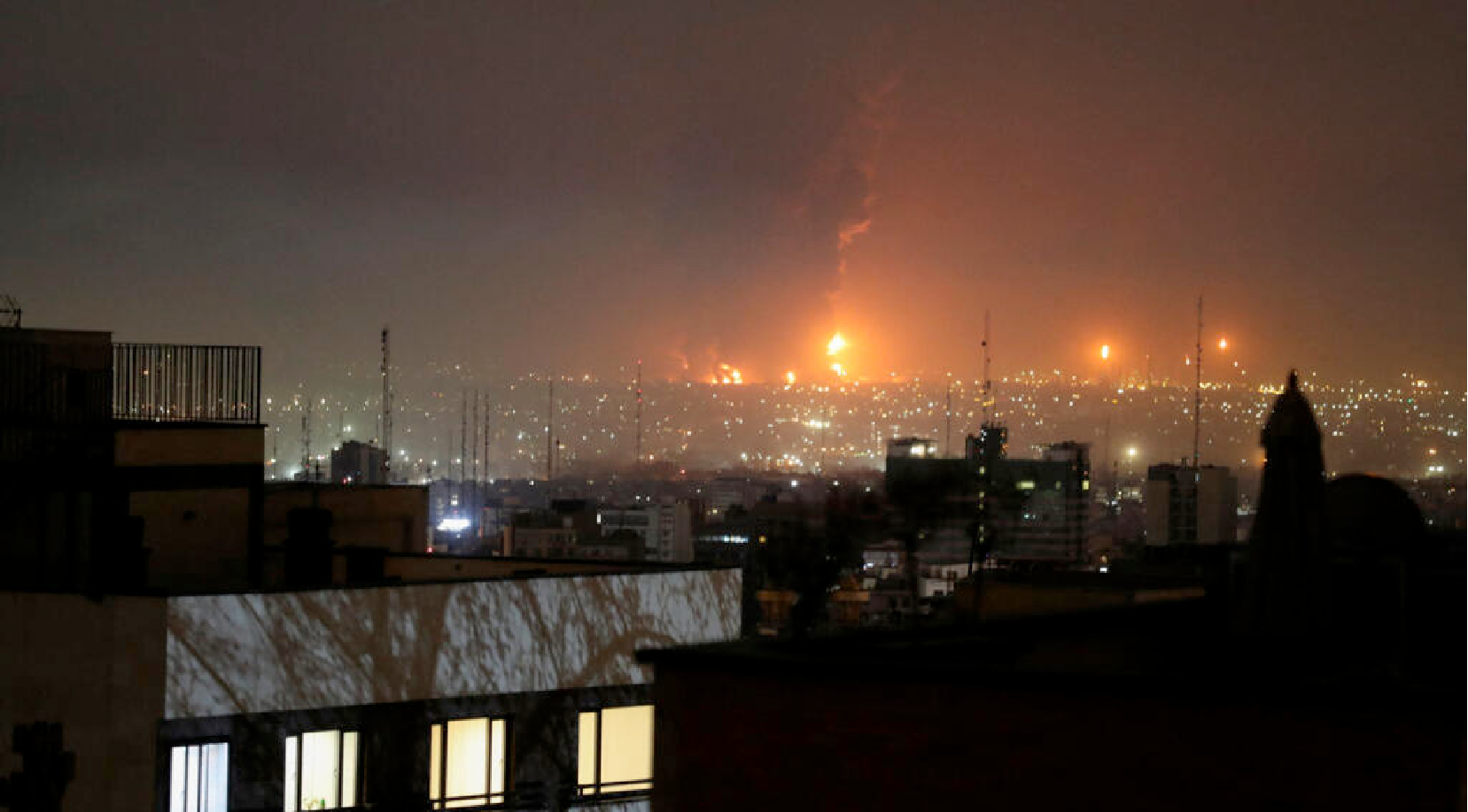
(ZENIT News / Rome, 03.17.2026).- From the window of the Apostolic Palace, during the Angelus of the Fourth Sunday of Lent, Pope Leo XIV raised a voice that echoed far beyond St. Peter’s Square: a stark call for an immediate ceasefire in a Middle East once again engulfed in spiraling violence. His appeal, however, lands in a region where not only cities but also the most sacred spaces of Christianity have been forced into an unprecedented silence.
The current escalation, triggered on February 28 by a joint military campaign of the United States and Israel against Iran, has already claimed more than 1,200 lives, including at least 200 children, according to various estimates. The conflict has rapidly expanded, drawing in Lebanon and threatening to engulf the wider Gulf, while diplomatic avenues appear increasingly remote.
The Pope’s words were direct and unambiguous. War, he insisted, cannot deliver justice, stability, or peace—only dialogue can. Yet, as he spoke, facts on the ground told a different story: intensified bombardments, mass displacement, and a regional architecture of conflict hardening by the day.
Lebanon has emerged as one of the most immediate humanitarian fault lines. Israeli operations against Hezbollah have escalated sharply, with entire المناطق subjected to airstrikes. In just over ten days, more than 800,000 people have been displaced—roughly one in seven inhabitants of the country—while official figures point to over 800 deaths in recent days alone. Other estimates suggest up to 750,000 displaced in an even shorter timeframe, underscoring the fluid and chaotic nature of the crisis.
The human dimension of this upheaval is stark. Families fleeing southern لبنان have crowded into improvised shelters, stadiums, and church compounds, while others sleep in cars or on the streets. Public infrastructure, already fragile after years of economic collapse, is buckling under the pressure. Humanitarian organizations warn that needs are outpacing response capacity.
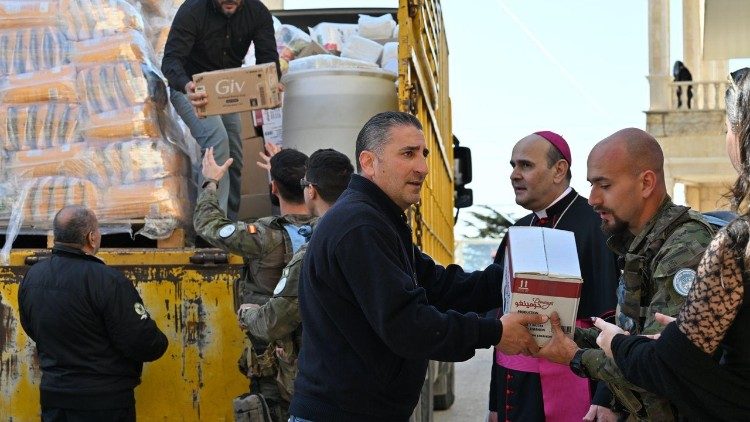
Amid this collapse, the Catholic Church’s presence has taken on both pastoral and operational urgency. Paolo Borgia has personally overseen the distribution of at least 15 tons of aid to affected المناطق, describing a landscape of destroyed roads, isolated villages, and widespread fear. His account of praying in a village church while mortar shells fell nearby captures the surreal coexistence of faith and الحرب.
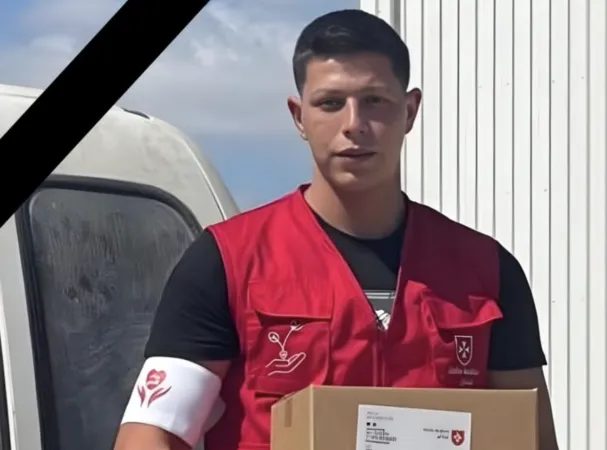
The death of a young humanitarian worker linked to the Sovereign Order of Malta, as well as the killing of a Maronite priest, has further shaken the local Church. The latter case has sparked international condemnation from a network of over 2,200 priests across 59 countries, who have called for accountability under international law and denounced what they describe as serious violations of humanitarian norms.
While Lebanon burns, Jerusalem—spiritual heart of three monotheistic religions—has entered a state of near paralysis. For the first time in living memory, the doors of the Church of the Holy Sepulcher have remained closed for an extended and continuous period during Lent. Even in times of past wars or pandemics, access had never been so severely restricted.
The implications are profound. The Via Dolorosa, the path traditionally associated with Christ’s Passion, has fallen silent. Liturgies marking the central mysteries of Christianity have been suspended or drastically curtailed. Not even internal celebrations behind closed doors—permitted in previous crises—have been allowed in recent weeks.
The physical danger is no abstraction. Missile fragments have struck a primary school near Jaffa Gate, while other debris has landed near sites such as the Shepherds’ Field in Beit Sahour. The المدرسة was empty—schools have been closed since the outbreak of hostilities—but the حادث underscores the indiscriminate nature of the threat. Residents of the Old City, notably, lack access to bomb shelters, making every strike a potential catastrophe.
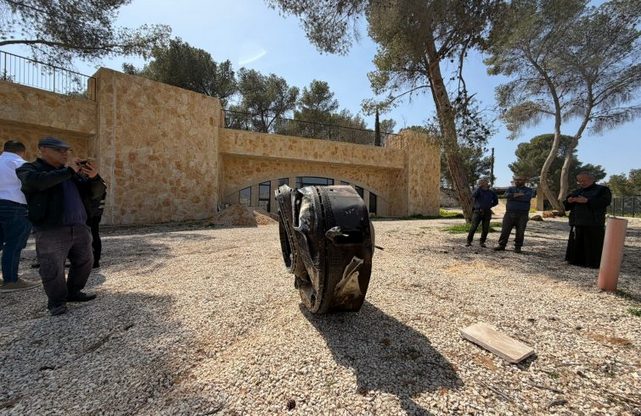
The broader military landscape continues to deteriorate. Iranian counterattacks have targeted U.S. bases in the Gulf and positions in Iraq, while Israel has intensified strikes on Tehran and southern Lebanon. Reports indicate that up to 15,000 Iranian targets have been hit since the beginning of the campaign, while Tehran has launched ballistic missiles weighing up to two tons toward Israeli territory.
In the Gulf, the strategic Strait of Hormuz has become a focal point of tension, with attacks on at least 16 commercial vessels and growing discussions of naval escorts. Meanwhile, the possibility of a U.S. ground operation—potentially involving between 2,500 and 5,000 marines—has heightened fears of a further escalation.
Political rhetoric has done little to ease concerns. Donald Trump has dismissed calls for an immediate halt to hostilities, insisting that Iran is nearing defeat while rejecting negotiation terms as insufficient. Israeli leadership, for its part, has ruled out near-term dialogue with Lebanon, signaling a continuation of military operations aimed at dismantling Hezbollah’s infrastructure.
In this context, analysts point to overlapping motivations: strategic ambitions to reshape the regional balance of power, domestic political calculations, and the enduring logic of deterrence through force. Yet for civilians—whether in Beirut, southern villages, or Jerusalem’s Old City—the consequences are measured not in geopolitical gains but in displacement, loss, and uncertainty.
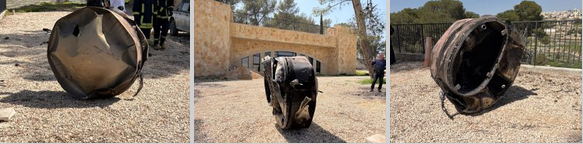
Perhaps nowhere is the symbolic weight of the conflict more evident than in the closure of Jerusalem itself. Access restrictions have prevented not only Christian rites but also Muslim prayers on the Temple Mount and Jewish worship at the Western Wall at key moments, effectively suspending the shared religious rhythm of the city.
Against this backdrop, the Pope’s appeal acquires a deeper resonance. His call to “open paths of dialogue” is not merely diplomatic language: that peace cannot be engineered through domination or sustained through fear.
For now, however, the skies over the Middle East remain filled not with pilgrims or processions, but with drones and missiles—“instruments without eyes or heart,” as one Franciscan observer described them. And beneath those skies, a region that once gave birth to the world’s great monotheistic traditions finds itself struggling to keep even its holiest doors open.
Thank you for reading our content. If you would like to receive ZENIT’s daily e-mail news, you can subscribe for free through this link.

Publicaciones relacionadas:
 Vatican questions “preventive” war in Iran as Leo XIV intensifies diplomatic calls for peace
 A Church Against the Logic of War: Vatican Voices, Middle East Realities, and the Risk of a Vanishing Christianity
 Pope Speaks Again of Homosexuality, Recountss Experience and Surprises Non-Catholic Press
 Shanghai: Why Did the Chinese Communist Party Violate Its Agreement with the Vatican?
