

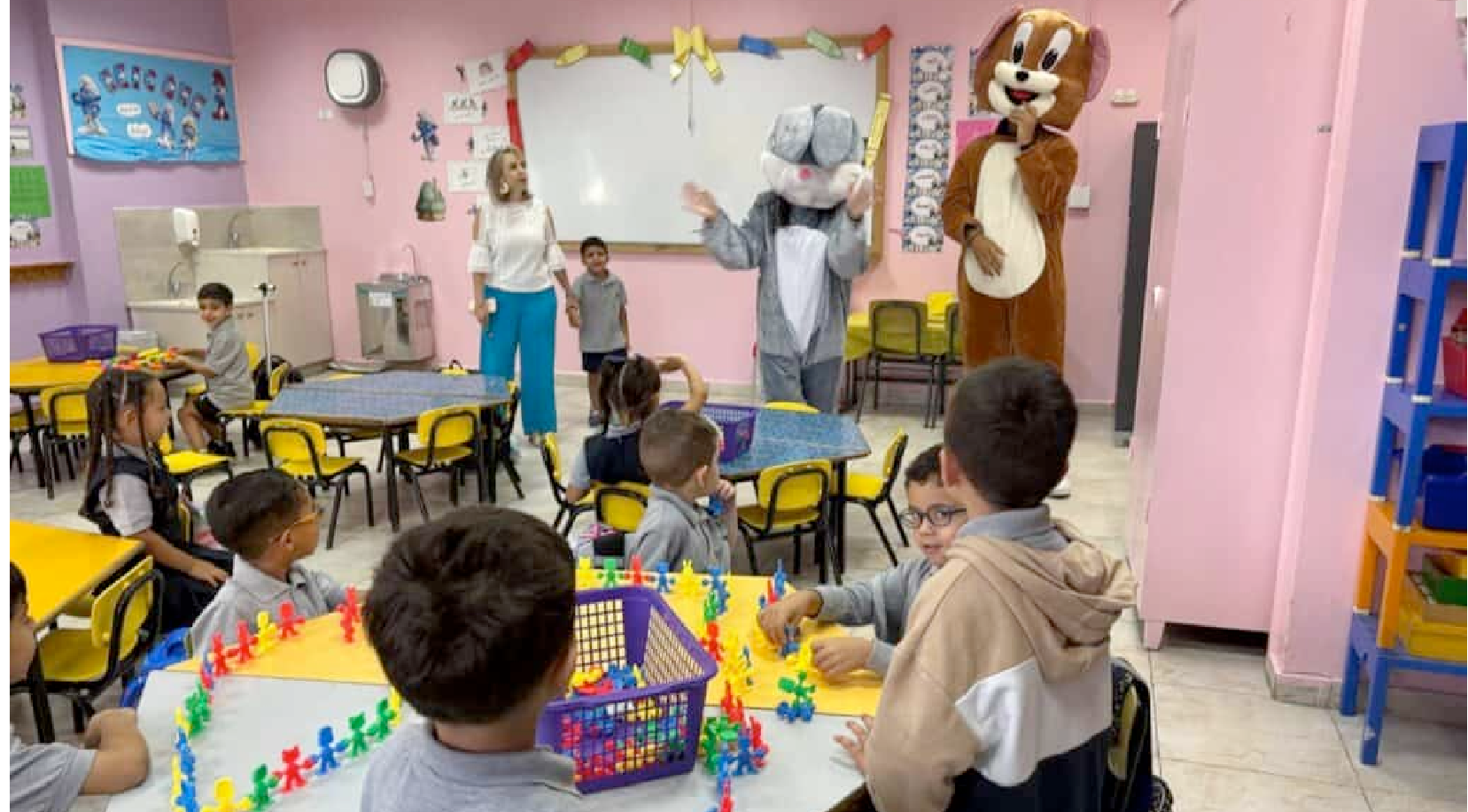
(ZENIT News / Jerusalem, 04.04.2026).- A consequential policy shift in Jerusalem’s education system is raising alarms far beyond the classroom. A directive issued by Israel’s Ministry of Education could soon prevent hundreds of Palestinian Christian teachers from working in the city’s historic Christian schools, a move Church leaders warn may erode one of the oldest continuous Christian presences in the world.
The measure, formalized on March 10, 2026, instructs school directors in Jerusalem that, beginning in September 2026, they may employ only teachers who both reside within the Jerusalem and hold qualifications recognized by Israeli authorities. In practice, this excludes Palestinian Christian educators living in the West Bank—even those holding residency permits that have traditionally allowed them to work in areas under Israeli control.
According to data cited by Aid to the Church in Need, the policy could affect approximately 230 teachers across 15 Christian schools in Jerusalem. The implications are immediate and structural: school administrators estimate that each institution could lose an average of 15 teachers, a disruption that would be difficult to absorb in a system already operating with limited resources.
The decision traces back to legislation advanced in July 2025 by the Knesset Education Committee, which sought to bar educators trained in West Bank institutions from teaching in Israel or in East Jerusalem. Israeli authorities have justified the measure on academic grounds, arguing that such qualifications do not meet national standards. But for Church representatives and Palestinian observers, the consequences appear to extend well beyond questions of accreditation.
The General Secretariat of Christian Schools, which coordinates these institutions, has warned that the policy threatens not only staffing levels but the very identity of Christian education in the city. Many of the affected schools were founded in the late nineteenth century and have, over decades, educated hundreds of thousands of students—both Christian and Muslim—serving as rare spaces of interreligious coexistence. Their mission has been as much cultural and communal as academic: to sustain a fragile Christian presence in a city central to three faiths.
That presence is already demographically precarious. Christian communities in Jerusalem and the wider Holy Land have been declining for decades due to emigration, economic pressure, and political instability. Church officials now fear that restricting access to qualified teachers—many of whom have served for years—could accelerate that trend. The likely loss of employment for these educators would not only disrupt schools but also place families under economic strain, potentially prompting further emigration.
The tensions are not theoretical. At the start of 2026, 171 West Bank teachers were initially denied work permits, triggering a week-long strike across Christian schools in Jerusalem. The crisis was resolved only after authorities reversed course and issued the necessary permissions. That episode, however, now appears less an anomaly than a precursor.
Criticism of the new policy has been sharp. Palestinian journalist Daoud Kuttab has described it as a form of “collective punishment,” arguing that it targets an entire population segment rather than addressing specific security concerns. The Higher Presidential Committee for Church Affairs in Palestine has gone further, alleging violations of international humanitarian law, including provisions of the Fourth Geneva Convention and the International Covenant on Civil and Political Rights.
Within the Church, the language is more pastoral but no less urgent. George Akroush of the Latin Patriarchate of Jerusalem summarized the stakes succinctly: “To attack schools is to attack the future.” His remark reflects a broader ecclesial concern that education, in this context, is inseparable from presence. Schools are not only places of learning; they are institutions through which communities reproduce themselves across generations.
Efforts to reverse or mitigate the policy are underway. Church authorities are exploring legal avenues while engaging in dialogue with Israeli officials, though they acknowledge that such channels remain difficult. At the same time, appeals have been made to the Holy See and to international partners capable of exerting diplomatic pressure.
For now, uncertainty prevails. Much will depend on whether the directive is implemented in full by the start of the 2026 academic year. If it is, Jerusalem’s Christian schools—long regarded as pillars of both faith and coexistence—may be forced into a profound reconfiguration, with consequences that extend far beyond their classrooms.
In Jerusalem, where demography and identity are tightly intertwined, such changes rarely remain confined to administrative policy. They tend, instead, to redraw the contours of presence itself.
Thank you for reading our content. If you would like to receive ZENIT’s daily e-mail news, you can subscribe for free through this link.

Publicaciones relacionadas:
 Israeli government minister calls for construction of synagogue on Temple Mount (where Muslim mosque now stands)
 Attacks by Jewish settlers against our peaceful community must stop in Taybeh: note from Christian leaders in Holy Land
 The last historic Christian village in the Holy Land, threatened with annexation by the Jewish state of Israel
 Israeli police prevent a Mass from being celebrated at the Church of the Holy Sepulchre in Jerusalem and bar Cardinal Pizzaballa from entering
