

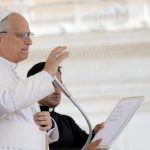
(ZENIT News / Washington, 03.22.2026).- From the window of the Apostolic Palace overlooking St. Peter’s Square, Pope Leo XIV delivered a message on the Fifth Sunday of Lent, 22 March. His words, they carried the weight of a moral indictment: war, he said, is “a scandal for humanity” and “a cry to God.”
The Pope’s appeal was not abstract. He spoke of “defenseless victims” and insisted that the suffering of those caught in conflicts—particularly in the Middle East—cannot be treated as distant or isolated. “What affects them affects all humanity,” he warned, framing war not only as a geopolitical failure but as a shared ethical collapse. His insistence on “sincere dialogue” and “respect for human dignity” as the only viable path forward reflects a longstanding line in Catholic social teaching, but his tone suggested urgency rather than routine repetition.
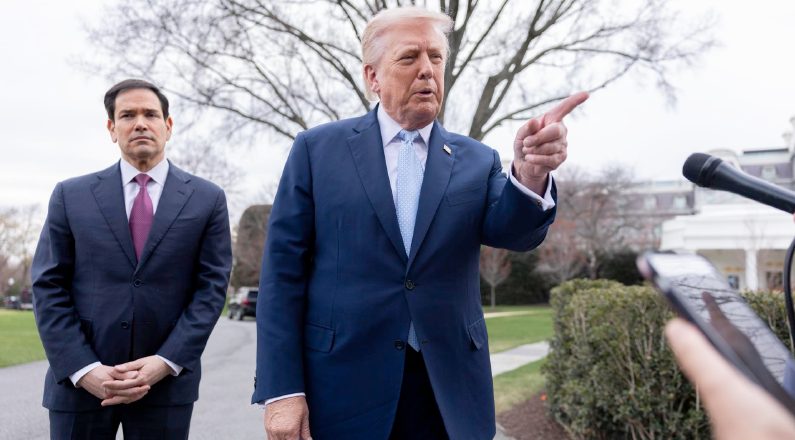
The appeal comes at a moment when events on the ground point in a sharply different direction. Across the Atlantic, Donald Trump has publicly dismissed the very idea of a ceasefire in the ongoing conflict involving Iran. Questioned about the Pope’s earlier call—issued on 15 March—for an immediate cessation of hostilities and a reopening of dialogue, the U.S. president was blunt: “We can talk, but I don’t want a ceasefire.”
Trump’s reasoning underscores a strategic calculus that stands in tension with the Vatican’s moral framing. According to his assessment, Iran’s military capacity has been effectively dismantled. He described a country stripped of naval and air power, lacking basic defensive infrastructure such as radar and anti-air systems, and deprived of leadership after targeted strikes. In such a context, he argued, halting military operations would be premature—if not counterproductive.
«I don’t want to do a ceasefire.» – President Trump was asked what he had to say to Pope Leo, who has recently called for a ceasefire in the Middle East. The US President said he was open to dialogue but «you don’t do a ceasefire when you’re literally obliterating the other… pic.twitter.com/LlRi3mpyCM
— EWTN News Nightly (@EWTNNewsNightly) March 20, 2026
The conflict itself escalated dramatically on 28 February, when joint U.S. and Israeli strikes targeted Iranian assets. Tehran retaliated with attacks on American and Israeli bases, widening the confrontation and deepening regional instability.
Beyond military and political calculations, the war has had immediate consequences for civilian and religious life. Catholic pilgrimage routes in the region have been disrupted, and local Christian communities have faced sudden evacuations, underscoring the broader humanitarian fallout often eclipsed by strategic narratives.
Trump has signaled that the campaign may continue with the explicit objective of preventing Iran from reconstituting its capabilities. In a 20 March interview, he suggested that even a decade-long rebuilding effort by Iran would be insufficient to offset the current level of destruction—yet still framed continued pressure as necessary to ensure long-term security.
Against this backdrop, the Pope’s call takes on a distinctly countercultural dimension. It is not merely a plea for de-escalation, but a challenge to the prevailing logic of total victory. By emphasizing prayer, dialogue, and the intrinsic dignity of every human life, Leo XIV is articulating a vision that resists the reduction of conflict to metrics of military success.
Yet the contrast is not simply one of ideals versus pragmatism. It reveals a deeper divergence in how peace itself is understood: as the product of negotiated reconciliation, or as the outcome of decisive force.
Back in St. Peter’s Square, the Pope concluded his address with a gesture far removed from geopolitics. Greeting pilgrims from around the world, he pointed to the Rome Marathon taking place that day, describing it as “a sign of hope.” In the discipline of sport, he suggested, there remains a capacity to foster inclusion, solidarity, and even a form of spiritual openness.
Thank you for reading our content. If you would like to receive ZENIT’s daily e-mail news, you can subscribe for free through this link.

Publicaciones relacionadas:
 Pope Leo XIV, the US-Iran war, and a forceful call in a Middle East on the brink of the abyss
 A Church Against the Logic of War: Vatican Voices, Middle East Realities, and the Risk of a Vanishing Christianity
 Pope Francis sparks debate with call to investigate Gaza genocide allegations
 Pope Leo XIV Speaks Out on the Situation in Iran: No Armed Victory Outweighs the Pain of Mothers and the Fear of Children
