

(ZENIT News / Jerusalén, 03.24.2026).- For centuries, the Christian presence in the land traditionally known as the Holy Land has endured wars, empires, and shifting political realities. Today, however, local Church leaders warn that a convergence of pressures—violence, economic collapse, and restricted humanitarian access—is placing that presence in unprecedented jeopardy.
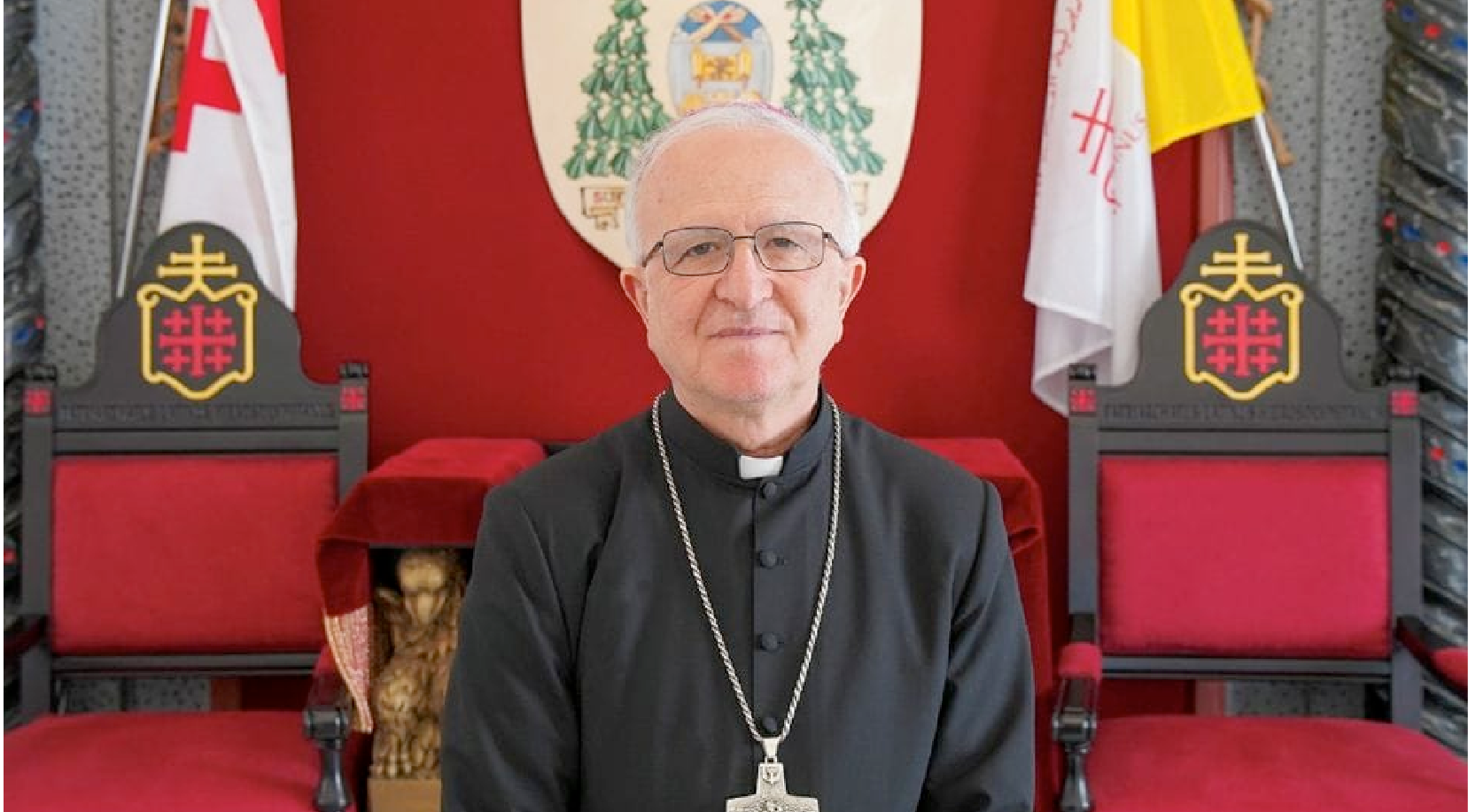
Speaking from Jerusalem, the bishop William Shomali has described a marked escalation in attacks against Christian communities in the West Bank, particularly in areas historically associated with a continuous Christian population. According to the bishop, what was once a relatively stable situation around Bethlehem has deteriorated as Israeli settlements expand and tensions intensify.
The pattern he outlines is not episodic but persistent. In towns such as Taybeh, a predominantly Christian village, residents have reported threats, physical assaults, and acts of vandalism, including the burning of vehicles. In Birzeit, located roughly ten kilometers north of Ramallah, the pressure has become almost routine: settlers, Shomali says, arrive “nearly daily” to intimidate families in their homes and workplaces. The cumulative effect is not only fear, but economic suffocation. Many families have effectively lost access to their livelihoods.
Land, in this context, has become both symbol and battleground. The bishop points to several recent incidents: the occupation of agricultural land belonging to a convent in Urtas, near Bethlehem, where nuns cultivated olive groves; and the seizure of a one-hectare plot in Beit Sahour—his own hometown—reportedly marked with an Israeli flag despite documented private ownership by a Christian family. He also warns of planned settlement construction in the Shepherds’ Field area, land tied to local Christian heritage.
For Shomali, these developments are not isolated disputes but part of a gradual territorial transformation. He describes a process in which land identified by Israel as Judea and Samaria is becoming “less and less Palestinian and more and more settler territory,” with direct consequences for the viability of Christian life in the region.
If violence and land pressure form one axis of the crisis, humanitarian constraints form another. The Catholic charity Aid to the Church in Need has reported that, since early March, Israeli authorities have effectively halted the entry of emergency aid into Gaza, compounding an already dire situation. According to George Akroush, director of development for the Latin Patriarchate of Jerusalem, no humanitarian shipments—including essential medicines and hospital supplies—have been allowed into the enclave since March 7.
This blockade, introduced after the closure of border crossings on March 1 for security reasons, has immediate and tangible consequences. The only Christian hospital in Gaza, located near the Catholic parish complex, is struggling to maintain operations. Communication channels that Church authorities previously used to coordinate aid have reportedly been cut off, leaving local actors with limited capacity to respond.
The ripple effects extend beyond Gaza. In the West Bank, new regulatory requirements imposed on international aid organizations—such as Caritas, Oxfam, and Save the Children—have complicated or curtailed their activities. Israeli authorities have justified these measures on security grounds, citing concerns about links between aid personnel and militant groups. Yet for local communities, the result is a further contraction of already fragile support systems.
Economic disruption adds another layer of strain. Before the escalation of violence following the October 7, 2023 attacks, approximately 180,000 Palestinians from the West Bank held permits to work in Israel. That number has since dropped dramatically to 15,000, and even those remaining permits are now largely ineffective due to movement restrictions. The impact is particularly acute for Christian institutions: around 40 percent of teachers and support staff in Jerusalem’s Christian schools traditionally commute from the West Bank.
Faced with shrinking opportunities and mounting insecurity, many Christian families are contemplating emigration. According to Akroush, some are already seeking pathways through Jordan toward Europe or other Western countries. Others, even if not yet ready to leave, are preparing documentation in anticipation of a possible departure. The demographic implications are significant: a continued exodus would further erode a Christian presence that has already diminished over decades.
And yet, amid this bleak landscape, Church leaders continue to articulate a cautious hope. Aid to the Church in Need has intensified its support through emergency assistance, job creation initiatives, and food distribution. The Latin Patriarchate’s mission, often described by its leaders in starkly metaphorical terms, is one of persistence: small, incremental efforts aimed at sustaining communities that might otherwise disappear.
The emerging picture is not of a single crisis, but of an accumulation of pressures—territorial, economic, and humanitarian—that together threaten the continuity of Christian life in one of its most historic homelands. Whether that presence can endure will depend not only on political developments, but on the capacity of local and international actors to prevent what Church leaders increasingly describe as a slow-motion displacement.
Thank you for reading our content. If you would like to receive ZENIT’s daily e-mail news, you can subscribe for free through this link.

