

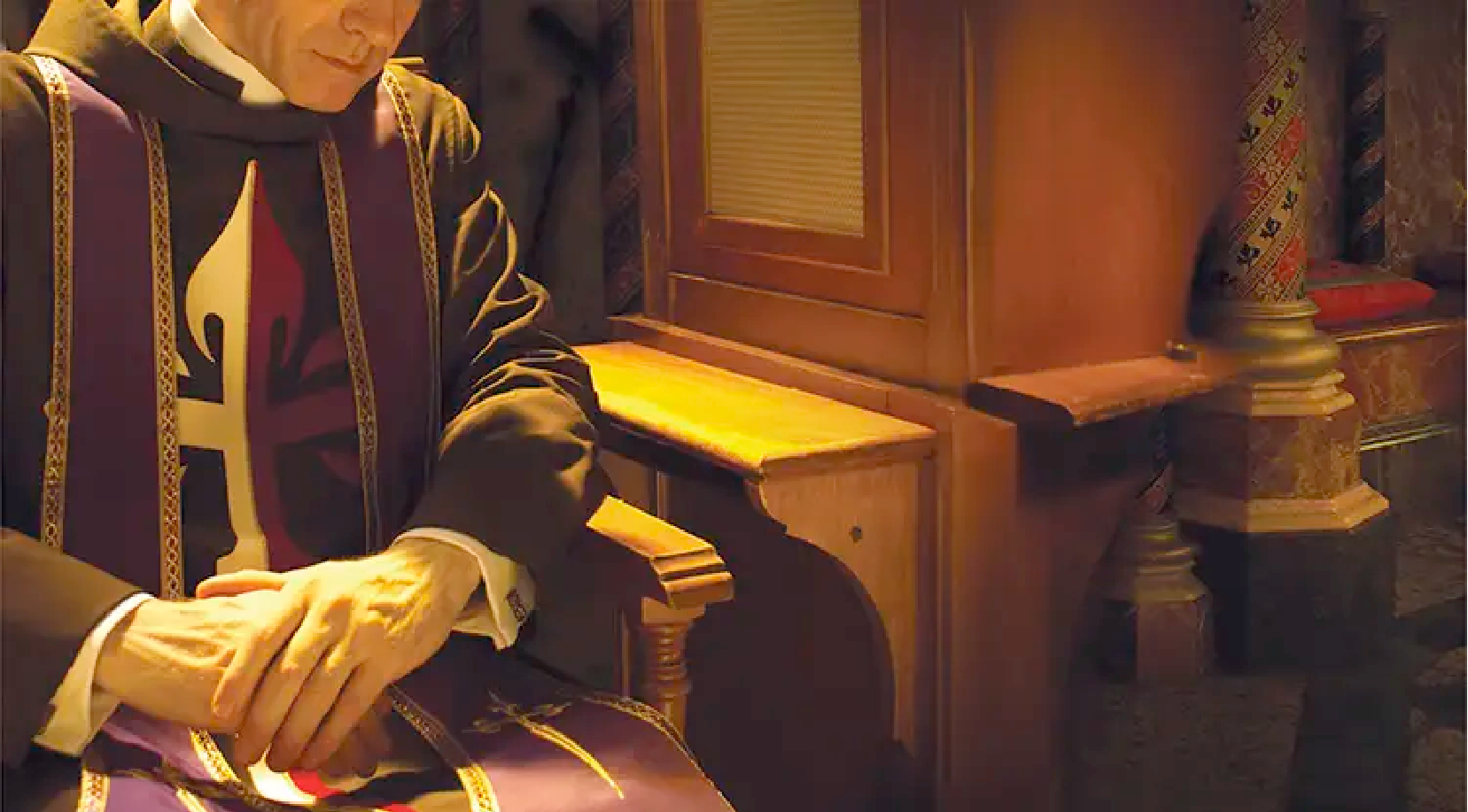
(ZENIT News / Washington, 03.26.2026).- A new nationwide survey suggests that, beneath years of declining sacramental practice, a latent desire for reconciliation remains strong among American Catholics—and may be resurfacing with particular force during Lent 2026.
According to “The Catholic Pulse Report: The Confession Study,” conducted by the Vinea Research Group, roughly two-thirds of Catholics who have not gone to confession in the past year—67%—say they would be willing to return. Notably, half of this group also expressed a desire to confess more frequently, indicating that the issue may not be outright rejection of the sacrament, but rather distance, hesitation, or misunderstanding.
The study surveyed 1,500 U.S. Catholics who attend Mass at least occasionally, offering one of the most detailed snapshots in recent years of attitudes toward a sacrament long considered central to Catholic life, yet often underexamined in empirical research.
A sacrament believed in, but seldom practiced
The data reveal a striking imbalance between belief and practice. Only 20% of respondents reported going to confession regularly—defined as four or more times in the past year—while an additional 12% had gone between one and three times. This leaves a substantial majority who approach the sacrament rarely or not at all.
Yet the theological core of confession appears largely intact among the faithful. Among those who do confess regularly, 83% say their primary motivation is to receive God’s mercy and forgiveness. Even among those absent from the confessional for over a year, 75% cite that same reason as what would draw them back.
Hans Plate, founder of the Vinea Research Group, argues that this convergence points to an underappreciated dynamic: the sacrament’s appeal has not disappeared, but its meaning may have become obscured. Speaking to EWTN News, Plate suggested that inadequate catechesis plays a decisive role. Many Catholics, he said, have “lost sight of what confession offers”—particularly the certainty of forgiveness, which Catholic theology understands not as a subjective feeling but as an objective reality conferred through absolution.
This distinction is not merely academic. The Catechism of the Catholic Church teaches that individual confession and absolution remain the ordinary means by which the faithful are reconciled with God and the Church, barring exceptional circumstances. In that light, misconceptions about the necessity of confession take on greater significance.
Misunderstanding and discomfort as barriers
Indeed, the most commonly cited reason for avoiding confession is the belief that it is unnecessary for receiving God’s forgiveness. The report indicates that 63% of respondents hold this view, rising to 73% among those who have not attended Mass in the past year.
Psychological barriers also weigh heavily. Half of those who have not confessed in over a year report feeling shame at the idea of speaking their sins aloud, while 53% describe the experience as uncomfortable. These findings suggest that the obstacles are not only doctrinal but also deeply personal, touching on vulnerability, fear of judgment, and unfamiliarity with the rite.
At the same time, the study highlights specific pastoral opportunities. Around 40% of infrequent penitents say they would be more inclined to return if greater emphasis were placed on divine mercy rather than judgment. A similar proportion indicated that reassurance about the normality of recurring struggles with the same sins could encourage more frequent participation.
The experience of those who return
For those who do approach the sacrament regularly, the reported effects are significant. Approximately two-thirds describe a clear sense of forgiveness, confidence in God’s mercy, and inner peace following confession. Beyond absolution itself, respondents point to what Plate describes as “fruits of interior healing” and a renewed vitality in their faith.
The study also draws a broader connection between sacramental life and overall well-being. Catholics who attend Mass at least monthly score above national averages on measures of human flourishing, and those who confess regularly report the highest levels—particularly in terms of meaning, peace, and general well-being.
Such findings may resonate with a wider cultural context in which mental health and the search for meaning are increasingly prominent concerns. While the study does not claim causation, it suggests that sacramental practice may play a more integrated role in personal well-being than is often assumed.
A pastoral opportunity in Lent
The timing of the report during Lent underscores its practical implications. Across the United States, dioceses have long experimented with initiatives aimed at lowering the threshold for returning to confession. Among the most notable is “The Light Is On for You,” launched in 2007 in the Archdiocese of Washington and the Diocese of Arlington. The program, which extends confession hours—typically on Wednesday evenings throughout Lent—has since been adopted or adapted in dioceses nationwide.
With support from the United States Conference of Catholic Bishops, these efforts have expanded into a broader pastoral strategy: increasing accessibility, normalizing the practice, and reframing confession as an encounter with mercy rather than a moment of judgment.
The new data suggest that such initiatives may be addressing a real and measurable openness among the faithful. As Plate notes, the findings are “highly encouraging”: many Catholics not only retain a belief in the sacrament, but have experienced it positively and remain open to returning.
What emerges, then, is not a portrait of a sacrament in terminal decline, but of one in suspension—awaiting clearer explanation, renewed pastoral emphasis, and perhaps the right moment. Lent 2026, the study indicates, may be precisely such a moment.
Thank you for reading our content. If you would like to receive ZENIT’s daily e-mail news, you can subscribe for free through this link.

Publicaciones relacionadas:
 The Apostolic Exarchate in Germany and Scandinavia switches to the Gregorian calendar
 USA: study reveals what men who will be ordained priests in 2023 look like
 From Secret Handshakes to Facebook Ads: Britain’s Freemasons Confront a Crisis of Relevance
 This is what religious with perpetual vows in the USA are like, according to the CARA 2025 survey
