

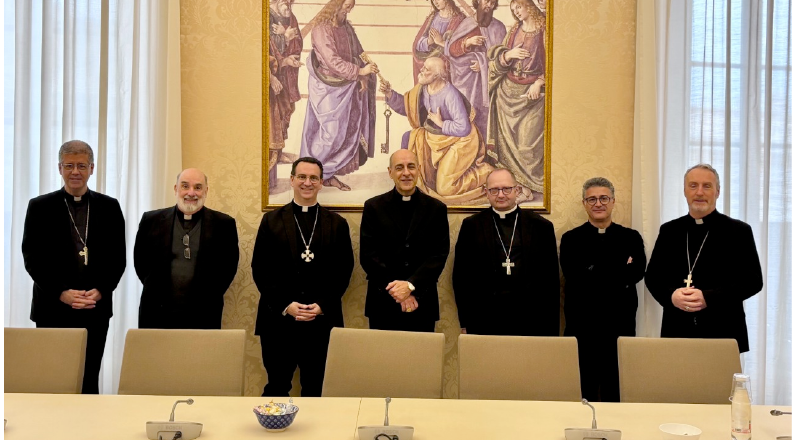
(ZENIT News / Rome, 03.29.2026).- A new document issued under the authority of cardinal Víctor Manuel Fernández offers one of the most detailed theological and pastoral reflections to date on the experience of Anglican communities that have entered into full communion with Rome. Far from being a merely descriptive text, it subtly advances a broader ecclesiological vision—one that could have implications well beyond the specific case of the ordinariates.
Published on March 24, 2026, the document—titled “Characteristics of the Anglican Heritage as Lived in the Ordinariates Established Under the Apostolic Constitution Anglicanorum Coetibus”—emerges from a plenary meeting held in Rome from March 1 to 3. During that gathering, bishops leading these ordinariates were invited to articulate, in concrete terms, how their communities live out what the Church calls the “Anglican patrimony.”
These ordinariates, created following the 2009 apostolic constitution Anglicanorum Coetibus of Benedict XVI, were designed to allow groups of Anglicans to enter into full communion with the Catholic Church without abandoning elements of their spiritual, liturgical, and pastoral identity. The new text insists that this patrimony is not a concession or a transitional phase, but rather “a precious gift” that enriches the universal Church.
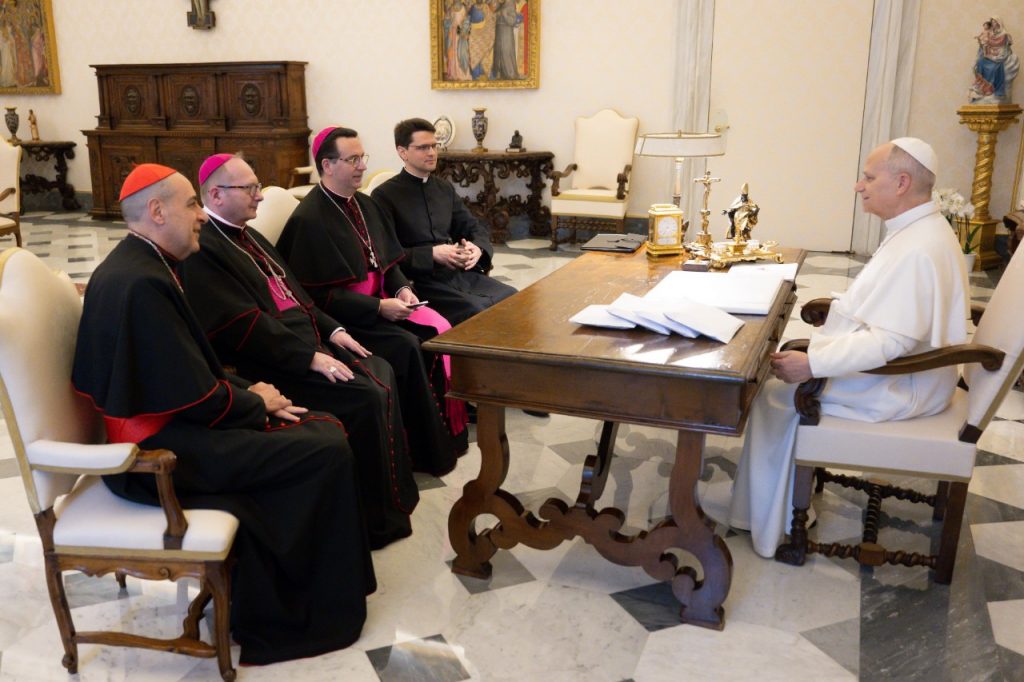
What emerges most clearly from the bishops’ reflections is the existence of a shared identity that transcends geography. Despite spanning vast distances—from parts of the United Kingdom such as Inverness and Devon, to North America, Australia, and even Guam—these communities exhibit a recognizable ecclesial culture rooted in their common journey into Catholic unity.
At the heart of this identity lies a theological principle often invoked but less frequently embodied with such clarity: inculturation. The document presents the ordinariates as a living example of how the Gospel can take root within a particular historical and cultural experience without erasing it. In this case, the Anglican tradition is not discarded but received, purified, and integrated into the fullness of Catholic communion.
Several defining features of this patrimony are identified. Among them, the role of beauty stands out prominently. In the liturgical life of the ordinariates, aesthetic elements such as sacred music, architecture, and ceremonial precision are not treated as embellishments but as vehicles of evangelization. Beauty, the text suggests, has an intrinsic capacity to draw the human person toward God—a conviction deeply embedded in both Anglican and Catholic traditions.
Equally significant is a strong communal ethos. The bishops describe a participatory ecclesial life in which clergy and laity collaborate closely, reflecting a consultative culture shaped by Anglican experience. This is accompanied by a rhythm of prayer that often echoes monastic patterns, particularly through the centrality of the Divine Office as a shared practice of the entire community.
The document also highlights a pronounced emphasis on pastoral care, including spiritual direction and the sacrament of reconciliation. This approach prioritizes personal accompaniment and sustained engagement with the faithful—an inheritance from Anglican pastoral sensibilities that has found a renewed expression within Catholic structures.
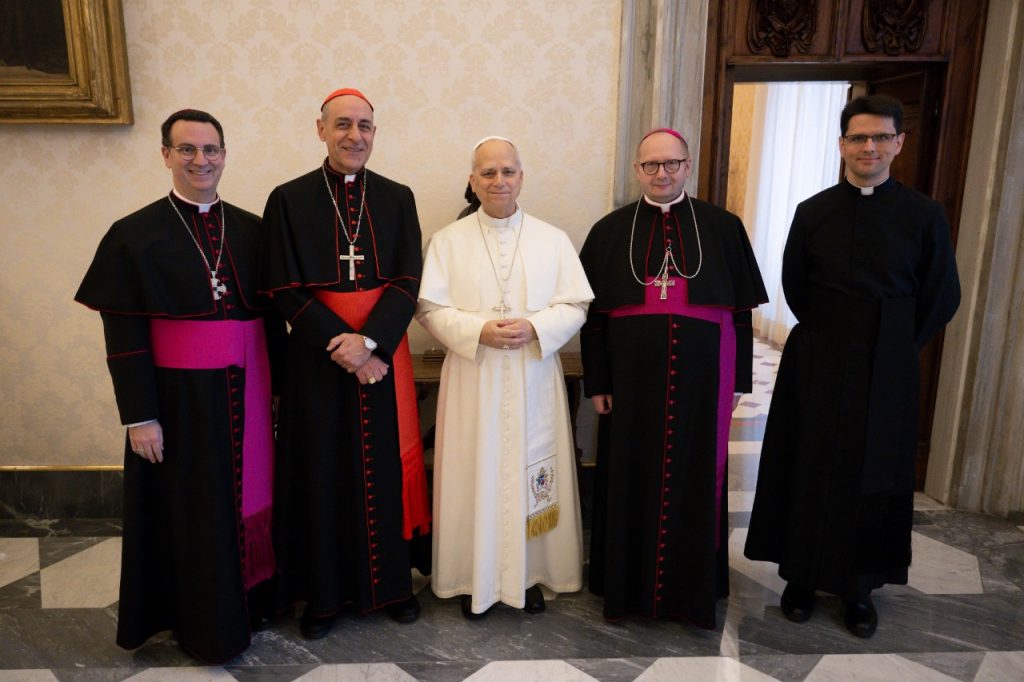
Another pillar is the integration of faith and daily life, especially through the family. The ordinariates place considerable weight on the concept of the “domestic Church,” encouraging parents to assume their role as primary educators in the faith. This emphasis is reinforced by a broader commitment to intellectual formation, rooted in Scripture, the Church Fathers, and a synthesis of faith and reason.
Notably, the bishops also stress the inseparability of liturgical life and social responsibility. The care for the poor is presented not as an optional add-on but as a natural extension of sacramental life. In this respect, the document recalls figures such as John Henry Newman, whose pastoral legacy combined intellectual rigor with concrete service to those in need.
While the text refrains from drawing explicit conclusions beyond its immediate subject, its implications are difficult to ignore. By affirming that a distinct ecclesial tradition can be fully integrated into Catholic unity without losing its identity, the document implicitly points to a model that could resonate in other areas of ecclesial tension—particularly where questions of tradition, reform, and diversity remain unresolved.
In this sense, the ordinariates are presented not simply as a pastoral solution for former Anglicans, but as a case study in the Church’s ongoing effort to reconcile unity with legitimate diversity. Whether this model can be extended or adapted elsewhere remains an open question. What is clear, however, is that Rome is increasingly willing to present it as a success story—one in which the Church does not merely absorb differences, but is itself enriched by them.
Thank you for reading our content. If you would like to receive ZENIT’s daily e-mail news, you can subscribe for free through this link.

Publicaciones relacionadas:
 Secretary of the Congregation for the Doctrine of the Faith Calls for Review of Celibacy
 Pope Francis: formation of priests and seminarians to have a liturgical-sapiential imprint
 Vatican publishes the note ‘Jubilee 2025: remission of the ecological debt’
 Vatican: A French bishop succeeds Cardinal O’Malley as head of the Pontifical Commission for the Protection of Minors
