

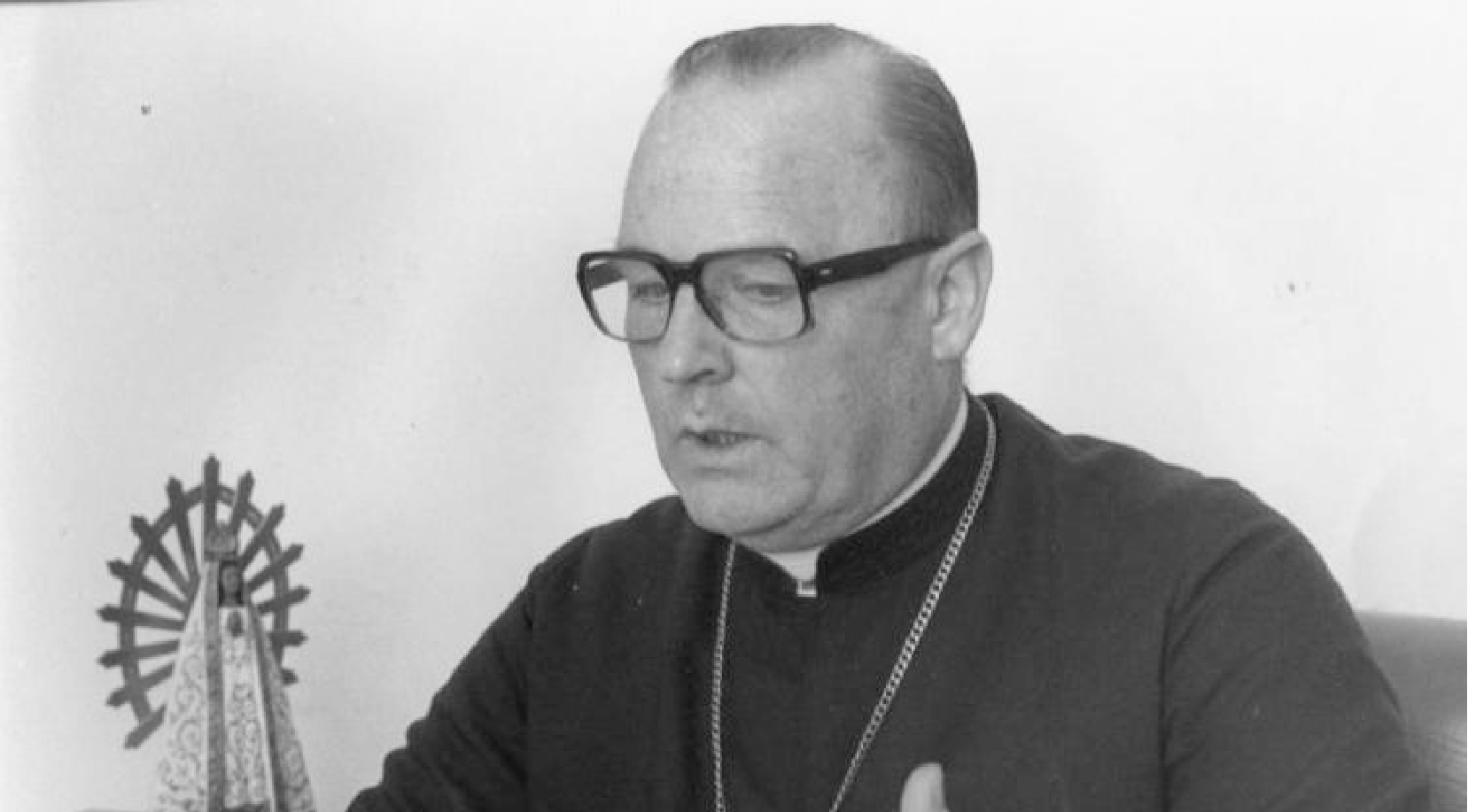
(ZENIT News / Rome, 04.08.2026).- The road to sainthood in the Catholic Church is rarely linear, but few developments are as abrupt—and as revealing—as the sudden suspension of a cause already underway. Such is the case of Jorge Novak, the first bishop of Quilmes, whose beatification process has been halted following a decision from the Holy See that introduces new complexity into an otherwise widely respected ecclesial legacy.
The turning point came on October 13, 2025, when cardinal Marcello Semeraro confirmed the revocation of the nihil obstat previously granted to Novak’s cause. In the procedural language of the Vatican, this step is decisive: the nihil obstat—literally “nothing stands in the way”—is the formal clearance required for a cause to proceed. Its withdrawal does not erase the process entirely, but it effectively freezes it, preventing further advancement until unresolved issues are clarified.
At the center of the decision lies a specific concern. According to the documentation examined by the Dicastery for the Causes of Saints, there may have been a canonical procedure that Novak, as diocesan bishop, did not carry out in relation to the conduct of a priest under his jurisdiction. The Vatican has not publicly detailed the case, nor has it drawn definitive conclusions about responsibility. Yet the mere possibility of an omission in handling a disciplinary matter—particularly in the contemporary Church, where governance and accountability have become critical criteria in evaluating candidates for sainthood—has proven sufficient to interrupt the process.
Significantly, the Vatican has taken care to delimit the scope of its judgment. Cardinal Semeraro explicitly stated that the decision does not constitute a moral evaluation of Novak’s life, virtues or pastoral work. In ecclesial terms, this distinction is crucial. The title “Servant of God,” which Novak received when the cause was opened in 2017, remains intact. The suspension therefore does not amount to a condemnation, but rather to a procedural pause prompted by unresolved questions about episcopal governance.
This nuance, however, does not diminish the impact of the decision. In practical terms, the cause—formally initiated on December 11, 2017, after receiving Vatican approval earlier that year—cannot progress. The diocesan phase had already gathered testimonies and documentation concerning Novak’s life, including his widely acknowledged commitment to human rights and his pastoral focus on marginalized communities. That body of material now remains in abeyance.
The reaction in Argentina has been marked by a mixture of sorrow and restraint. The Diocese of Quilmes and the Society of the Divine Word, which jointly promoted the cause, publicly expressed their pain at the outcome while reaffirming their trust in divine mercy. Their statement reflects a theological horizon that extends beyond canonical recognition: sainthood, in the Catholic understanding, is not created by the Church but discerned by it. A halted process, therefore, does not negate the possibility of holiness, even if it prevents its formal proclamation.
To understand the broader implications, it is necessary to situate Novak within his historical context. Born in 1928 and ordained a priest in 1954 after formation within the Society of the Divine Word, he later earned a doctorate in Church history from the Pontifical Gregorian University. Appointed bishop of the newly created Diocese of Quilmes in 1976 by Paul VI, he led the diocese for a quarter of a century, until his death in 2001.
His episcopate coincided with one of the darkest periods in Argentine history: the military dictatorship that ruled from 1976 to 1983. During those years, Novak became one of the most visible episcopal voices in defense of human rights, co-founding the Ecumenical Movement for Human Rights and denouncing abuses committed by the regime. This aspect of his legacy has long been central to his reputation, distinguishing him within a Church that, at the time, displayed a wide range of responses to the dictatorship.
Yet the current pause in his cause illustrates a broader shift in the criteria by which such legacies are assessed. In recent decades, the Catholic Church has increasingly emphasized not only personal virtue and public witness, but also the integrity of governance, particularly in relation to cases involving clerical misconduct. Even the absence of a fully executed canonical procedure can raise questions significant enough to halt a cause, reflecting heightened expectations of episcopal responsibility.
Some interpretations circulating in ecclesial and media circles suggest that the Vatican’s concern may relate to the handling of abuse cases during Novak’s tenure. However, no official confirmation has been provided, and the Dicastery’s communication remains deliberately limited, avoiding specific accusations or conclusions. This restraint underscores the provisional nature of the decision: the cause is not closed, but suspended pending clarification.
Whether it will eventually resume depends on the resolution of the issues identified by the Holy See. Canonization processes, often spanning decades, are not immune to such interruptions. What distinguishes this case is the tension between a widely recognized pastoral legacy—marked by courage during a period of political repression—and the contemporary demand for accountability in ecclesial leadership.
In that sense, the halted cause of Jorge Novak becomes more than an isolated episode. It reflects an evolving ecclesiology in which sanctity is inseparable from responsibility, and where the credibility of the Church’s witness is measured not only by heroic virtue, but also by the transparency and completeness of its governance.
Thank you for reading our content. If you would like to receive ZENIT’s daily e-mail news, you can subscribe for free through this link.

Publicaciones relacionadas:
 Opus Dei Convokes An Extraordinary General Congress Following the Pope’s Request for Reform
 A saintly samurai: progress and hopes for the canonization of the «Samurai of Christ
 Vatican Limits Traditional Latin Mass in Texas Diocese Following Bishop’s Removal
 From Oxford to the Catholic Liturgical Calendar: Vatican gives St. John Henry Newman a place in the Catholic Church’s daily prayer
