

(ZENIT News / Chicago, 04.12.2026).- When the Catholic Church elected its first American pope, global attention quickly turned to questions of theology, diplomacy, and ecclesial direction. Yet in Chicago, another detail captured the public imagination with unusual force: the new pontiff, Leo XIV, was not only American, but a lifelong fan of the Chicago White Sox. What might have remained a curious biographical footnote has since evolved into a cultural phenomenon—one now culminating in an unusual tribute that blends devotion, identity, and commercial spectacle.
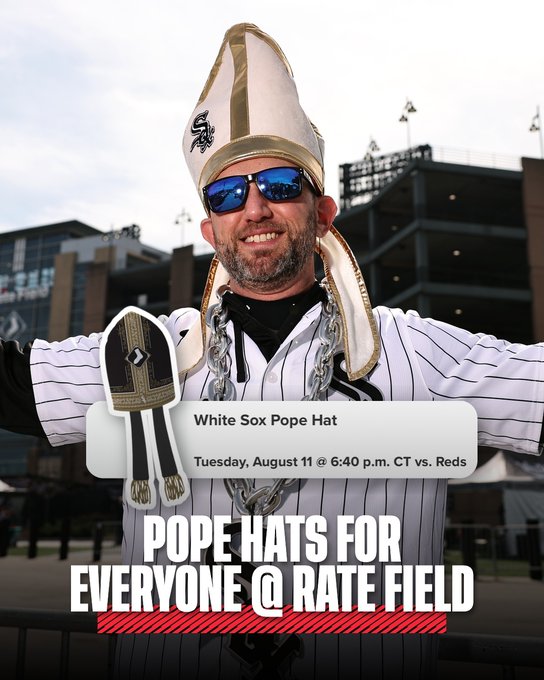
On August 11, during a home game against the Cincinnati Reds, the White Sox will distribute a limited-edition headpiece inspired by a papal mitre to fans attending the game. Initially conceived as a promotional item tied to specific ticket packages, the initiative has expanded due to high demand into a giveaway available to all spectators entering the stadium. The object itself—black and gold, with the team’s logo prominently displayed—translates one of the most recognizable symbols of ecclesiastical authority into the language of sports merchandising.
Ver esta publicación en Instagram
The gesture is rooted in a genuine connection. Leo XIV, born in Chicago, has long been associated with the South Side franchise. His presence at Game 1 of the 2005 World Series remains a point of pride for fans: seated in Section 140, Row 19, Seat 2, he witnessed a 5–3 victory over the Houston Astros, part of a four-game sweep that secured the team’s first championship since 1917. That moment has since been memorialized within the stadium itself, where a graphic installation near the same सीट depicts the future pope waving, alongside a still image from the original television broadcast showing him with friends.
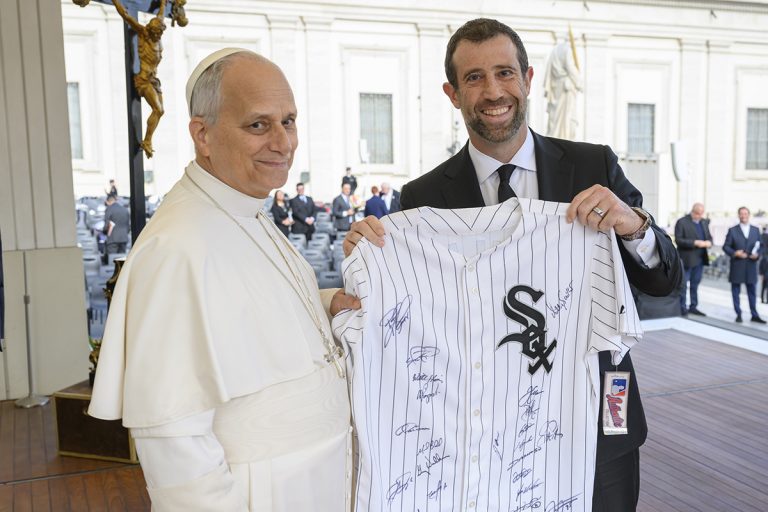
The relationship between the pontiff and the team has continued to develop in symbolic ways. In 2025, the stadium—now known as Rate Field—hosted a public event marking his election, while former White Sox captain Paul Konerko received a jersey signed by the pope during a ceremony commemorating the championship team. The exchange, linking two figures associated with the number 14, reinforced the sense of mutual recognition between ecclesial and sporting worlds.
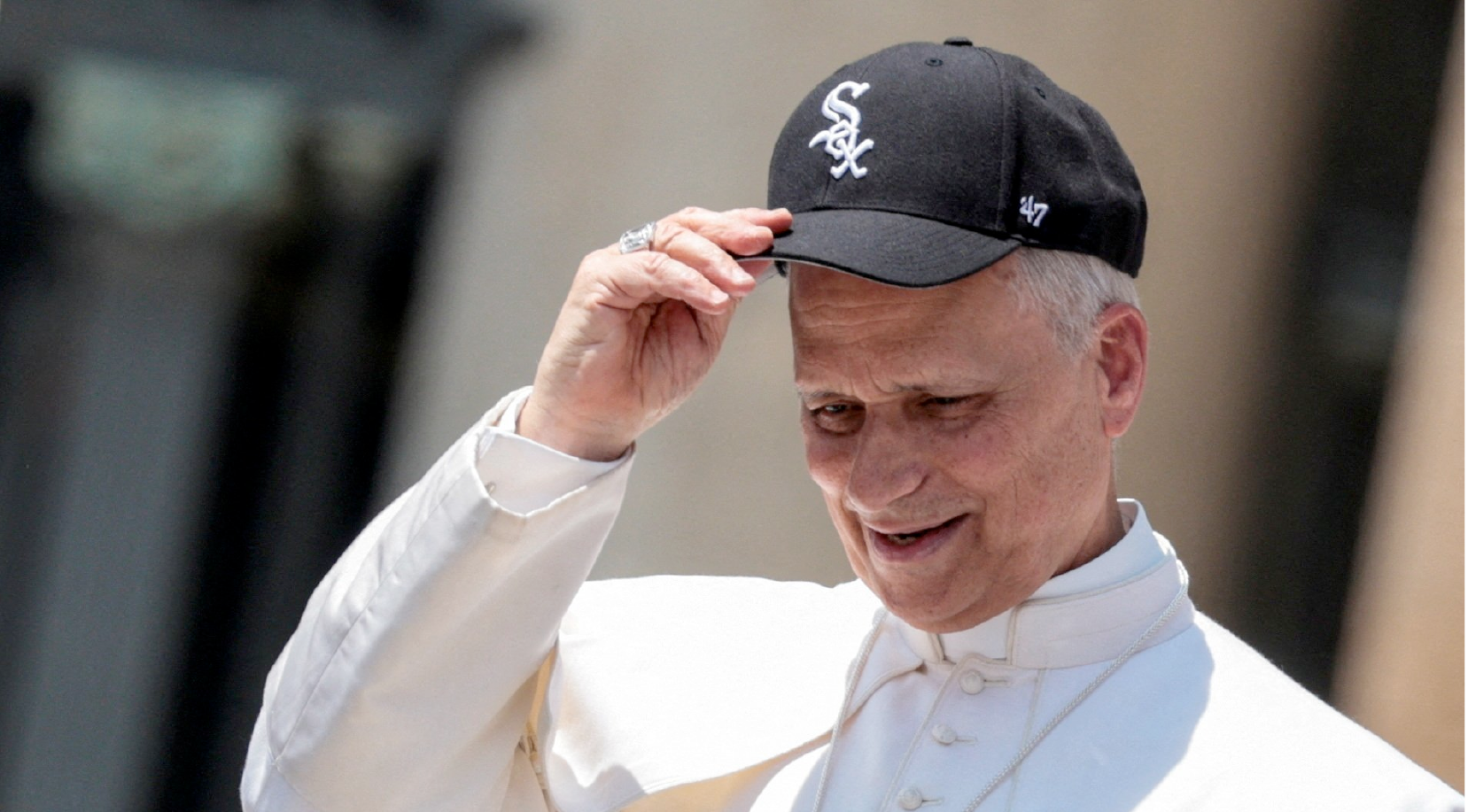
Leo XIV himself has not discouraged this narrative. On several occasions, he has displayed a disarming spontaneity uncommon in Vatican protocol. He has worn a White Sox cap during a public appearance, responded humorously to rival fans, and openly expressed his affection for the team. Such gestures, while minor in themselves, have contributed to a broader perception of accessibility and cultural proximity—particularly in the United States, where the papacy is often viewed through a more distant, institutional lens.
Yet the planned distribution of mitre-shaped caps has also prompted unease in certain Catholic circles. The mitre is not merely decorative; it is a liturgical insignia reserved for bishops, symbolizing their authority to teach, sanctify, and govern. Its origins date back to the early centuries of the Church and remain closely tied to the visible structure of ecclesial leadership. For this reason, some observers have questioned whether its adaptation into a promotional object risks trivializing a symbol of sacred office.
Among those voicing concern is Dominican priest Patrick Mary Briscoe, who has drawn attention to the distinction between informal expressions of enthusiasm and the institutional use of religious imagery for commercial purposes. While acknowledging the goodwill behind the initiative, he has suggested that alternative forms of tribute—such as commemorative items without liturgical connotations—might have been more appropriate. The Archdiocese of Chicago, for its part, has indicated that it was not consulted regarding the use of the mitre in this context.
The enthusiasm surrounding the initiative is difficult to dismiss. For many fans, the event represents a moment of shared identity, an opportunity to celebrate a local figure who has attained global significance without losing touch with his origins. The stadium, in this sense, becomes more than a venue for sport; it is transformed into a space where civic pride, religious affiliation, and collective memory intersect.
This convergence also reveals something about the contemporary papacy itself. In an age of mass communication and symbolic immediacy, the personal traits of a pontiff can resonate far beyond traditional ecclesial boundaries. Leo XIV’s affinity for baseball—particularly for a team that embodies the working-class ethos of Chicago’s South Side—has provided an unexpected avenue for connection, one that speaks less to doctrine than to shared cultural experience.
Whether the mitre-shaped caps will ultimately be remembered as a creative homage or a misjudged appropriation remains to be seen. What is already clear, however, is that the figure of the pope has entered a new kind of public imagination—one in which the sacred and the everyday, the liturgical and the recreational, coexist in ways that challenge conventional categories.
Thank you for reading our content. If you would like to receive ZENIT’s daily e-mail news, you can subscribe for free through this link.

Publicaciones relacionadas:
 “As a child he pretended to give homilies by putting a towel over his shoulders»: Pope Leo XIV’s brother speaks out
 Pope Leo XIV to the French episcopate: Seek inclusive solutions for Catholics who use the Old Missal
 Pope Leo XIV Reverses Another Decision of Pope Francis: World Children’s Day Cancelled in Rome
 Two interpretations of the empty tomb, only one to choose: Pope Leo XIV’s reflection
