

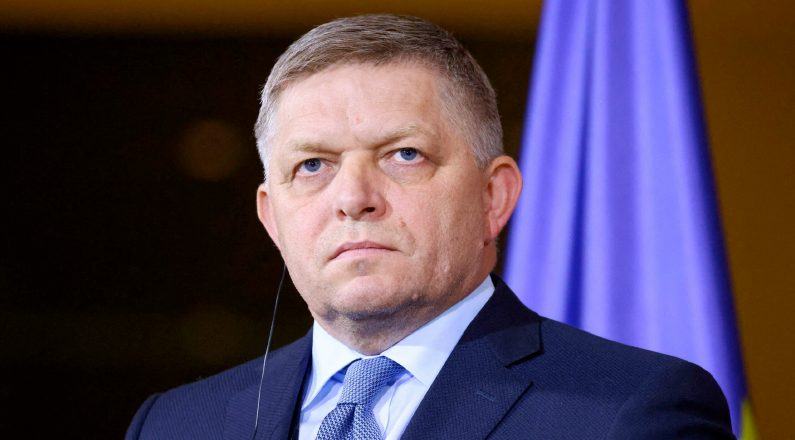
(ZENIT News / Bratislava, 09.30.2025).- Slovakia has taken a dramatic step in defining its national identity, adopting constitutional amendments that enshrine a binary understanding of gender, prohibit surrogacy, and restrict adoption to married heterosexual couples. In doing so, the Central European nation has not only tightened its laws on social issues but also sent a clear message to Brussels: in matters of morality, sovereignty comes first.
The amendments, approved in late September by the National Council with the narrow three-fifths majority required, will take effect in November. The outcome surprised many analysts, who expected the package to collapse under political fragmentation. Instead, a coalition of government deputies, joined by a dozen conservative opposition lawmakers, pushed it through—transforming what was initially described as a symbolic gesture into binding constitutional law.
For Prime Minister Robert Fico, who has repeatedly styled himself as a defender of Slovakia’s Christian heritage, the moment was a crowning achievement. In a tone reminiscent of his speeches at conservative gatherings abroad, he framed the reform as nothing less than a bulwark against what he calls “progressive ideology” from the European Union. “We know our roots,” he declared after the vote. “Slovakia is not for sale, and our traditions will not be diluted.”
The reform goes beyond gender definitions. It bars the use of surrogates to carry children, codifies wage equality between men and women, and requires parental consent for any sexual education in schools. It also stipulates, in unambiguous terms, that a child’s parents are “a mother, who is a woman, and a father, who is a man.” In legal terms, these provisions collectively form a constitutional firewall around what Fico describes as “natural values.”
Church leaders, though not officially part of the legislative process, welcomed the result. Archbishop Bernard Bober, head of the Slovak Bishops’ Conference, praised the deputies who backed the measure, arguing that the decision underscored the country’s desire to safeguard truth, freedom, and human dignity. Other bishops described the outcome as a sign that even across ideological divides, Slovaks can rally around the family as the foundation of society.
The debate has exposed deep cultural fissures. Slovakia, a member of the European Union since 2004, now stands among the first EU countries to constitutionally reject gender fluidity, staking out a position more in line with Hungary and Poland than with Western capitals. Critics warn that the move places Bratislava on a collision course with EU law and human rights bodies. Supporters, however, view it as a declaration of independence from what they see as an aggressive “woke” agenda imported from abroad.
Perhaps most striking was the breadth of the coalition that carried the amendments over the line. Lawmakers from Fico’s left-leaning Smer party, often described as nationalist social democrats, stood shoulder to shoulder with religious conservatives and independents. Several votes came at the last minute, including from deputies who had previously voiced hesitation but ultimately decided, as one explained on social media, that their conscience as believers required support.
President Peter Pellegrini, signaling he will sign the amendments into law, interpreted the unusual consensus as a rare sign of national unity. “In a time of great division,” he said, “a constitutional majority on such a sensitive issue deserves respect.”
What remains to be seen is how the European Union will respond. Similar moves in Hungary and Poland have sparked fierce disputes with Brussels over rule-of-law principles. Slovakia may soon find itself in the same crossfire. Yet for Fico and his allies, the political calculation is clear: identity, tradition, and sovereignty are worth the risk.
With this constitutional reform, Slovakia has repositioned itself not only within the EU but also within the broader cultural battles shaping Europe. Whether hailed as a historic defense of family or criticized as a regression in rights, the amendments mark a turning point for a small nation determined to define itself against the currents of globalization.
Thank you for reading our content. If you would like to receive ZENIT’s daily e-mail news, you can subscribe for free through this link.

Publicaciones relacionadas:
 USA: Young People’s Support for Gay Unions Drops
 Cardinal Eijk Calls for Deeper Church Engagement on Gender Medicine and Bioethics
 Oregon Department of Human Services denied single mother Jessica Bates’ application to adopt siblings from foster care because of her religious beliefs
 Biological men in women’s sports have taken nearly 2,000 gold medals from women, according to a study
