

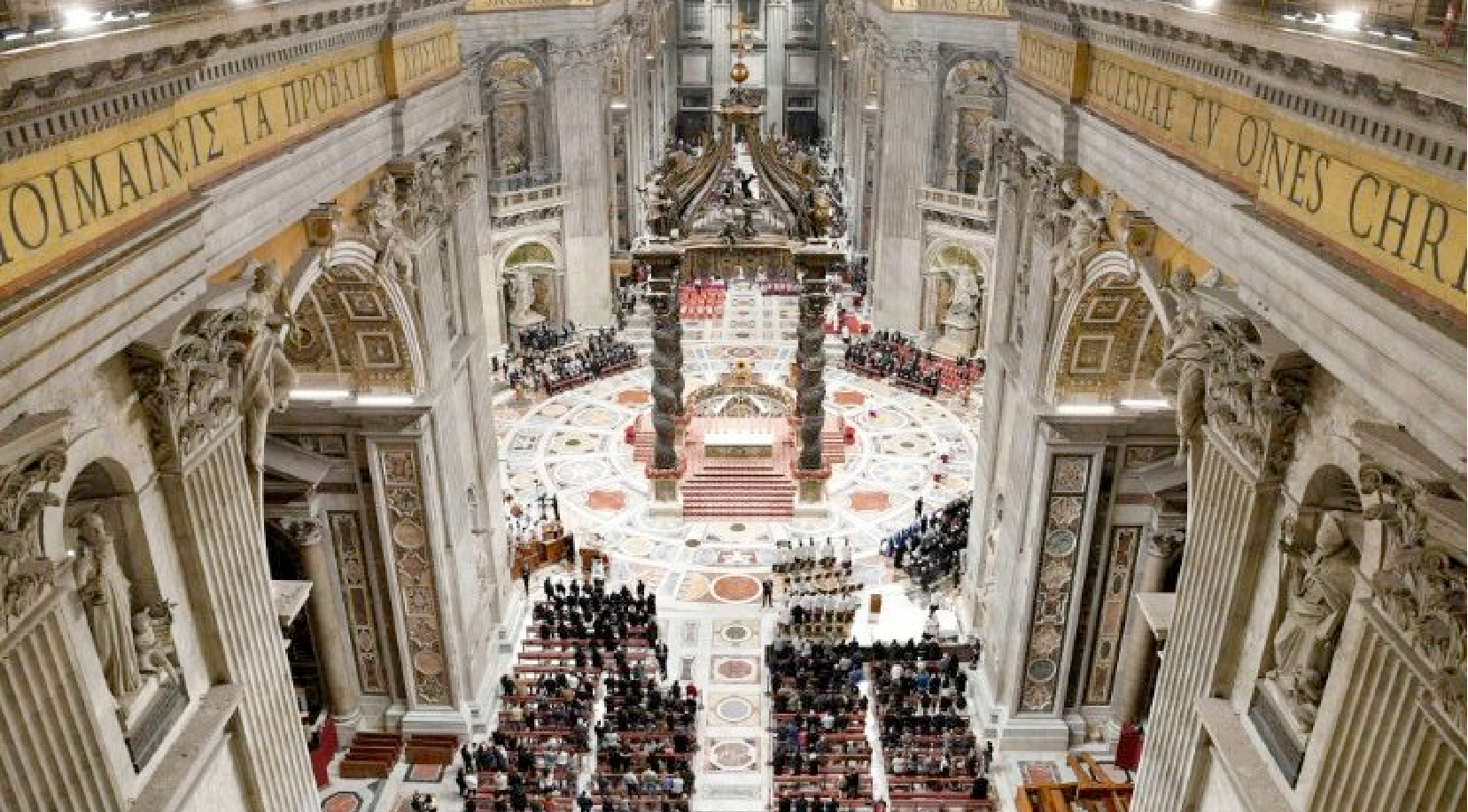
(ZENIT News / Rome, 09.10.2025).- Rome is preparing to witness an event that only a few years ago would have seemed unlikely: the return of the traditional Latin Mass to the altar of the Chair in St. Peter’s Basilica. On October 25, 2025, Cardinal Raymond Leo Burke will preside at a solemn pontifical liturgy during the annual «Summorum Pontificum» pilgrimage — a gathering of clergy and laity devoted to the ancient Roman rite.
The celebration comes as part of the three-day pilgrimage “Ad Petri Sedem,” scheduled from October 24 to 26. Established in 2012, the initiative has drawn thousands of participants over the years, from seminarians to bishops, all seeking to express their attachment to the liturgy codified in 1962. This year’s edition coincides with the Jubilee, lending it an added resonance.
For many pilgrims, the announcement is both unexpected and deeply significant. Since Pope Francis’ 2021 motu proprio «Traditionis custodes», opportunities to attend the Latin Mass within the Vatican basilica became virtually impossible. In recent years, the pilgrimage was limited to vespers, processions, or adoration, while requests for Mass on papal altars were consistently denied.
The return of the ancient rite to St. Peter’s therefore signals more than a liturgical event; it suggests a cautious re-opening under Pope Leo XIV, who received Cardinal Burke in private audience last August. Although no official decree has been issued, the symbolic weight of this liturgy — in the very basilica built over the tomb of the Apostle — has not been lost on the faithful.
Cardinal Burke, who turned 77 this year, has long been a prominent defender of the traditional form of the Roman rite. A Wisconsin native ordained in 1975, he rose through the episcopate as Bishop of La Crosse, Archbishop of St. Louis, and later Prefect of the Apostolic Signatura, the Church’s highest court. Elevated to the College of Cardinals by Benedict XVI, Burke became closely identified with the «Summorum Pontificum» movement and was one of the strongest critics of Francis’ restrictions. His subsequent removal from several Vatican positions only amplified his profile among Catholics attached to the older liturgy.
The program of the pilgrimage also features pontifical vespers led by Cardinal Matteo Zuppi, Archbishop of Bologna, underscoring the broader ecclesial participation in the event. Organizers have confirmed that the St. Peter’s Mass will be the first celebrated as part of the pilgrimage since 2022.
Reactions from traditionalist circles have been enthusiastic. Dr. Joseph Shaw, president of Una Voce International, welcomed what he described as “a pastoral gesture” from Pope Leo XIV. “After the confusion and suffering of recent years,” he said, “we can hope for a renewed coexistence between the new and the old forms of the Mass.”
The pilgrimage, named after Benedict XVI’s 2007 motu proprio that widened access to the Latin Mass, has grown into an annual manifestation of global Catholic devotion. Its hallmark is not only the liturgies themselves but also the solemn procession through the streets of Rome, which has become a visual statement of fidelity to tradition in the heart of the universal Church.
Whether this year’s celebration signals a lasting shift in Vatican policy remains to be seen.
Thank you for reading our content. If you would like to receive ZENIT’s daily e-mail news, you can subscribe for free through this link.

Publicaciones relacionadas:
 Deloitte’s new headquarters in Rome: «professional partner» for the Jubilee, says Fisichella
 Pope Francis to visit the Capitol in Rome on June 10: the Jubilee 2025 as the main theme
 Italian police confiscate 13 million unauthorized religious articles sold around the Vatican
 Lefebvrians will be officially welcomed in Rome on the occasion of the Jubilee: this is what is known
