

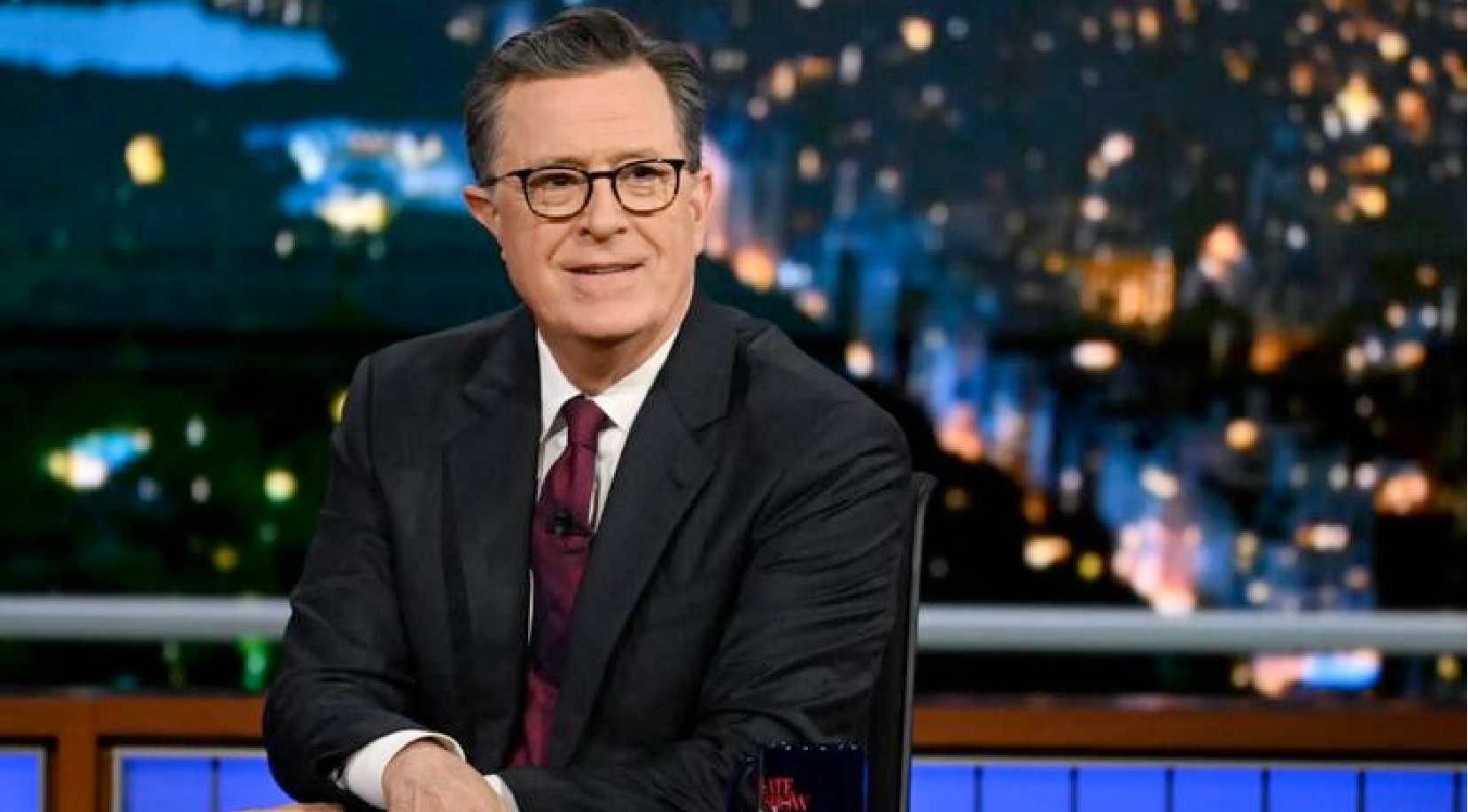
(ZENIT News / Washington, 02.07.2026).- As Stephen Colbert counts down the final months of his long-running late-night reign, one ambition remains stubbornly unmet. If there is a television host with the cultural clout, religious fluency, and personal motivation to attempt an interview with Pope Leo XIV, it is Colbert himself. Yet even for America’s most openly Catholic comedian, persuading a reigning pontiff to appear on a late-night talk show is no small miracle.
The revelation came not on his own stage, but during a guest appearance on «Late Night with Seth Meyers» on January 27. In an unusually candid exchange, Colbert disclosed two closely guarded details: the precise date of his final broadcast and the interview he hopes might crown his career. His last episode of «The Late Show with Stephen Colbert», he confirmed, will air on May 21, 2026. Asked by Meyers to name his dream guest before the curtain falls, Colbert did not hesitate. “The Pope,” he said. Then, with unmistakable pride: “The American Pope.”
The remark carried more than comedic punch. Colbert’s Catholic identity is not a branding accessory but a defining feature of his public persona. Over the years, he has quoted Scripture as easily as polling data, framed political arguments in theological language, and nudged guests—sometimes unsuspectingly—toward questions about God, conscience, and moral responsibility. For regular viewers, his papal wish list sounded less like a punchline and more like a fitting epilogue.
The timing, however, is complicated. When CBS announced in July 2025 that The Late Show would be cancelled, the network attributed the decision to financial considerations. Still, the context raised eyebrows. The cancellation followed closely on the heels of Colbert’s on-air denunciation of what he described as a “large bribe” involving CBS’s parent company and then-President Donald Trump. While no official connection was acknowledged, the sequence of events fueled speculation that Colbert’s political candor had finally collided with corporate limits.
Against that backdrop, his hope of welcoming Pope Leo XIV—a pontiff still early in his papacy and closely watched for how he will navigate media, politics, and American expectations—takes on added symbolic weight. Meyers, leaning into the irony, joked that the new pope was “the one you want,” implying that Pope Francis, by contrast, would never have been a comfortable fit for a late-night couch. Colbert pushed back, insisting Francis would have been “an infallible talk-show guest,” before turning the exchange into a self-deprecating riff.
He teased Meyers for declining an invitation to meet Francis in 2024, when the late pope addressed an unprecedented audience of more than 100 international comedians at the Vatican. Mock solemnity followed. Such irreverence, Colbert joked, would never be tolerated inside the Apostolic Palace. “Those Swiss Guards would take that halberd and take you down,” he quipped, conjuring images of Renaissance weaponry and famously flamboyant uniforms.
Beneath the humor lies a genuine question about the evolving relationship between the papacy and contemporary culture. Pope Leo XIV, the first American to occupy the Chair of Peter, represents a novelty that late-night television cannot ignore. Yet novelty alone does not guarantee accessibility.
With less than four months remaining before Colbert’s farewell broadcast, the odds are long. Securing such an appearance would require not only Vatican approval but also a pontiff willing to embrace an unscripted format shaped by irony, laughter, and the rhythms of American television. Still, Colbert himself might argue that hope is a theological virtue.
Thank you for reading our content. If you would like to receive ZENIT’s daily e-mail news, you can subscribe for free through this link.

Publicaciones relacionadas:
 Why is he called Leo XIV? The official answer given by the Pope
 “Only informed individuals peoples can make free decisions”: Leo XIV’s full speech to journalists
 Pope Leo XIV, Father Dowling, and China
 Leo XIV will go to Turkey at the end of 2025. Patriarch of Constantinople confirms it after audience
