

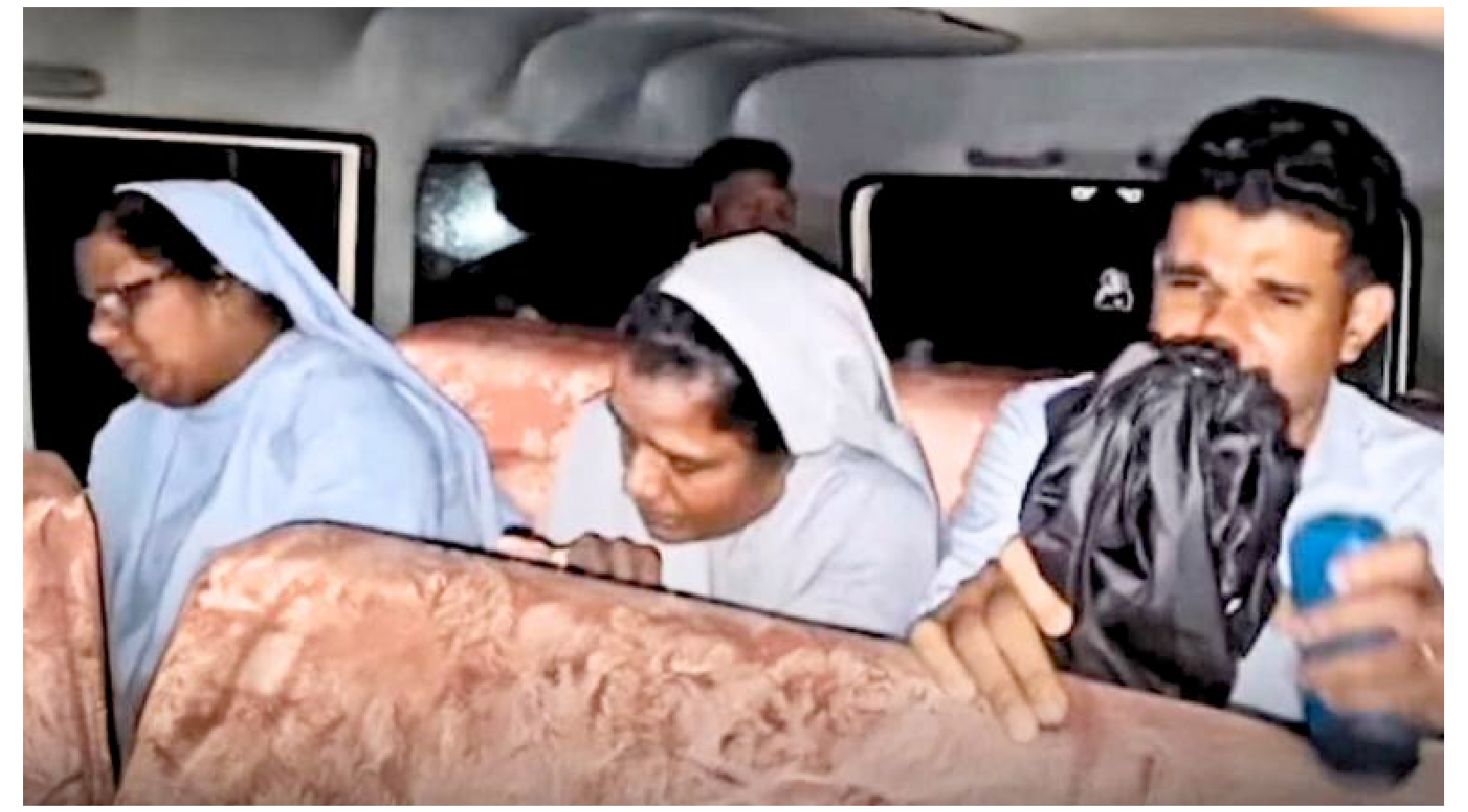
(ZENIT News / Odisha, 08.15.2025).- A brutal assault in the eastern Indian state of Odisha has once again drawn attention to the country’s worsening climate of religious intolerance. On the night of August 6, a mob of around 70 people—many believed to be affiliated with the Hindu nationalist group Bajrang Dal—ambushed two Catholic priests and a catechist returning to their parish in the town of Jaleswar. The victims, accompanied by two nuns, had just celebrated Mass in memory of two local Catholics who died two years ago.
According to the Indian Bishops’ Conference, the attackers blocked the group’s vehicle, forcibly separated the nuns—who were later rescued by local women—and detained the priests and catechist. Witnesses say the men were beaten, accused of “religious conversion,” and robbed of personal belongings. The catechist’s motorcycle was smashed; Father Lijo Nirappel’s phone was seized. Church officials describe the incident as a planned ambush, not a spontaneous outburst.
This violence, the bishops argue in their August 8 statement, is part of “a disturbing pattern of hostility toward the Christian minority in India.” They call it “a blatant violation of constitutional rights and human dignity” and urge Odisha’s government to swiftly prosecute the perpetrators. The bishops warn that the rise in mob-led aggression threatens the very fabric of India’s religious coexistence.
Such warnings are not new. Odisha, where Christians make up just 2.7% of the state’s 42 million people, has long been a flashpoint for communal tensions. In 2008, the Kandhamal district was the scene of one of the worst anti-Christian pogroms in modern Indian history: more than 100 Christians killed, 50,000 displaced, 6,500 homes and 395 churches or chapels destroyed, along with schools, clinics, and social service centers. Many survivors still live in fear, and prosecutions have been rare.
Rights groups have noted that incidents like the one in Jaleswar are not isolated. The United Christian Forum reported at least 40 attacks against Christians in Odisha alone in recent years. Nationwide, hundreds of similar cases—often involving accusations of forced conversions—are recorded annually, particularly in states governed by the Bharatiya Janata Party (BJP), which critics say has emboldened radical Hindu groups.
Bajrang Dal, the group linked to the latest assault, is the youth wing of the Vishva Hindu Parishad (VHP), part of the Sangh Parivar network that shares ideological roots with the BJP. While the movement insists it is protecting Hindu culture, its members have been implicated in violent campaigns against Muslims and Christians alike, including the destruction of churches, disruption of prayer services, and assaults on clergy.
India’s constitution guarantees freedom of religion, yet a growing number of states have enacted “anti-conversion” laws, which activists say are used to harass Christian and Muslim minorities. These laws often place the burden of proof on the accused and provide a legal pretext for vigilante violence.
The Indian bishops’ statement, while restrained in tone, carries an urgent plea: that the government restore order, uphold constitutional protections, and ensure the safety of religious minorities. For Odisha’s Christians—already a small and vulnerable community—this is more than a legal demand; it is a matter of survival.
International observers are taking note. The U.S. Commission on International Religious Freedom has repeatedly urged Washington to designate India as a “Country of Particular Concern,” citing rising incidents of mob violence, legal discrimination, and impunity for perpetrators. So far, such recommendations have gone unheeded by successive administrations.
In Jaleswar, the bruises will heal, but the memory of being hunted for one’s faith will not fade quickly. For many Christians in India, the question is no longer whether they are safe—it is whether their centuries-old presence in the country can endure amid the emboldened tide of religious nationalism.
Thank you for reading our content. If you would like to receive ZENIT’s daily e-mail news, you can subscribe for free through this link.

Publicaciones relacionadas:
 Nigeria: fourth priest abducted in five months
 Pakistani police charge Christian brutally assaulted by Muslims with blasphemy
 Nicaragua’s Silenced Church: A Report from Exile on a Persecution Without Pause
 Christian leaders in the Holy Land condemn Israeli local government threat to confiscate Armenian church property
