Stefano Gennarini
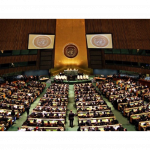
(ZENIT News – Center for Family and Human Rights / New York, 02.08.2026).- The UN is set to define new “gender crimes” in international criminal law. Western nations want these to include opposition to abortion and LGBT issues from political leaders and possibly civilians.
Most Western nations want the term “gender” in a new UN treaty on crimes against humanity to be left undefined to include gender as a social construct and sexual and gender identity issues. They also want a slew of new gender crimes to be listed in the treaty, including “gender apartheid” and “reproductive violence.”
The Holy See and traditional countries, mainly from Asia and Africa, pushed back against this effort in a special committee of the General Assembly that met over the last two weeks of January 2026 to discuss a preliminary draft of the treaty. They insisted on the need to define gender to avoid weaponizing international criminal law against conservatives.
Traditional countries warned that the new treaty would make all opposition to feminist, homosexual, and transgender rights a potential international crime. This includes support for laws and policies that protect marriage and the natural family, any limits on homosexual and transgender rights, and inequality for women as measured through quotas.
Although most preliminary discussions were held behind closed doors, several interventions were posted on the committee’s website.
On the last day of the committee, an Iraqi delegate delivered a powerful pro-family statement on behalf of several Islamic nations. He argued that a fluid definition of gender undermined the family as defined in international law. He said that the “nuclear family comprising two spouses of opposite sexes and their eventual filiation” was a “universal human experience” and that it had “positive and legal status” in international law. For this reason, gender could only be understood to refer to the two biological sexes, male and female.
The delegation of Mexico, which is aggressively pro-LGBT, immediately tried and failed to strike the Iraqi statement from the record. The delegations joining the statement were Algeria, Bahrain, Egypt, Iran, Jordan, Kuwait, Libya, Oman, Pakistan, Qatar, Saudi Arabia, Sudan, Syria, Tunisia, Yemen.
The delegation of Burundi criticized the decision of the International Law Commission, which prepared the initial draft of the treaty, to omit a definition of gender, as courting “politicized application and legal uncertainty.”
Burundi requested that if the term “gender” is retained in the treaty, it must be “clearly and expressly defined as referring exclusively to the two sexes, male and female, and that any broader or evolving interpretations be explicitly excluded.”
Burundi also opposed the creation of new gender crimes, such as “gender apartheid,” because it was a concept too vague to be used in criminal laws. “While we unequivocally condemn all forms of discrimination and historical inequality against women, not all inequalities rise to the level of crimes against humanity.”
The Namibian delegation rejected the rationale of the International Law Commission for removing the definition of gender. The commission cited the non-binding recommendations and work product of UN human rights mechanisms and the ICC prosecutor as establishing new obligations to recognize gender as a social construct, including sexual orientation and gender identity issues, under international law.
Namibia’s statement said these were “ambiguous” documents from mechanisms that were neither binding nor authoritative and therefore could not provide the “legal clarity and certainty” necessary in criminal law. Namibia said that the new treaty should continue to use the precise definition of gender as male and female in the Rome Statute of the International Criminal Court instead.
The discussion took place in the preparatory committee of the General Assembly, tasked with organizing the diplomatic conference expected to negotiate and adopt the new treaty in 2029. The next step is for delegations to prepare written amendments for submission by April 30 this year. The preparatory committee must decide the rules of procedure and final dates of the diplomatic conferences by April 15, 2027.
Other nations that asked to retain the definition of gender from the Rome Statute in the new treaty included Argentina, Algeria, Burkina Faso, Cameroon, Egypt, Gambia, Ghana, the Holy See, Hungary, Iran, Malaysia, Nigeria, the Russian Federation, Senegal, Türkiye, and others. European and Nordic countries, as well as Canada, Australia, New Zealand, Mexico, and Colombia, argued in favor of dropping the definition.
Thank you for reading our content. If you would like to receive ZENIT’s daily e-mail news, you can subscribe for free through this link.