

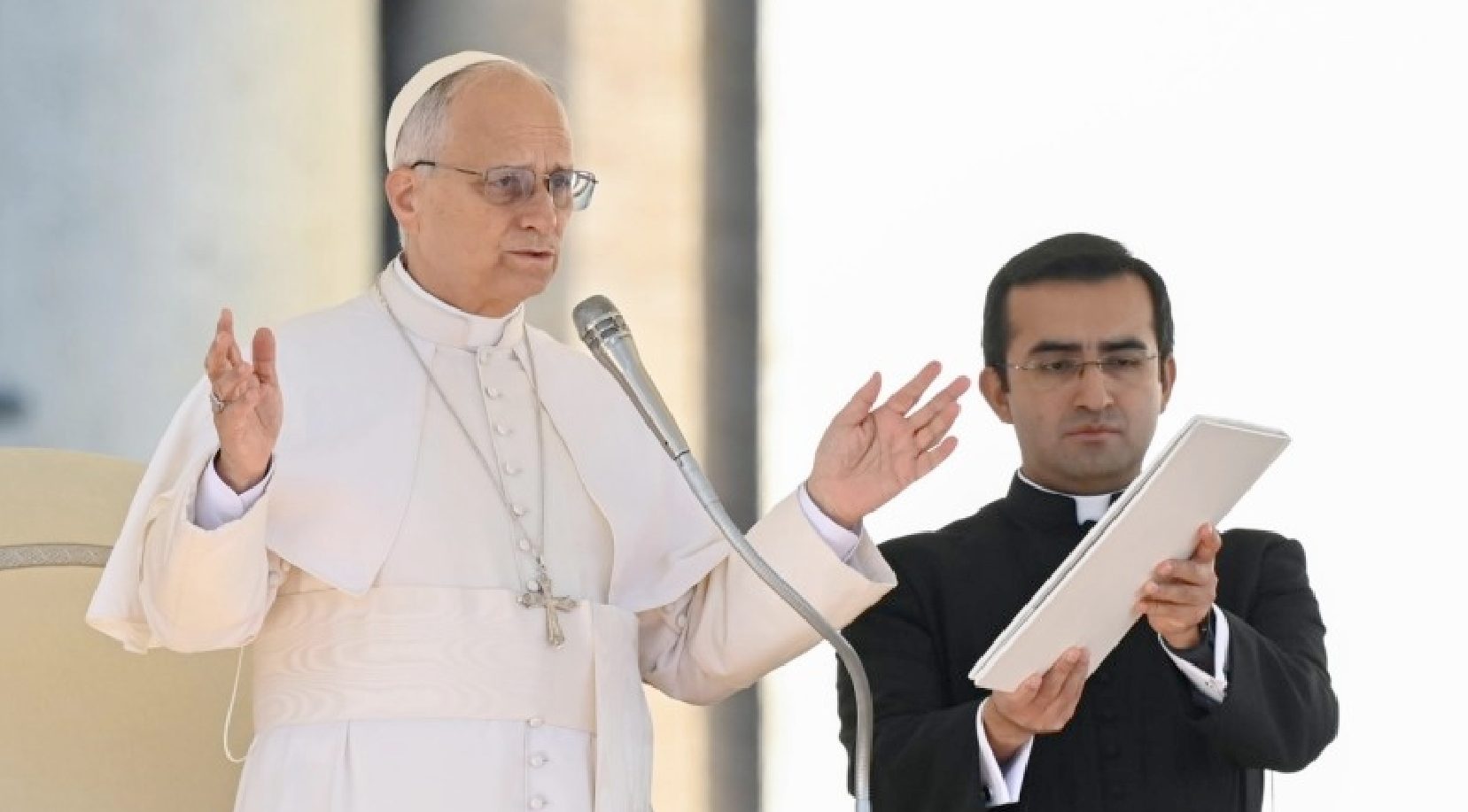
(ZENIT News / Doublin, 11.13.2025).- Dublin, a city where history and faith intertwine in every street and stone, may soon witness the closing of one of the longest chapters left unresolved by the Reformation. For the first time in nearly five hundred years, the Irish capital could officially have a Catholic cathedral of its own—if Pope Leo XIV approves the proposal to designate St. Mary’s Pro-Cathedral as the Archdiocese’s permanent seat.
The plan, which coincides with the bicentenary of St. Mary’s completion, would mark an extraordinary symbolic reconciliation between Ireland’s turbulent religious past and its living Catholic present. Though the Pro-Cathedral has long functioned as the de facto home of the Archbishops of Dublin, its very title—pro tempore, “for the time being”—has stood as a quiet reminder that the Church’s post-Reformation exile was never officially undone.
St. Mary’s, modestly tucked along Marlborough Street just north of Dublin’s city center, was built in 1825 when the Penal Laws still cast long shadows over Catholic life. Its location was a deliberate act of caution: the Church’s original plan had been to build on what is now O’Connell Street, but after the failed 1798 rebellion, Irish Catholics chose discretion over prominence.
Fr. Kieran McDermott, the cathedral’s administrator, told RTÉ that the decision reflected the precarious times. “The Catholic community decided not to take risks,” he explained. “They sought a quieter, safer place to build.” Two centuries later, that temporary solution still defines the heart of Catholic Dublin.
The story of St. Mary’s cannot be separated from the 16th-century upheaval that stripped the Catholic Church of its cathedrals. Both Christ Church and St. Patrick’s, the great medieval sanctuaries of Dublin, became Anglican following Henry VIII’s break with Rome. “That was the rupture,” Fr. McDermott said. “And five hundred years later, Christ Church remains the seat of the Church of Ireland’s Archbishop, while St. Patrick’s serves as its national collegiate church.”
Throughout the centuries, various efforts to establish a true Catholic cathedral have faltered. In the 1930s, the Archdiocese even held an architectural competition for a new cathedral planned for Merrion Square, but financial and social pressures forced the idea to be abandoned.
Momentum returned only recently under Archbishop Dermot Farrell, who was appointed in 2021. Confronted by the historical anomaly that the majority-Catholic capital lacked its own cathedral, he initiated a wide consultation that concluded with a pragmatic yet symbolic proposal: to confirm St. Mary’s as the official cathedral of Dublin, and to elevate nearby St. Andrew’s in Westland Row to the rank of minor basilica.
That proposal is now reportedly before Pope Leo XIV, whose decision could come as early as this year. For many Irish Catholics, it would represent not just a canonical correction but a moment of healing—a recognition that what began as a “temporary” measure has become a cornerstone of the nation’s faith.
“After five centuries, this would be more than a designation,” Fr. McDermott reflected. “It would be a homecoming.”
Thank you for reading our content. If you would like to receive ZENIT’s daily e-mail news, you can subscribe for free through this link.

Publicaciones relacionadas:
 Pope confirms new Custos of the Catholic Church for the Holy Places in the Holy Land
 Pope Leo XIV avoids schism, ends mission of bishop in liturgical dispute in India
 Pope Leo XIV will visit Lebanon, according to official statements by the Archbishop of Beirut
 Luxembourg has a new Grand Duke: this is what the Pope said in his message on the day of his coronation
