

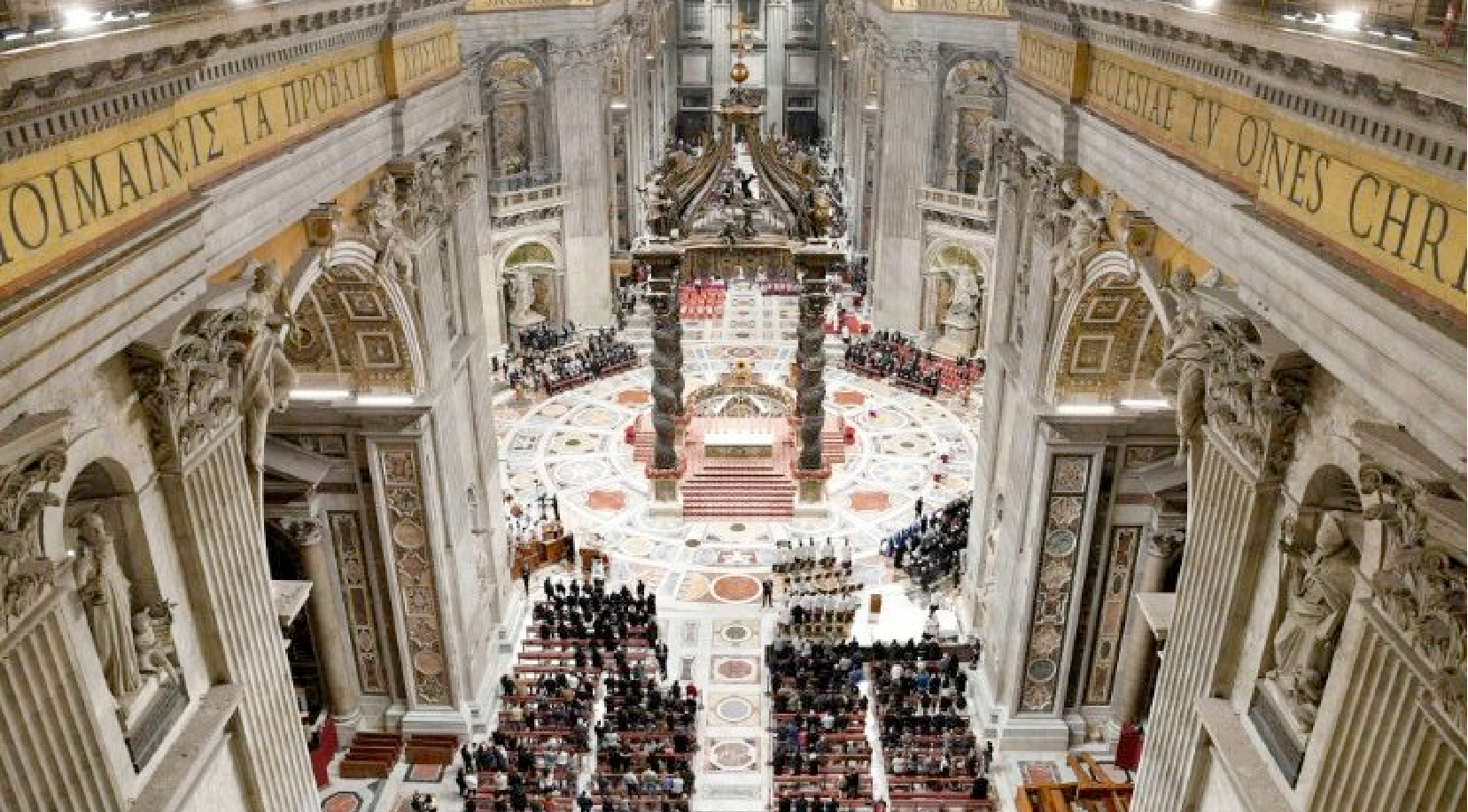
(ZENIT News / Vatican City, 02.16.2026).- Celebratory events, spiritual journeys and technological innovation characterize the program of initiatives for the IV Centenary of the Dedication of St. Peter’s Basilica (1626-2026).
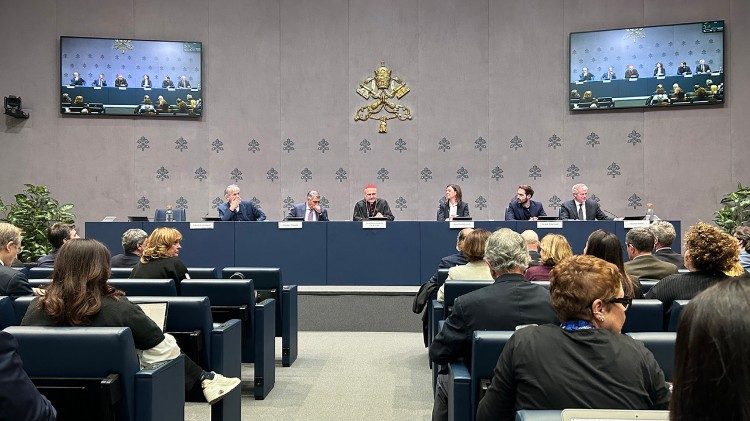
Initiatives to celebrate the IV Centenary of the Dedication of the Basilica
Alongside the innovation and research projects, the program of initiatives for the fourth Centenary, which will culminate on November 18 with the Eucharistic celebration presided over by the Holy Father, includes a wide range of proposals of a spiritual and cultural nature: from the inauguration on February 20 of the new Via Crucis of the Basilica to the Spiritual Elevations, i.e. meetings, on a weekly basis, of prayer and polyphonic singing animated by the Julia Chapel; from the historical-cultural, theological-liturgical and pastoral-spiritual conferences (24 March, 26 May and 13 October), to the Lectio Petri on 20 October and 24 November; from the Narrationes Petri, insights into the human and faith journey of the Apostle (3, 10 and 17 November), to the proposal of the Quo Vadis path in the city of Rome, in the footsteps of the monumental testimonies of the Apostles, and to the representation, near the Solemnity of Peter and Paul, of the show «Peter and Paul in Rome» by Michele La Ginestra. Other initiatives: a new app for liturgies in the Basilica, with readings, songs and simultaneous translation service in sixty languages developed in collaboration with the Dicastery for Communication and the company Translated; the live streaming broadcast, again in collaboration with the same Dicastery and with the help of RAI volunteers, of the most important celebrations of the Basilica. In addition, the official logo for the fourth centenary, the commemorative medal and stamp will be presented, as well as the new institutional font «Michelangelus», inspired by Buonarroti’s handwriting and developed by Studio Gusto, which will be included in Microsoft’s Office package.
The «Digital Mission of the Outgoing Basilica»
The Digital Ecosystem, which already allows the integration of data, services and tools to support the activities of the Fabbrica di San Pietro and the experience of pilgrims, is enriched with a new real-time booking system for access to the Basilica, Smart Pass. Integrated into the official www.basilicasanpietro.va platform, the service will make it possible to verify the possibility of accessing the Basilica in a short time and book admission, thus favoring a more orderly management of flows. In this sense, a further contribution to the preservation of the sacredness of the place and to the reception will be offered by the implementation of the platform with an advanced attendance monitoring system: the installation and configuration of a network of sensors inside the Basilica that communicate in real time with the technologies underlying the Digital Ecosystem to know the flows of people and promote their safety and the management of internal spaces.
Finally, the interactive section of the digital platform will be developed to allow pilgrims, faithful and tourists to tell their visit to St. Peter’s Basilica, transforming them into active creators of a collective experience – social wall –, writing a message, leaving a prayer intention, posting a photo taken outside the Basilica.
Integrated study and monitoring of St. Peter’s Basilica
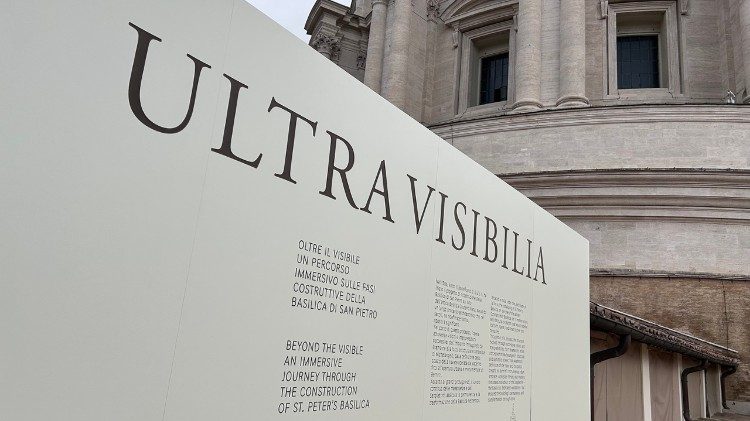
Of particular importance is the «Beyond the visible» project, the result of the collaboration between the Fabbrica di San Pietro and Eni to safeguard the static nature of the Vatican Basilica, through structural, integrated and permanent monitoring.
The collaboration between Eni, as technical sponsor, and the Fabbrica di San Pietro was born with the aim of preserving the «state of health» and magnificence of the Basilica over time through work conducted with the adoption of advanced geophysical, geological, topographical and structural survey technologies and which makes use of high-precision monitoring systems. A project that allowed us to enter the heart of the Basilica and to look, in fact, «Beyond the visible».
A three-dimensional and interactive digital model
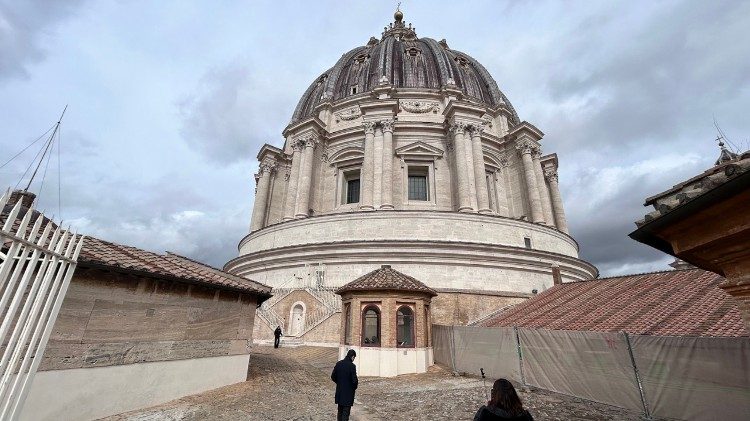
The collaboration between Eni and Fabbrica di San Pietro has led to the creation of a three-dimensional digital model of the entire monumental complex that also allows us to deepen the state of the foundations and the subsoil of the Basilica. The first phase of the project involved the acquisition and study of the sources of the Historical Archives of the Fabbrica di San Pietro (ranging from the sixteenth to the eighteenth century), the information of the investigations conducted by Eni between 1997 and 1999 on the occasion of the restoration of the façade, and some geotechnical tests carried out in the years following 2000.An integrated and multidisciplinary approach of the project has combined three levels of representation in a dynamic and interactive way: the high-definition metric-architectural model of the Basilica, the geological and hydrogeological model of the subsoil and the structural monitoring model that can be searched in real time, which in turn consists of three main networks installed on the façade, on the drum of the dome and in other sensitive areas of the Basilica. All this makes it possible to detect millimetric displacements and inclinations of the order of ten thousandth of a degree. This model now allows the technicians of the Factory and the bodies in charge to access a complete mapping of the architecture and geology of the land below the Basilica, with the possibility of querying the monitoring data in real time, 24 hours a day, 7 days a week, thus becoming a tool for consultation and the elaboration of new assessments on which to base future study actions, archaeological insights and conservation of the Basilica. The operational campaign, carried out in less than two months, required about 4,500 hours of work, between day and night, involving a total area of about 80,000 square meters, visible – such as the façade, the colonnades, the basilica body, the roofs and the churchyard – and not visible, such as the Vatican Grottoes and the Necropolis, except through technological tools.
«In recent years, as the Fabbrica di San Pietro, we have embarked on an organic path that has led us to think of the Basilica as a living system, to be known, preserved and communicated with tools appropriate to our time,» said Cardinal Mauro Gambetti, Archpriest of the Papal Basilica of St. Peter’s, who then added:The project carried out with Eni and the other initiatives we have presented push our gaze towards the future, towards the fourth millennium, combining historical research, scientific study and digitization, with the aim of deepening knowledge of the Basilica and taking care of it in an increasingly conscious way. If technology is guided by shared vision and responsibility, it can express a language capable of helping today’s man to read that interweaving of history, art and spirituality that makes St. Peter’s Basilica unique in the world.»
«Putting our skills at the service of St. Peter’s Basilica, in a special year such as that of the Jubilee of Hope, is a source of great pride for Eni,» said Claudio Granata, Eni’s Director of Stakeholder Relations & Services. «Our collaboration with Fabbrica di San Pietro has deep roots and reflects a business vision that considers the care of cultural heritage as an integral part of its responsibility towards the common good, deploying advanced technologies and a multidisciplinary team for an unprecedented scientific study of the foundations of the Basilica and its Dome. At Eni we are used to looking «beyond the visible»: we have applied our ability to analyze the subsoil to preserve the magnificence of this symbolic place. Many of our interventions will remain invisible to the eyes of visitors, but they are essential to ensure the stability and health of the monumental complex for future generations.»
The project is also recounted in the documentary «Beyond the visible», narrated by art historian and popularizer Jacopo Veneziani, available on the YouTube channels of Vatican News and Eni.com, who spoke with the protagonists of the project, merging the technical story of the activities with the architectural and historical aspects of the Basilica.
Thank you for reading our content. If you would like to receive ZENIT’s daily e-mail news, you can subscribe for free through this link.

Publicaciones relacionadas:
 Provocation at the Vatican? Russian artist intends to exhibit work on Vatican border
 Synod 2023: Two Chinese Bishops In (with Government’s Permission), Cardinal Ladaria Out
 U.S. Undersecretary of Homeland Security visits the Vatican
 Jewish leader to Pope at Vatican: use your moral strength to free hostages
