

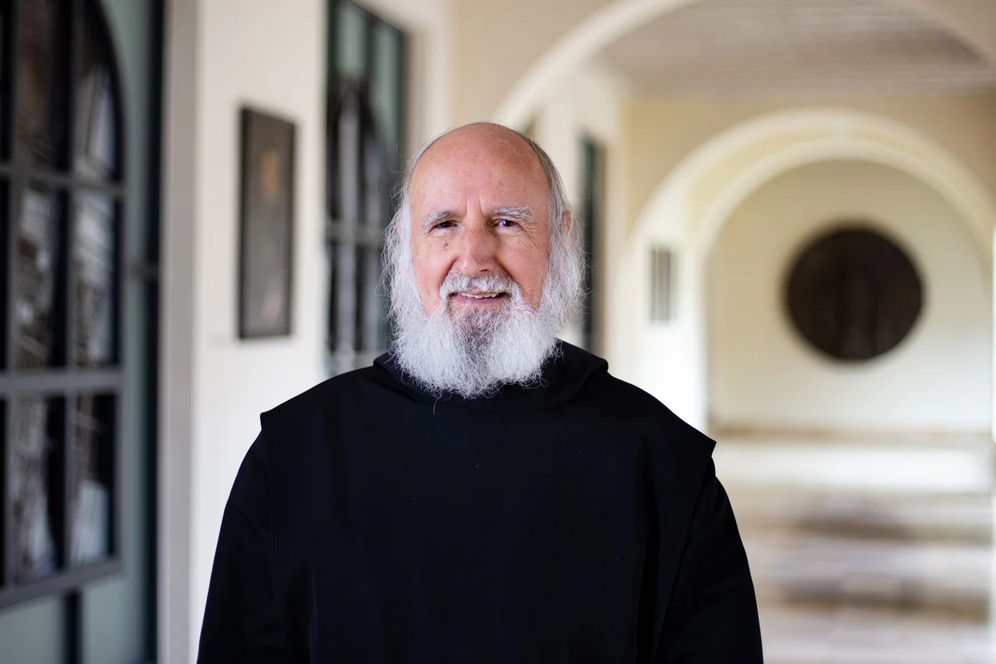
(ZENIT News / Bonn, 11.09.2026).- A growing dispute over the handling of sexual abuse allegations at a Catholic retreat centre in Bavaria has taken a new turn, with Germany’s Council of Abuse Survivors accusing its leadership of refusing to engage with concerns that the institution’s previously reported case may not have been an isolated incident.
In a statement issued in Bonn on 28 October 2026, the council criticised the Recollectio-Haus and its spiritual director, Benedictine monk and bestselling author Anselm Grün, for declining a proposed face-to-face meeting. The group said it had received new indications of possible misconduct connected with sexual abuse and called for an independent investigation. The German Catholic outlet katholisch.de reported the statement the following day.
The allegations carry particular weight because of the role played by the Recollectio-Haus, located in Schwarzach am Main and run under the authority of Münsterschwarzach Abbey. The centre offers psychological and spiritual support to priests and religious experiencing personal crises, including individuals involved in abuse cases. Grün, one of the most widely read spiritual writers in the German-speaking Catholic world, has been associated with the institution for many years.
According to the survivors’ council, information gathered in recent weeks raises questions about whether the case that came to light in September was exceptional. It also says it has received accounts of other alleged problems involving sexual abuse at the centre. The council therefore sought a meeting with those responsible, particularly Grün, but says its request was rejected and that it was instead asked to submit its allegations in writing.
The abbey disputes that account. Responding to katholisch.de, it said it had been willing to engage in dialogue and had asked the council to specify in writing the matters it wished to clarify, but had received no response. It maintained that personal discussions had not been ruled out. The abbey also said it currently had no information concerning cases of sexual abuse of minors and would examine any such information if it emerged.
The disagreement over whether a meeting was refused or merely postponed does not resolve the central issue: whether the new allegations warrant independent scrutiny. The council intends to bring them to the attention of Bishop Heiner Wilmer, president of the German Bishops’ Conference, and ask him to commission an investigation by independent experts. Pending clarification, it argues that the Recollectio-Haus should no longer receive funding from church-tax revenues and should not be recommended to Church employees as a place of support.
The controversy follows revelations in September, when an independent commission investigating sexual abuse in the Archdiocese of Paderborn reported that a priest accused of abuse had stayed at the Recollectio-Haus during the 1990s. According to the commission’s findings, Grün later considered it possible that the priest might return to ministry. Grün initially denied the allegation, but Münsterschwarzach Abbey subsequently acknowledged that the case had occurred. The centre’s current director, Corinna Paeth, said Grün had not possessed all the relevant information at the time. Wunibald Müller, who previously headed the institution, also defended the monk.
The distinction between what Grün knew, what decisions were made at the time and what safeguards were applied to the priest is central to the questions now being raised. The available accounts do not establish that further abuse took place at the centre, nor do they prove that its leadership deliberately concealed additional cases. But the new claims, together with the earlier findings, have intensified demands for a transparent examination of its conduct.
For the German Church, the dispute touches a particularly sensitive nerve. The country’s Catholic institutions have spent more than a decade confronting the scale of clerical sexual abuse and the failures that allowed it to continue. A centre entrusted with helping priests in crisis must be subject to especially rigorous standards when allegations concern its own handling of abuse. Its therapeutic and spiritual mission cannot substitute for accountability, and institutional reputation cannot take precedence over the protection and testimony of victims.
An independent inquiry would therefore serve not only those raising the allegations, but also the institution itself. Until the questions are properly examined, uncertainty will continue to undermine confidence in a centre whose work depends fundamentally on trust.
Thank you for reading our content. If you would like to receive ZENIT’s daily e-mail news, you can subscribe for free through this link.

Publicaciones relacionadas:
 Pope Francis Calls for a Cultural Shift in Child Protection Within the Church
 $800 million in compensation for abuse cases: the situation in the Archdiocese of New York
 Pontifical Commission for the Protection of Minors and Ending Clergy Abuse Hold First Structured Dialogue in Rome
 Leo XIV emphasizes the need for safe spaces within the Church to experience love with Jesus Christ
