

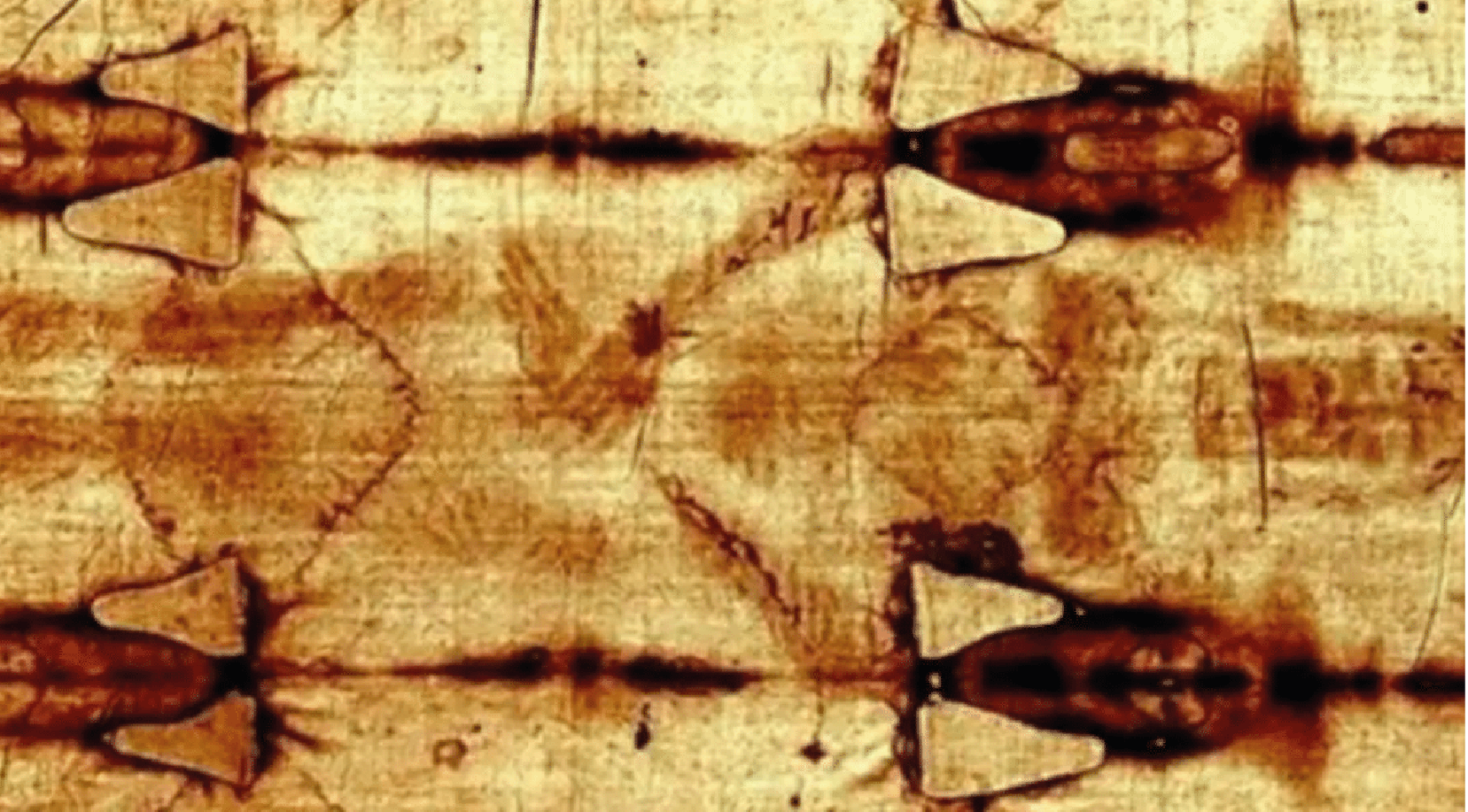
(ZENIT News / Turin, 08.08.2025).- In a media landscape increasingly driven by digital simulations and speculative headlines, the Shroud of Turin has once again found itself at the center of controversy. This time, the spark comes from a computer-generated study by Brazilian designer Cicero Moraes, who claims the Shroud’s image was produced by pressing linen against a bas-relief sculpture. The timing of the release—coinciding with the international congress on the Shroud in St. Louis (USA)—has raised eyebrows among scholars and faithful alike.
Moraes, known for his 3D reconstructions of historical figures, published his findings in the journal Archaeometry, presenting them as scientific research. Yet his own disclaimers reveal the limitations of the work: no chemical analysis, no study of blood flow, no consideration of the textile’s microscopic properties. The model omits the dorsal image entirely and misrepresents the anatomical posture of the man in the Shroud. Even the positioning of hands and feet is reversed for visual convenience.
Critics argue that Moraes’s approach is not only methodologically superficial but also historically uninformed. His theory ignores decades of research, including the extensive findings of the Shroud of Turin Research Project (STURP), which in 1978 ruled out contact-based image formation. The image on the Shroud is not a pigment or a burn; it’s a superficial oxidation of cellulose, so faint it penetrates less than a fraction of a millimeter. This phenomenon, consistent with ultraviolet radiation, cannot be replicated by pressing cloth against a sculpture.
The International Center for Studies on the Shroud (CISS) has issued a technical rebuttal, stating that Moraes’s digital models “do not reflect real conditions” and “do not add anything new” to the body of knowledge. The Center emphasizes that while digital tools can aid reflection, they cannot replace direct physical and chemical analysis—especially when the image contains Middle Eastern pollen, traces of aloe and myrrh, and human blood consistent with crucifixion wounds.
Cardinal Roberto Repole, Archbishop of Turin and Pontifical Custodian of the Shroud, has also weighed in. Without dismissing scientific inquiry, he cautions against the superficiality of conclusions that collapse under scrutiny. He calls for “critical attention” to what is so easily published and reminds the public of the CISS’s role in providing scientific support to the Church’s custodianship.
What remains troubling is not just the fragility of Moraes’s thesis, but the way it has been amplified. Major Italian outlets like La Repubblica and La Stampa have echoed the claims without critique, presenting them as breakthroughs rather than speculative exercises. Some even refer to Moraes as leading an “international team,” despite the solitary nature of his digital modeling. The media’s uncritical repetition has left the public confused, and in some cases, misled.
This pattern is familiar. In 2018, Matteo Borrini and Luigi Garlaschelli attempted to discredit the Shroud’s bloodstains, only to be met with counter-experiments and rebuttals. Moraes’s work follows a similar trajectory—less rigorous, more convenient, and ultimately dismissive of the Shroud’s complexity.
The Shroud continues to provoke discomfort in circles resistant to its implications. Its silent witness to suffering, its inexplicable image, and its enduring mystery challenge both scientific reductionism and cultural skepticism. Perhaps that is why it is so often targeted—not because it has been disproven, but because it refuses to be easily explained.
In an age of digital certainty, the Shroud remains a paradox: fragile linen bearing an image that defies replication, a relic that speaks not only to faith but to the limits of human understanding. And in that tension, it continues to inspire inquiry, devotion, and—inevitably—controversy.
Thank you for reading our content. If you would like to receive ZENIT’s daily e-mail news, you can subscribe for free through this link.

Publicaciones relacionadas:
 Dangar of Asset Ownership Following Iraqi Government’s Measure Against Cardinal Leader of Iraqi Catholics
 The canonical visit to the Aletti Center, founded by Rupnik, has concluded, and here is what part of the report states
 Pope Francis yes, Church no: survey reveals that the Pope is the most trusted person in Italy
 “Deportation hurts the dignity of many men»: Pope Francis in letter to U.S. bishops
