

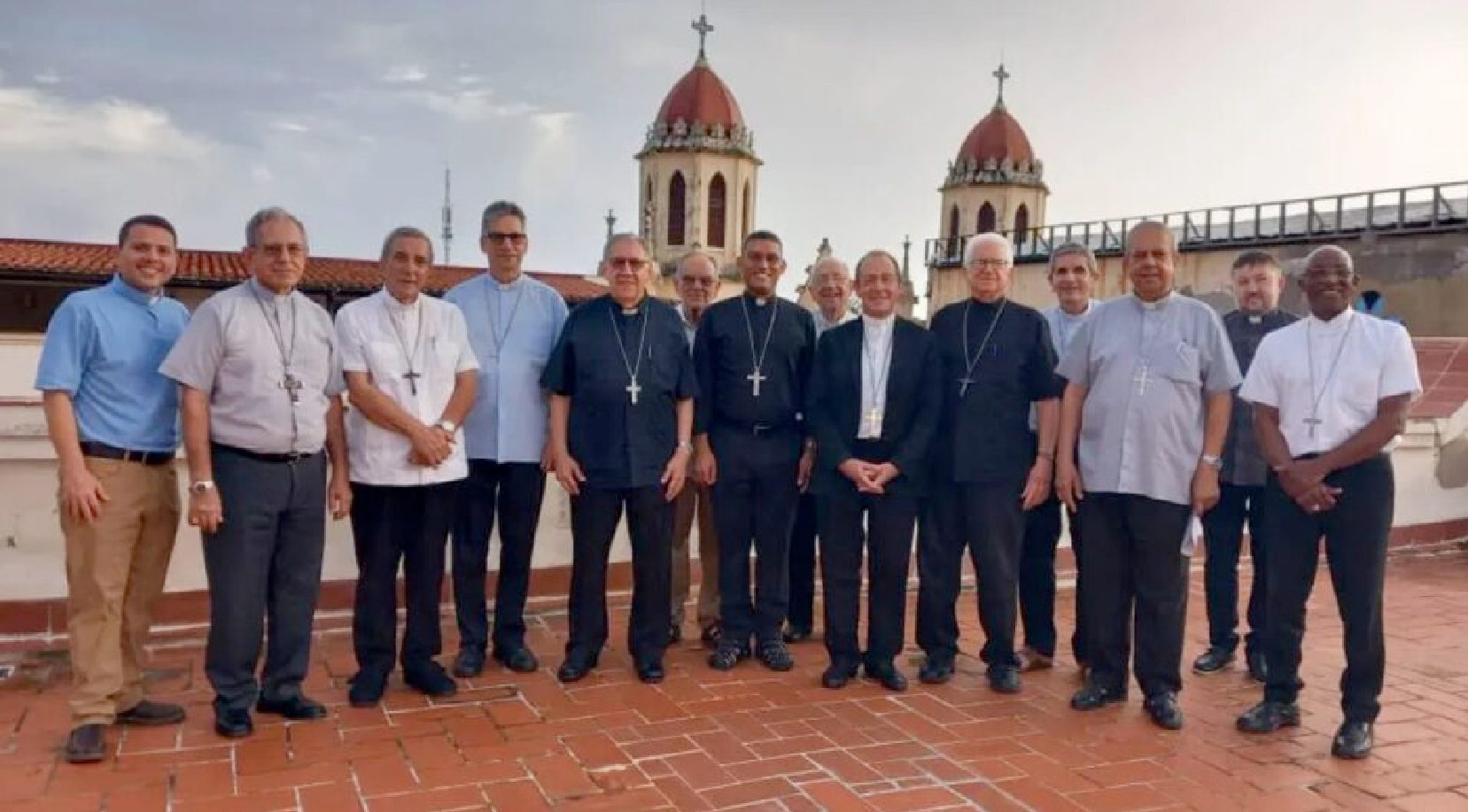
(ZENIT News / Havana, 02.14.2026).- What was meant to be a moment of ecclesial communion between Cuba’s bishops and Pope Leo XIV has instead become a stark symbol of the island’s deepening paralysis. The Cuban episcopate has formally requested the postponement of its Ad Limina Apostolorum visit to Rome, originally scheduled for February 16–20, after an acute fuel shortage rendered international travel impossible.
The decision, communicated by the Secretariat of the Cuban Conference of Catholic Bishops (COCC) on February 12, reflects what the bishops described as a worsening socio-economic environment generating “instability and uncertainty.” Vatican sources confirmed that the visit could not proceed “because current conditions do not permit it,” a phrase that in diplomatic language encompasses both logistical and political realities.
At the heart of the disruption lies an escalating energy crisis. On February 10, Cuba reportedly ran out of fuel for commercial aircraft, leaving flights unable to refuel. The shortage follows renewed pressure from Washington: on January 29, the U.S. government announced tariffs targeting countries that supply oil to the island, a move intended to increase economic leverage over Havana’s communist leadership. Cuban authorities have framed the situation as the result of an intensified petroleum embargo.
For the Church, the consequences were immediate. The Ad Limina visit—mandated roughly every five years for each national episcopal conference—is not a ceremonial courtesy but a canonical obligation rooted in the bishops’ accountability to the Successor of Peter. The Latin expression ad limina apostolorum, “to the thresholds of the Apostles,” refers to prayer at the tombs of Saints Peter and Paul in Rome, coupled with formal reports to the Holy See on the state of diocesan life.
The Cuban bishops had planned not only an audience with Pope Leo XIV on February 20 but also meetings with various Vatican dicasteries and pilgrimages to the four major papal basilicas. Such visits provide rare opportunities for bishops from isolated or politically constrained contexts to present pastoral challenges directly to the central governance of the Church.
Instead, the bishops remain on an island grappling with structural economic contraction and mounting social strain. Independent estimates suggest that Cuba’s gross domestic product has declined by more than 15 percent cumulatively in recent years. The shortages of basic goods, daily extended blackouts, soaring inflation, partial dollarization of the economy and sustained outward migration have created what many observers describe as a systemic crisis.
In a January 31 statement, the COCC warned that without structural reforms Cuba risks sliding toward social chaos and violence. “Cuba needs changes, and they are increasingly urgent,” the bishops wrote, adding pointedly that the country does not need “more anguish or pain.” Their appeal came amid fears that reduced oil supplies could paralyze transportation, electricity generation and tourism—one of the government’s principal sources of foreign currency.
Pope Leo XIV has not remained silent. On February 1, during the Angelus address from the Apostolic Palace overlooking St. Peter’s Square, he expressed “great concern” over rising tensions between Cuba and the United States. Aligning himself with the Cuban bishops’ call, he urged “sincere and effective dialogue” to avoid violence and prevent further suffering for the Cuban people. The Holy See, which maintains diplomatic relations with both Washington and Havana, has historically positioned itself as a proponent of engagement rather than escalation.
The postponement of the Ad Limina visit thus carries symbolic weight beyond scheduling inconvenience. It underscores how geopolitical friction and economic sanctions reverberate into the ecclesial sphere, constraining even routine expressions of Catholic unity. In practical terms, the bishops have pledged to maintain their communion with the pope and the Apostolic See while awaiting more stable conditions.
When the visit is eventually rescheduled, it will likely carry an added layer of gravity. The reports the bishops bring to Rome will speak not only of parish life and vocations but also of blackouts, migration and the search for dialogue in a climate of scarcity. Until then, the thresholds of the Apostles will have to wait.
Thank you for reading our content. If you would like to receive ZENIT’s daily e-mail news, you can subscribe for free through this link.

Publicaciones relacionadas:
 Leader of Ukrainian Catholics visits the Pope and invites him to Ukraine: “his visit would contribute to stop the war”
 These are the first countries Pope Leo would visit according to Cardinal Sturla’s statements
 Pope Leo XIV avoids schism, ends mission of bishop in liturgical dispute in India
 This is the new Catholic bishop appointed by Pope Leo XIV for London: he is from Africa, enjoys horse riding, and was a soldier
