

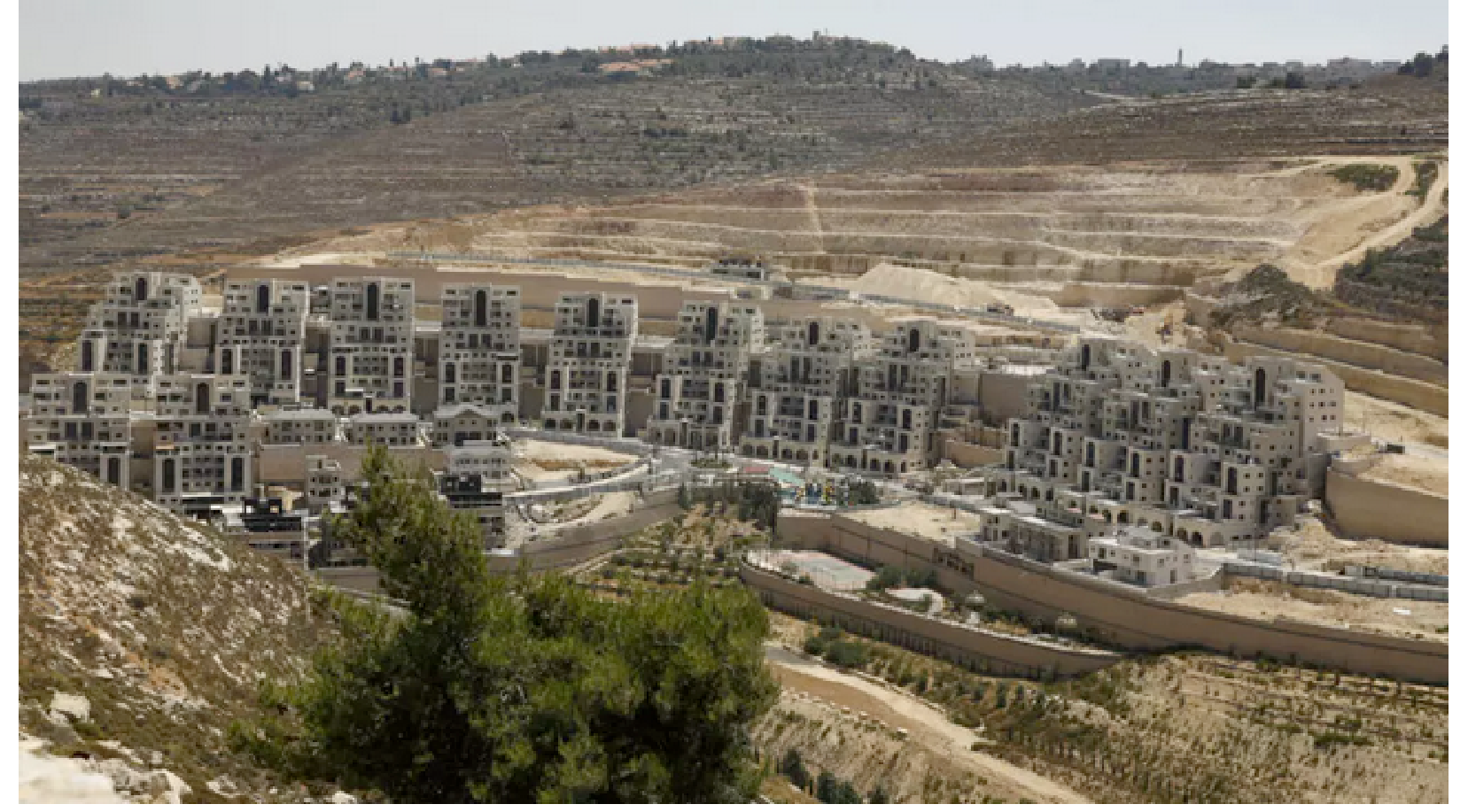
(ZENIT News / Jerusalem, 08.26.2025).- While Israel finalizes plans for thousands of new housing units in the occupied West Bank, Church leaders are warning that such moves imperil not only the fragile prospects of peace but the very dignity of peoples who share the land once called holy.
On August 20, Israel’s Higher Planning Council granted final approval for 3,753 housing units, including more than 3,400 in the long-disputed E1 corridor east of Jerusalem. The decision revives a project frozen for decades under U.S. pressure, yet now pushed forward by Finance Minister Bezalel Smotrich, who openly declared that the plan would “bury the idea of a Palestinian state.” The E1 expansion would link Ma’ale Adumim to Jerusalem, cutting the West Bank in two and rendering impossible any contiguous Palestinian territory.
The response from Church leaders was unambiguous. Bishop Nicholas Hudson, chair of the Department for International Affairs of the Catholic Bishops’ Conference of England and Wales, together with Bishop Jim Curry, senior bishop for the Holy Land, condemned the approval. They described the move as “illegal under international law” and a violation of the right to self-determination enshrined in the UN Charter. For the bishops, such developments not only deny Palestinians their political aspirations but block the only viable path toward a durable peace.
The Holy See has long advanced a two-state solution, balancing its recognition of Israel in 1993 with its formal acknowledgment of the State of Palestine in 2015. Pope Leo XIV reiterated that position, urging the faithful to dedicate August 22—traditionally observed as the Feast of the Queenship of Mary—to fasting and prayer for peace in the Holy Land, Ukraine, and other regions scarred by conflict. “We pray for all who seek a just and lasting peace between Israel and Palestine,” the Pope said, underscoring the Vatican’s consistent call for dialogue over force.
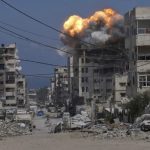
Yet events on the ground are moving in the opposite direction. Israel’s military posture has hardened in parallel with its settlement policy. Defense Minister Israel Katz confirmed the mobilization of 60,000 reservists, with as many as 130,000 potentially engaged in operations around Gaza. In recent days, armored brigades have launched incursions on the edges of Gaza City, preparing for a broader offensive dubbed “Chariots of Gideon II.” Meanwhile, over a million Palestinians have been displaced from northern Gaza, with humanitarian agencies struggling to cope with the mass movement of civilians.
For the Palestinian Authority, the latest Israeli decision represents a political and humanitarian disaster. Officials in Ramallah warned that the E1 plan “turns the West Bank into a prison,” creating disconnected enclaves where movement depends on Israeli checkpoints and where armed settler violence increasingly shapes daily life. Human rights groups echo these concerns, fearing the collapse of what little remains of a framework for negotiation.
Diplomatic efforts, meanwhile, appear fragile. Arab mediators led by Qatar continue to push for a ceasefire in Gaza, with Hamas signaling conditional approval for a new proposal. Israel’s government remains divided, with Prime Minister Benjamin Netanyahu insisting on the immediate return of all hostages before any truce. His rhetoric has sharpened against European leaders, notably French President Emmanuel Macron, whom he accused of “fueling antisemitism” by advancing recognition of a Palestinian state. Paris, in turn, dismissed the charge as a distortion of Europe’s fight against anti-Jewish hatred.
In this volatile context, the Church’s voice serves as both lament and warning. By linking settlement expansion to the erosion of peace itself, bishops are placing moral weight on what could otherwise seem like technical planning decisions. And in calling the international community to speak “with one voice,” they echo the Vatican’s conviction that religious leaders cannot remain silent when political choices close the door to reconciliation.
Thank you for reading our content. If you would like to receive ZENIT’s daily e-mail news, you can subscribe for free through this link.

Publicaciones relacionadas:
 Israeli government minister calls for construction of synagogue on Temple Mount (where Muslim mosque now stands)
 Dire Warnings from Holy Land Leaders as Humanitarian Crisis Deepens in Gaza, Lebanon, and West Bank
 Pope Leo XIV publicly notes deterioration of international and humanitarian law
 How many Christians remain in Gaza after nearly two years of war? These are the data
