

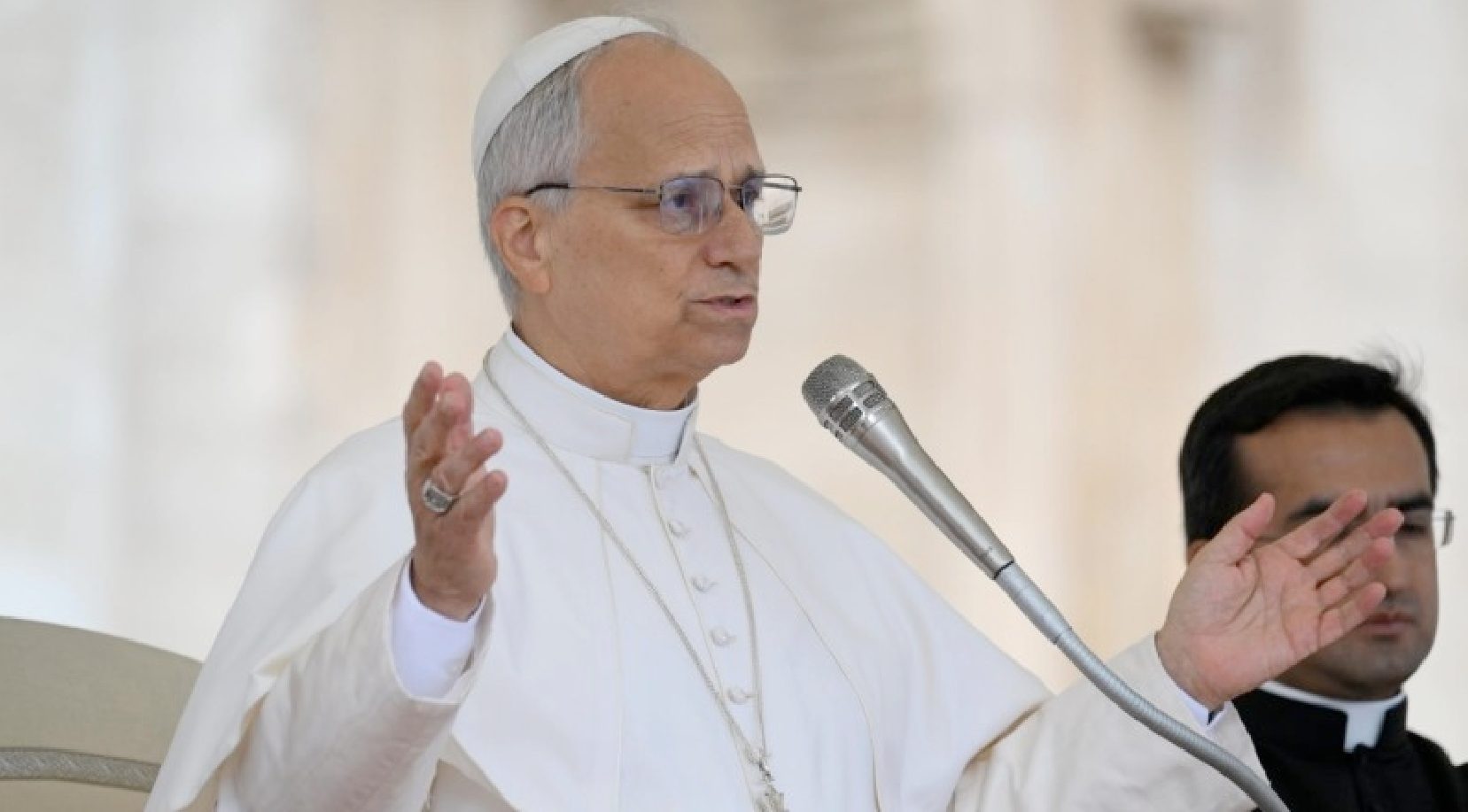
(ZENIT News / Rome, 10.01.2025).- Rome is already abuzz with speculation: around October 4, the feast of St. Francis of Assisi, Pope Leo XIV is expected to publish his first apostolic exhortation. According to Italian media reports, the document will focus on the care of the poor—a theme deeply rooted in the Franciscan spirit and already central to his predecessor’s magisterium.
An apostolic exhortation is not a legislative act, but a pastoral encouragement. Its purpose is to guide and inspire, drawing believers closer to Gospel values in practical ways. From Evangelii Gaudium to Amoris Laetitia, Pope Francis used exhortations to speak directly to the life of families, young people, and the Church’s mission in the contemporary world. Leo XIV now follows suit, not by erasing the work already begun under Francis, but by refining and completing it. Insiders note that parts of the draft bore the mark of Archbishop Vincenzo Paglia, who had woven material from his own writings into the project years ago. After Francis’ death, Leo XIV asked the Dicastery for the Doctrine of the Faith and the Secretariat of State to revise the entire text, determined to ensure its coherence with today’s pastoral challenges.
Yet the exhortation is only part of the story. Rumors are also circulating about what will be the Pope’s first encyclical—a far weightier document. Tentatively titled «Magnifica Humanitas», it will take on the vast frontier of new anthropological questions, with particular attention to artificial intelligence. The title itself is more than poetic flourish: it proclaims a conviction that human dignity remains “magnificent” even in an age when technical power threatens to compress, redefine, or even commodify it.
The analogy many Vatican observers draw is deliberate. Leo XIV chose his papal name in conscious continuity with Leo XIII, author of «Rerum Novarum» (1891), the landmark social encyclical that responded to the upheavals of industrial modernity. Just as «Rerum Novarum» addressed the labor question in an age of monopolies and industrial exploitation, «Magnifica Humanitas» could become a foundational text for the digital and algorithmic era.
The parallels are striking. In the 19th century, the concentration of wealth, the exploitation of workers, and the rise of monopolies prompted the Church to intervene with principles of justice, subsidiarity, and solidarity. In the 21st century, the new monopolies no longer reside in factories but in data, algorithms, and platforms that shape not only economies but identities. Control is exercised not only through wages but through information, as personal data becomes the raw material of new empires.
Leo XIV does not approach these realities as a technophobe. His method, echoing Leo XIII, is neither nostalgic rejection nor naive celebration of innovation, but a sober moral realism: to acknowledge the benefits of technology while unmasking the distortions it creates. If «Rerum Novarum» defended the Sunday rest and the dignity of work, «Magnifica Humanitas» may call for institutions that safeguard transparency, limit abuses, and protect the most vulnerable in the face of opaque digital systems.
At the heart of such teaching lies a theological conviction: no machine, however powerful, can replace the primacy of conscience, the call to responsibility, or the irreducible worth of the human person. In a time when identities are profiled, relationships mediated by screens, and power consolidated in the hands of a few technological giants, the Church seems poised to proclaim anew the dignity of humanity as both gift and task.
If October will see the release of an exhortation on the poor, and soon after an encyclical on the future of humanity, the outlines of Leo XIV’s pontificate are already taking shape: a pastoral heart for the vulnerable, and a global vision that insists on placing human dignity at the center of every debate—whether economic, social, or technological.
Thank you for reading our content. If you would like to receive ZENIT’s daily e-mail news, you can subscribe for free through this link.

Publicaciones relacionadas:
 The parable of the Good Samaritan explained beautifully and concretely by Pope Leo XIV
 Meditation on isolation: a catechesis by Pope Leo XIV in the age of communications
 The encounter with the risen Christ that changes existence and illuminates affections, desires, and thoughts: Leo XIV’s homily to young people
 Pope Leo XIV’s doctoral thesis to be published in October 2025
