

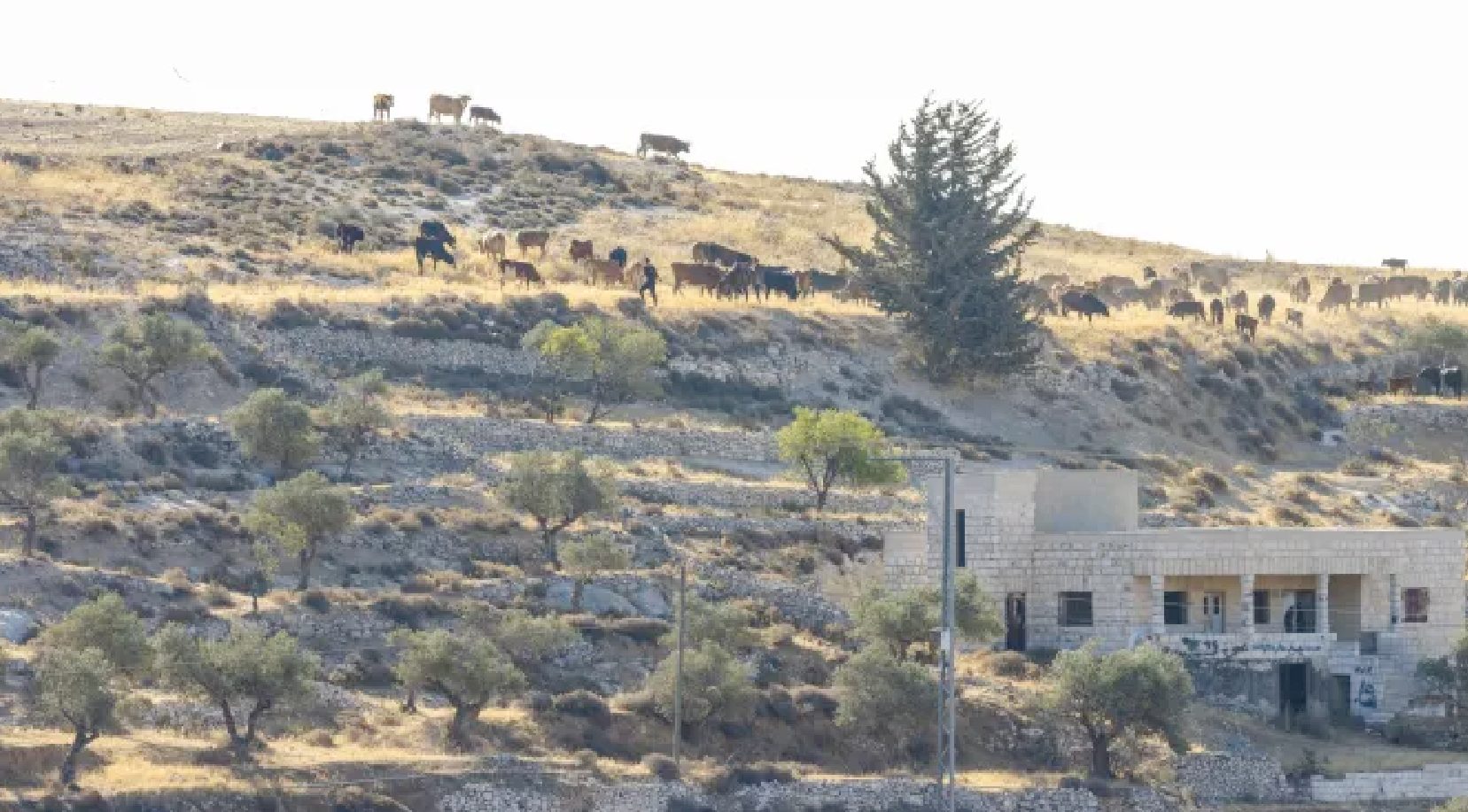
(ZENIT News / Jerusalem, 07.09.2025).- Taybeh, a town steeped in biblical history and long known as a rare enclave of uninterrupted Christian presence in the West Bank, is experiencing a wave of intensifying attacks that residents describe as a campaign of attrition. With olive groves razed, homes raided, and armed settlers encroaching deeper into their farmland, the people of Taybeh are confronting a grim reality: the erosion of safety, dignity, and the possibility of remaining in the land their families have tended for generations.
Located just east of Ramallah and often identified with the ancient Ephraim mentioned in the Gospel of John as Jesus’ final refuge before his Passion, Taybeh has become a focal point in the wider struggle for land, identity, and survival in occupied Palestinian territories. While other Christian communities in the region have steadily diminished over the decades, Taybeh has endured — but for how much longer is now a pressing question.
In recent weeks, settlers established a new outpost on the eastern perimeter of Taybeh. Built atop the ruins of a family farm cleared last year, the outpost extends into an area of around 17,000 dunums (about 1,690 hectares) — a tract vital to the town’s economy. These fields, rich with olive trees and seasonal crops, and home to livestock farming, form the town’s agricultural lifeline.
But this is only the latest chapter in a disturbing pattern. Previous years have seen settlers lighting crops on fire, looting farming equipment, and even herding cattle into cultivated fields to destroy harvests. During the last two olive harvests, dozens of farmers were blocked — and in many cases physically assaulted — when trying to access their land near the Rimmonim settlement, built on Taybeh’s confiscated territory. The harvests were either stolen or lost entirely.
In the wake of these developments, a letter sent to agency ZENIT just days after Easter 2025 reveals the depth of the town’s anguish. “Heavily armed occupation forces stormed into homes, smashing down doors,” the letter recounts. “Families, including women and children, were terrorized in the night. Fear now sleeps in our beds beside us, with weapons aimed at our heads.”
Colonos judíos invaden única población completamente cristiana de Tierra Santa
En Taybeh, el único pueblo 100% cristiano de Cisjordania, están instalando un asentamiento de colonos judíos en terrenos cristianos palestinos, con la protección del ejército. Video muestra un poco pic.twitter.com/txtsVObuRi
— Zenit News Agency – Español (@zenitespanol) July 9, 2025
Over a dozen families have reportedly left Taybeh in the last year alone, seeking refuge abroad. Their departure reflects not only the cumulative weight of violence and intimidation, but also the economic strangulation that has taken hold. Israeli authorities have erected metal gates at the town’s entry points, hindering daily travel, access to employment, and essential services.
Father Bashar Fawadleh, parish priest at the Church of Christ the Redeemer, expressed deep concern in an interview with ACI MENA. “We are surrounded. There is no peace here,” he said. “Even the hills where our ancestors planted olives and barley are now used by settlers to graze their cows — right next to people’s homes. This is economic warfare, plain and simple.”
The erosion of Taybeh’s security is part of a broader trend. Just weeks ago, three Palestinians were killed in a settler assault on the nearby village of Kaffr Malik. According to international reports, Israel has constructed around 160 settlements in the West Bank and East Jerusalem since 1967. While Israeli authorities dispute their illegality, most of the international community maintains that these settlements violate international law.
Yet for Taybeh’s residents, this is not a geopolitical debate. It’s a daily confrontation with dispossession. Their stories do not often reach the headlines, and their church bells now ring under a canopy of anxiety. Some cling to hope that the global Christian community will stand in solidarity, that the spiritual significance of this place — where Christ once took shelter — might awaken conscience abroad.
For now, Taybeh remains. But its future is written in question marks: on the gates at its entrances, in the fallow fields, and in the quiet prayers of those who have not yet packed their bags.
Thank you for reading our content. If you would like to receive ZENIT’s daily e-mail news, you can subscribe for free through this link.

Publicaciones relacionadas:
 How Does the Conflict Between Israel and Palestine Affect Christians?
 Jews attack Armenian neighborhood in Jerusalem but police arrest Christians
 Israel targets Catholic Church school in Gaza
 The last historic Christian village in the Holy Land, threatened with annexation by the Jewish state of Israel
