

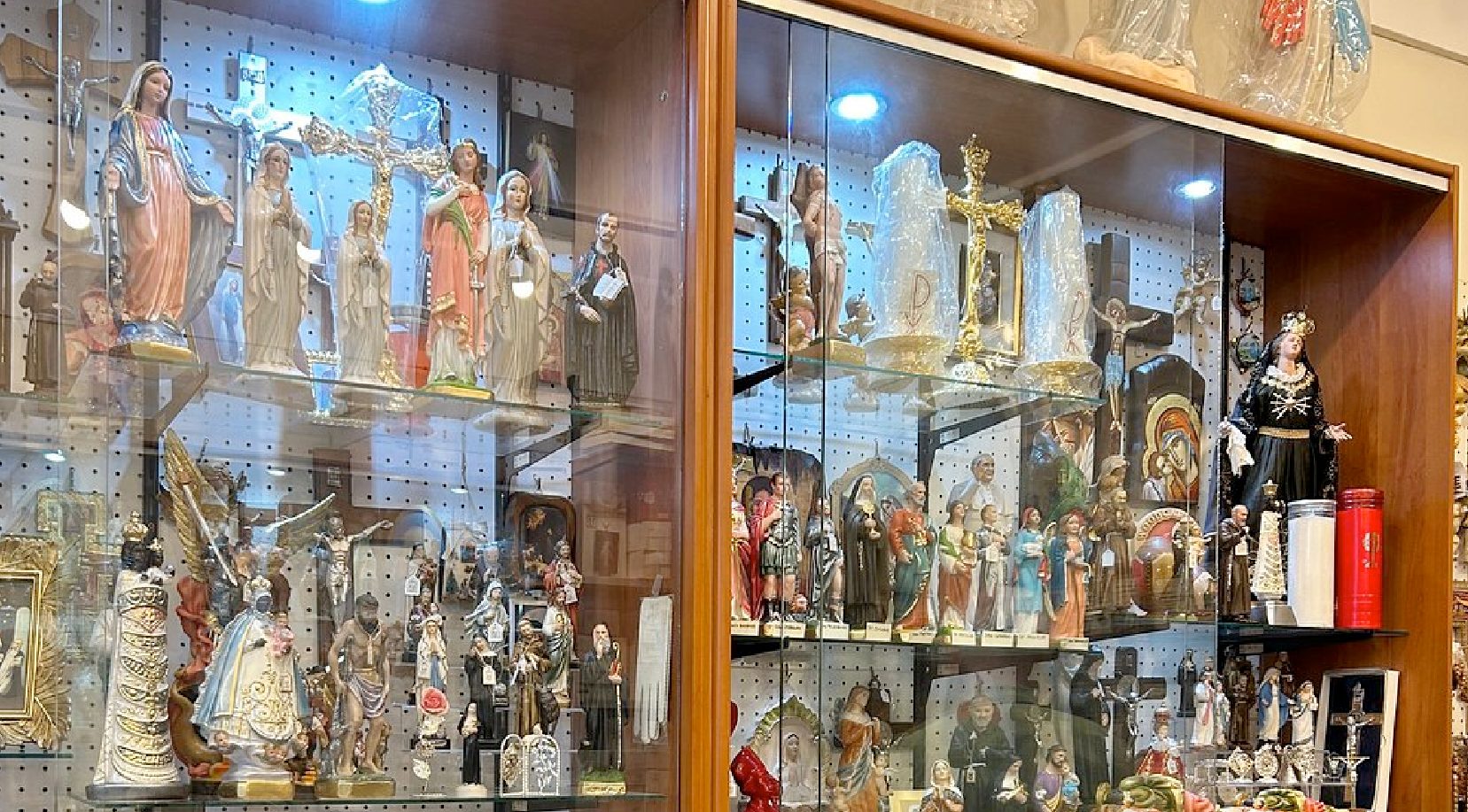
(ZENIT News / Rome, 07.21.2025).- As the 2025 Jubilee Year unfolds, Rome is experiencing not only a surge in pilgrims but also an unwelcome flood of counterfeit religious merchandise and labor law violations. Since the opening of the Holy Year on December 24, authorities have seized a staggering 24 million fake items across the city — with over half being religious goods, from rosaries to medallions, aimed at unsuspecting tourists and pilgrims.
The figures, revealed by Italian financial police and reported by «La Repubblica», highlight the darker underside of the city’s booming religious tourism sector. Among the items confiscated were 13 million objects with spiritual significance — often adorned with imagery or text designed to mimic Vatican-issued products.
As Rome braces for the Jubilee Youth Encounter at the end of July, preparations have shifted into high gear. The upcoming event, scheduled to bring nearly a million young pilgrims to the Vatican and Tor Vergata, has prompted stepped-up inspections and security controls. Giancarlo Franzese, provincial commander of the Guardia di Finanza in Rome, confirmed that enforcement actions have already uncovered some 750 undocumented or illegally employed individuals, particularly in the hospitality sector that thrives on the influx of visitors.
This isn’t the first time religious iconography has been co-opted for profit during a Holy Year. Last fall, authorities intercepted over 100,000 knock-off religious items — including rosaries and medallions bearing the Vatican’s logo — being sold in shops along Via della Conciliazione, the grand avenue leading pilgrims from the Tiber River to the gates of St. Peter’s Square. Many of these products falsely implied official sanction by the Holy See.
Yet, even as counterfeiters profit, a different kind of silence is being noticed just steps away from the basilica. Vendors near St. Peter’s are voicing frustration over a bureaucratic limbo surrounding the image of the new pope, Leo XIV. Despite his election in early May, official merchandise featuring his likeness has yet to appear widely — an unusual delay compared to past pontificates.
According to local shopkeepers, permission to reproduce the image of Pope Leo XIV on commercial souvenirs has not been granted by Vatican authorities. The reasons for the delay remain unclear, though it contrasts sharply with the swift rollout of products for previous popes, often within days of their election.
While retail channels wait, the Vatican has made the pope’s official portrait available digitally. Since May 16, institutions and church organizations can download the photo, which shows Leo XIV — the first American pope — in white cassock and golden pectoral cross, smiling against a neutral backdrop. The image, which also includes his coat of arms and signature, is free to use for institutional purposes but not yet for commercial sale.
For the thousands of pilgrims pouring into Rome — many eager to take home a token of their spiritual journey — the distinction between blessed and bootleg is becoming harder to discern.
Thank you for reading our content. If you would like to receive ZENIT’s daily e-mail news, you can subscribe for free through this link.

Publicaciones relacionadas:
 This Will Be the Rome of the 2025 Jubilee: 5G in the Entire City and New Streets and Parking Lots Around the Vatican
 A Truly Inclusive Jubilee: Vatican Presents Inclusive Itinerary for the Holy Door
 Rupnik was not «the cause»: Vatican clarifies why Cardinal Ladaria asked for dispensation from Synod
 One of the Most Wanted New York Criminals Is Arrested Around the Vatican
